
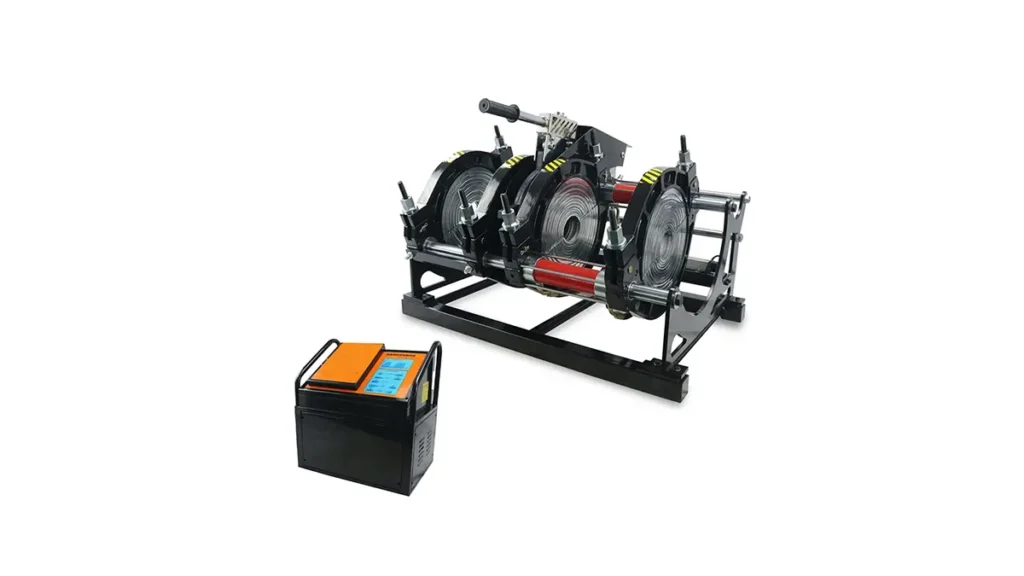
Polyethylene (PE) piping systems have become the industry standard for water distribution, gas conveyance, and industrial fluid transport worldwide. At the heart of every reliable PE pipeline lies a properly executed fusion joint, and that’s where the PE80 pipe welding machine plays its most critical role. PE80, a medium-density polyethylene grade with a Minimum Required Strength (MRS) of 8.0 MPa, demands precise welding parameters to achieve joints that match or exceed the pipe’s own strength. Understanding the equipment that delivers these results is essential for contractors, utility operators, and project managers who refuse to compromise on pipeline integrity.
Understanding PE80 Material and Its Welding Requirements
PE80 has been a cornerstone material in pipeline engineering for decades, offering an excellent balance of flexibility, crack resistance, and long-term durability. Unlike its higher-strength counterpart PE100, PE80 requires slightly different welding parameters — particularly in terms of bead-up pressure, heating time, and cooling duration under pressure. These parameters are defined by international standards including ISO 21307 butt fusion procedures, which specify three distinct welding cycles for PE materials. A quality PE80 pipe welding machine must deliver consistent, controllable pressure and accurate temperature regulation to meet these procedural requirements across varying pipe diameters and wall thicknesses.
Key Features of a High-Performance PE80 Pipe Welding Machine
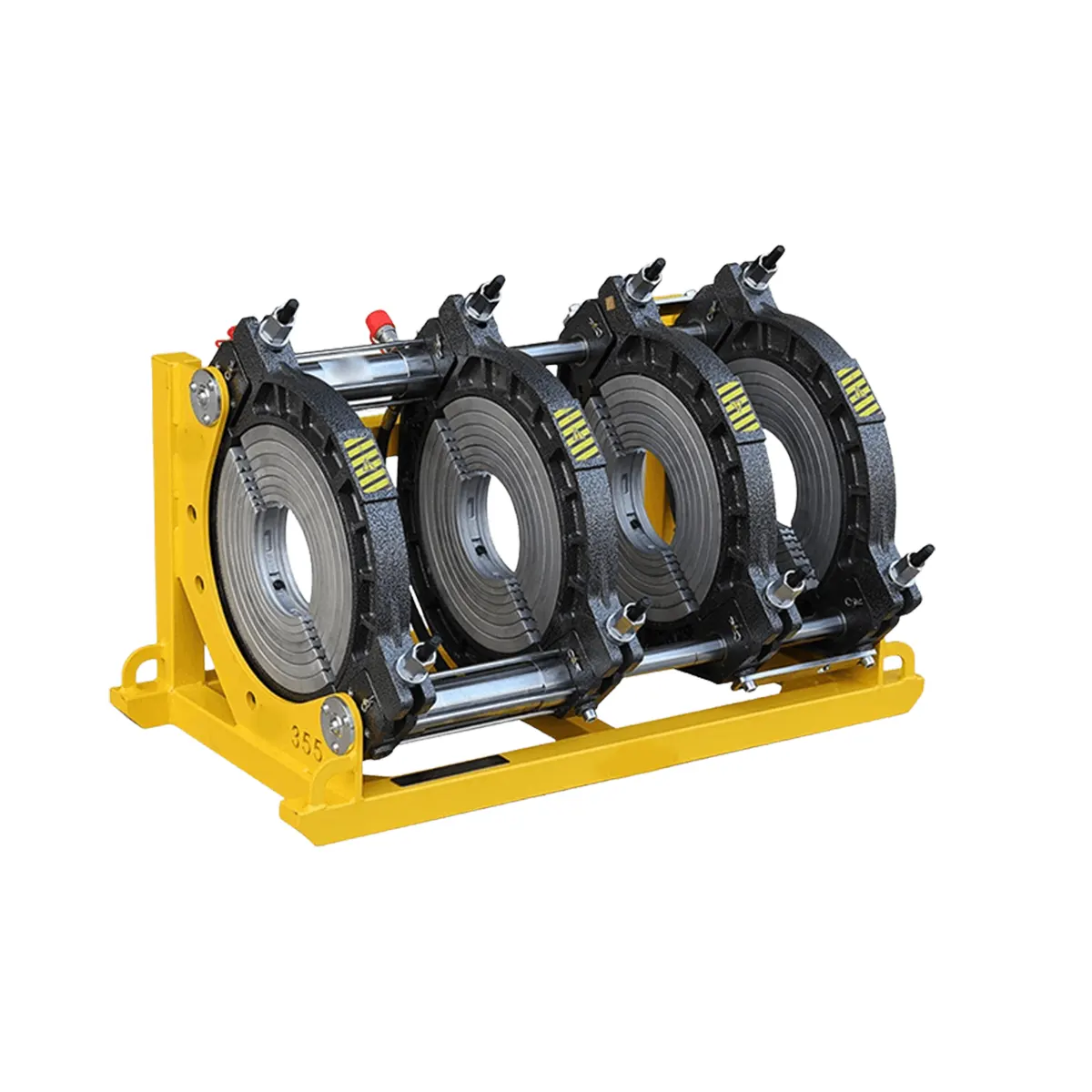
Not all welding machines are engineered to the same standard. When evaluating a PE80 pipe welding machine for your projects, several features distinguish professional-grade equipment from entry-level alternatives. These characteristics directly influence joint quality, operator efficiency, and long-term equipment reliability.
- Precision Temperature Control: The heating plate must maintain a consistent temperature typically between 200°C and 230°C, with uniform heat distribution across the entire surface. Digital controllers with ±2°C accuracy are now the industry benchmark.
- Controlled Fusion Pressure: Hydraulic systems should deliver smooth, adjustable pressure throughout the welding cycle. Look for machines with calibrated pressure gauges and responsive control valves that maintain steady bead-up and fusion pressure.
- Rigid Frame and Clamp Alignment: The machine frame must hold pipes in perfect axial alignment. Any misalignment during the fusion process can create stress points and compromise joint integrity. High-strength aluminum or steel clamps with independent adjustment are preferred.
- Durable Heating Plate Coating: Non-stick PTFE coatings on heating plates prevent molten PE from adhering to the surface, ensuring clean separation during the heating phase and reducing contamination risks.
- Electric Facing Tool: A precision trimmer ensures pipe ends are perfectly flat and parallel before fusion, which is essential for achieving full surface contact and uniform melt distribution.
Types of PE80 Pipe Welding Machines
The market offers several categories of butt fusion welding machines, each designed for specific project scales, pipe diameters, and operational environments. Understanding the distinctions helps you match the equipment to your application requirements.
Manual Butt Fusion Machines
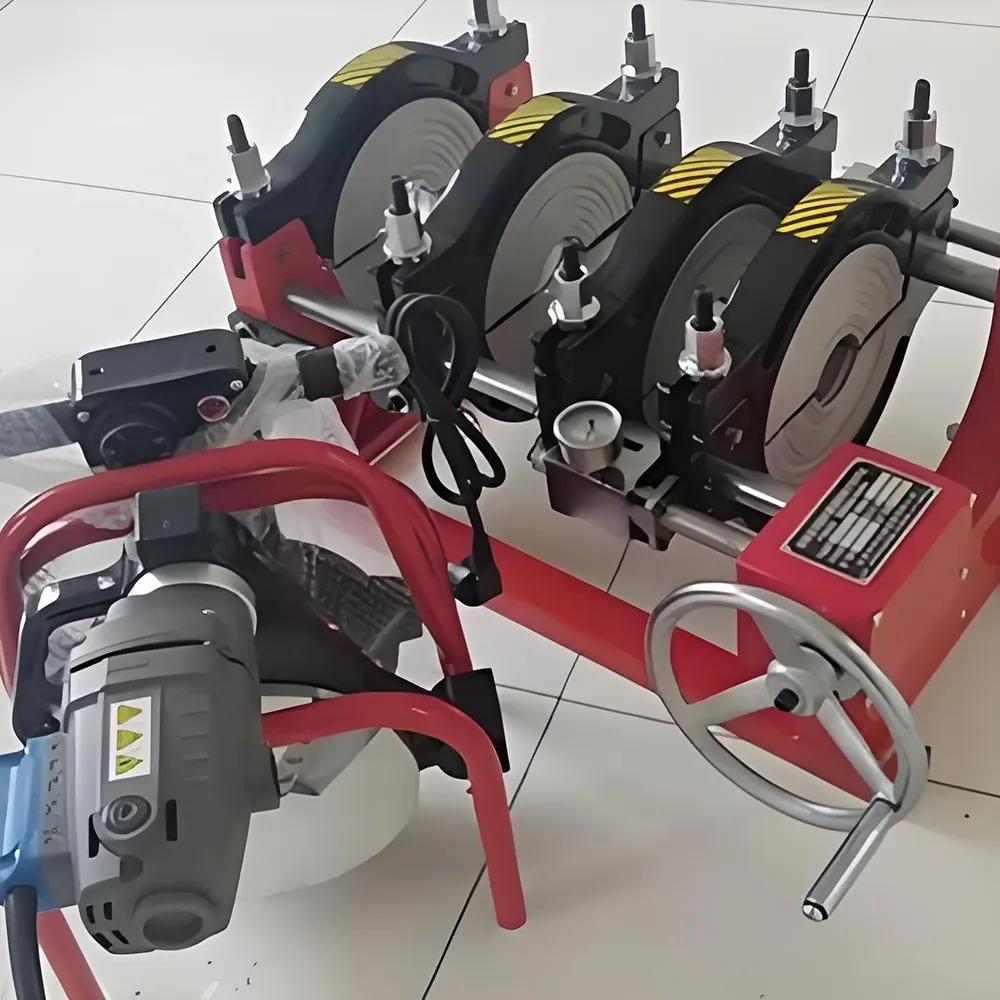
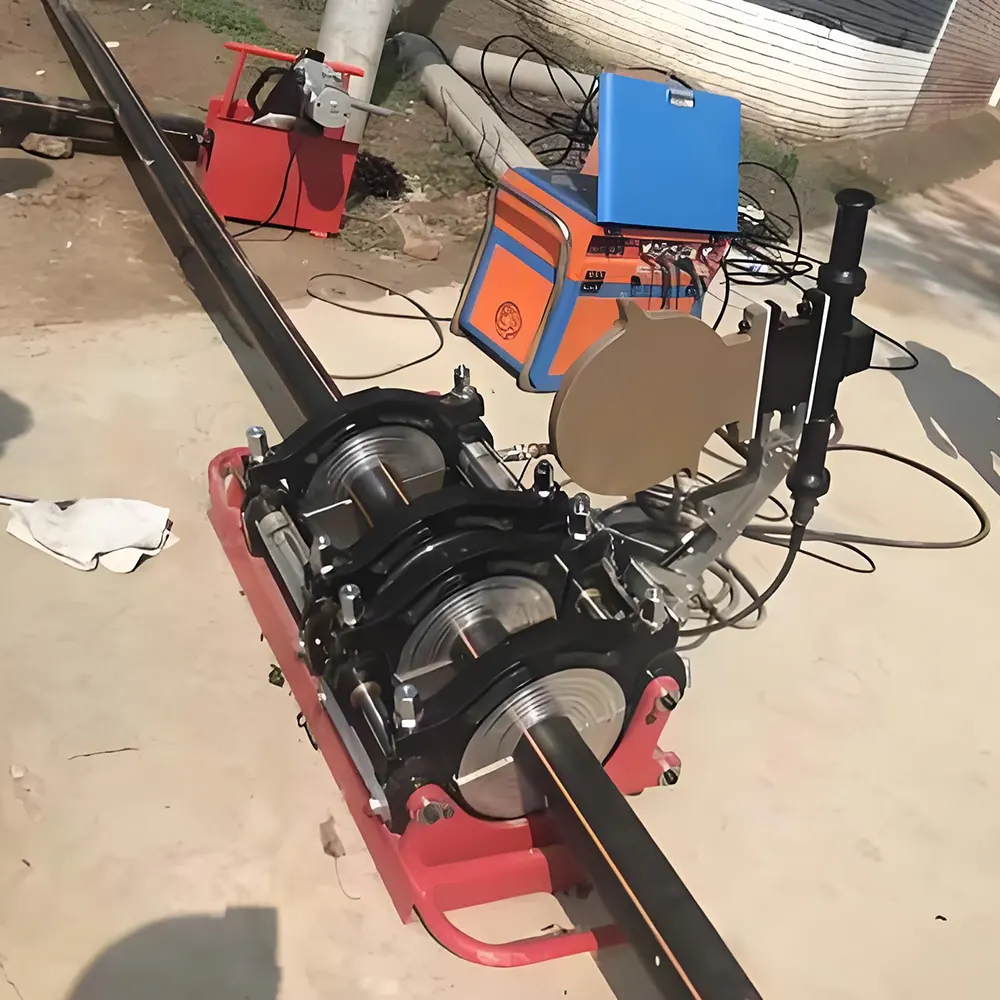
Manual machines rely on hand-operated levers for clamping and pressure application. These manual butt fusion welders are typically designed for smaller diameters ranging from 40mm to 315mm. They offer excellent portability, require no external power for the machine frame, and are cost-effective for small-scale installations, repair work, and projects in remote locations. The operator’s skill plays a significant role in joint quality, making proper training essential. Modern manual machines feature ergonomic handles, quick-release clamps, and lightweight aluminum construction for easier field handling.
Hydraulic Butt Fusion Machines
For medium to large diameter PE80 pipes, hydraulic butt fusion welding machines provide the necessary clamping force and controlled fusion pressure that manual systems cannot achieve. These units typically cover diameters from 200mm up to 2250mm or more. The hydraulic power unit delivers consistent, measurable pressure throughout the entire welding cycle, reducing operator fatigue and improving joint repeatability. Key advantages include programmable pressure profiles, emergency stop functions, and the ability to handle heavy-walled pipes that require significant force during the bead-up stage.
CNC Automatic Butt Fusion Machines
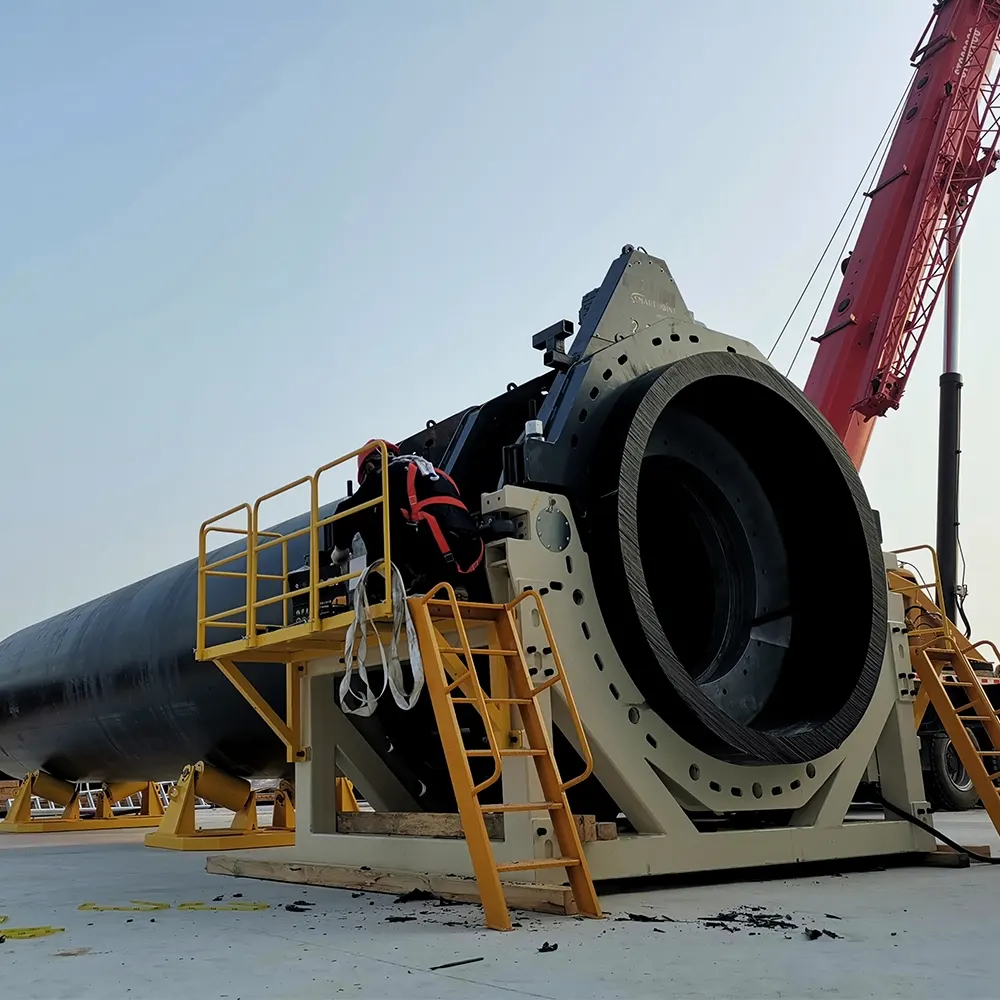
At the top end of the technology spectrum, CNC automatic butt fusion machines remove much of the operator dependency from the welding process. These systems use embedded controllers to automatically execute each phase of the fusion cycle — from initial bead-up through heating, changeover, fusion joining, and controlled cooling. They record all welding parameters in real-time, generating traceable data logs that confirm compliance with PE butt fusion equipment standards. Automatic machines are ideal for large infrastructure projects where documentation, consistency, and high production rates are mandatory.
Applications Across Industries
The versatility of PE80 piping and the reliability of modern PE80 pipe welding machines have driven adoption across multiple sectors. Each application brings specific demands that influence machine selection and on-site welding procedures.
| Industry Sector | Typical Pipe Range | Recommended Machine Type | Key Consideration |
|---|---|---|---|
| Potable Water Supply | 63mm – 800mm | Hydraulic / CNC Automatic | Hygiene, joint traceability |
| Natural Gas Distribution | 32mm – 630mm | Manual / Hydraulic | Safety protocols, leak prevention |
| Mining and Slurry Transport | 110mm – 1200mm | Hydraulic | Abrasion resistance, rugged frame |
| Industrial Effluent Systems | 90mm – 1000mm | Hydraulic / CNC Automatic | Chemical resistance, large volumes |
| Agricultural Irrigation | 50mm – 400mm | Manual | Portability, field conditions |
How to Select the Right PE80 Pipe Welding Machine
Choosing the optimal PE80 pipe welding machine requires evaluating several factors beyond just the pipe diameter rating. A systematic assessment ensures your investment delivers reliable performance across current and future projects.
- Pipe Diameter Range: Select a machine that comfortably covers your most common pipe sizes. Machines with interchangeable clamp inserts offer greater flexibility across a wider diameter range, reducing the need for multiple units.
- Wall Thickness Capacity: PE80 pipes come in various Standard Dimension Ratios (SDR). Thicker walls require higher fusion pressures and longer heating times. Verify that the machine’s hydraulic system can generate sufficient force for your heaviest wall specifications.
- Site Conditions and Accessibility: Trench work, steep terrain, and confined spaces demand compact, maneuverable equipment. Evaluate the machine’s total weight, frame dimensions, and whether it can be disassembled for transport.
- Power Availability: Hydraulic and automatic machines require electrical power for the heating plate and control systems. In remote locations, generator-compatible machines with stable voltage tolerance are essential.
- Data Logging Requirements: Projects governed by ISO or ASTM standards increasingly require documented weld records. Automatic machines with built-in data logging simplify compliance and provide auditable quality assurance.
Welding Standards and Operator Best Practices
International standards govern every aspect of PE80 pipe welding, from equipment specifications to procedural parameters and operator qualifications. Adherence to these standards is not merely a formality — it is the foundation of joint integrity and long-term pipeline performance. Key standards include ISO 21307 for butt fusion jointing procedures, ASTM F2620 for heat fusion joining of PE pipe, and various regional codes that build upon these international frameworks. Qualified operators who understand the interplay between material grade, ambient conditions, and machine settings produce consistently superior welds. Regular calibration of heating plates and pressure systems should be part of every maintenance schedule, with records retained for project documentation.
Maintenance That Extends Machine Life
A well-maintained PE80 pipe welding machine rewards its owner with years of reliable service. Daily cleaning of the heating plate’s non-stick surface prevents polymer residue buildup that can cause uneven heating. The facing tool blades require periodic sharpening or replacement — dull blades produce rough pipe ends that compromise fusion quality. Hydraulic systems should be inspected for fluid levels and hose integrity before each project, while clamp surfaces need cleaning to maintain their grip on PE pipe surfaces. Electrical connections, particularly on the heating plate, should be checked for secure contacts that prevent temperature fluctuations during the welding cycle.
Why Equipment Quality Matters for PE80 Welding
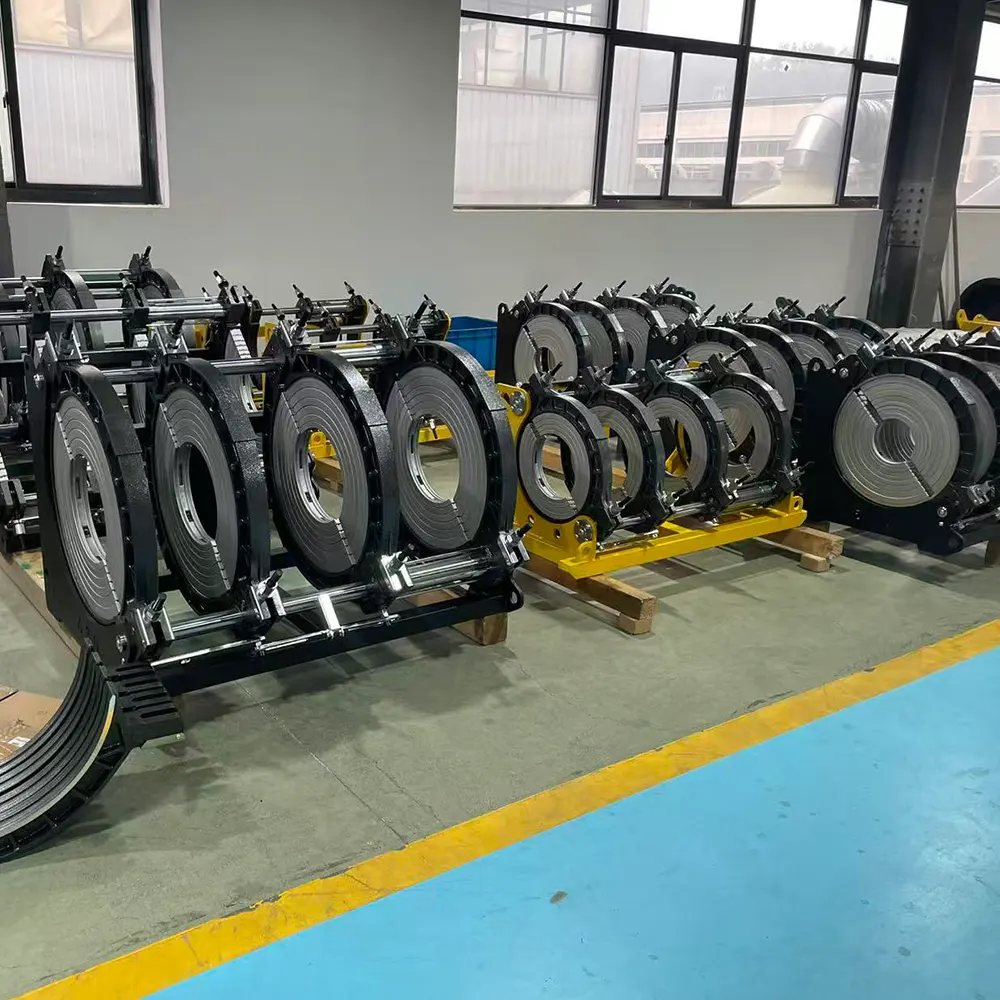
Pipeline failures most often trace back to joint defects rather than pipe material failures. This reality underscores why investing in a quality PE80 pipe welding machine is one of the most consequential procurement decisions a contractor makes. Precision-machined clamps, responsive hydraulic controls, and accurate digital temperature regulation collectively determine whether a fusion joint will perform flawlessly for decades or become a point of failure. When evaluating suppliers, consider not just the machine specifications but also the manufacturer’s commitment to after-sales support, spare parts availability, and technical guidance. JQ-Fusion, a professional manufacturer specializing in HDPE pipe welding machines, provides reliable butt fusion solutions engineered for the demanding requirements of global infrastructure projects, with products widely used in water supply, gas distribution, mining, and industrial pipeline systems.
Frequently Asked Questions About PE80 Welding Machines
Can the same welding machine be used for both PE80 and PE100 pipes?
Yes, most modern butt fusion welding machines are compatible with both PE80 and PE100 materials. The key difference lies in the welding parameters — PE100 typically requires slightly higher fusion pressures due to its higher melt viscosity. Always consult the machine’s parameter chart and the pipe manufacturer’s specifications for the correct settings for each material grade.
What is the typical lifespan of a PE80 pipe welding machine?
With proper maintenance, a quality PE80 pipe welding machine can deliver 10 to 15 years of reliable field service. Heating plates and facing tool blades are consumable components that require periodic replacement. Hydraulic seals, hoses, and electrical components should be inspected annually and replaced as preventive maintenance dictates.
How do I verify that my machine is producing quality fusion joints?
Visual inspection of the fusion bead provides immediate feedback — a uniform, symmetrical bead on both sides of the joint indicates proper alignment and pressure. Destructive testing of sample joints, including bend-back tests and tensile testing, provides quantitative verification. For critical applications, automatic machines with data logging offer continuous parameter monitoring that confirms adherence to the specified welding procedure.
Is operator training mandatory for PE80 pipe welding?
Absolutely. Even the most advanced CNC automatic machine benefits from a trained operator who understands material behavior, can identify potential issues before they affect joint quality, and knows how to respond to unexpected conditions. Many standards, including ISO 12176-3 for fusion operator qualification, establish competency requirements that are enforced in regulated industries such as gas distribution.
Looking for a reliable PE80 pipe welding machine for your next project? Explore our complete range of manual, hydraulic, and CNC automatic butt fusion solutions designed for consistent, high-quality welds.



