
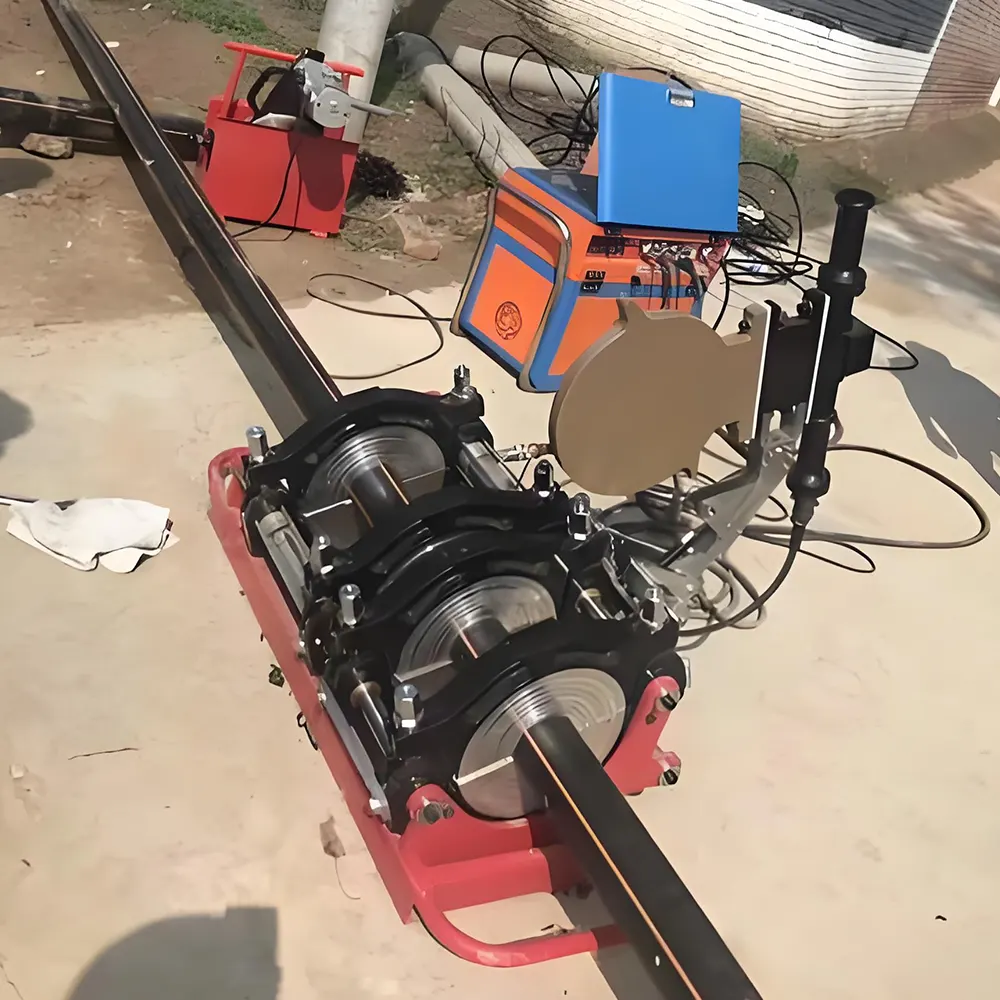
Exporting HDPE welding machines internationally is not only a matter of shipping heavy equipment from one country to another. It is a process that combines product selection, technical compliance, customs preparation, packaging protection, logistics planning, and after-sales service. For buyers, distributors, and contractors, the key goal is simple: receive a reliable machine that works safely, arrives on time, and meets local project requirements. For manufacturers, the challenge is equally demanding: every exported unit must reflect stable performance, clear documentation, and professional support.
In global pipeline construction, demand for HDPE pipe joining equipment continues to grow in water supply systems, gas distribution networks, mining projects, and industrial installations. This is why many international buyers search for a dependable butt fusion machine supplier that can provide not only products, but also export experience and long-term service. JQ-Fusion, with over 20 years of industry experience, has built its reputation around this exact need: delivering manual, hydraulic, and CNC automatic butt fusion solutions for global markets.
When planning an export order, the first step is understanding the application. Different projects require different machine configurations. A small-diameter municipal water project may need a compact hydraulic model, while a large industrial pipeline project may require a CNC automatic system with higher precision and greater productivity. Choosing the right machine early helps reduce technical risk, avoids expensive changes later, and ensures the equipment matches the jobsite environment.
One of the most important export decisions is to verify pipe diameter range, voltage standard, and operator skill level. These three factors directly influence machine compatibility and long-term jobsite efficiency.
1. Choose the Right Machine for the Target Market
International buyers often work across multiple countries, and each region may have different technical standards. Some markets require 220V single-phase power, while others need 380V or 400V three-phase systems. Some customers prioritize manual equipment for basic use, while others need automated systems for higher output and consistency. A professional supplier should be able to adjust the product configuration to fit these requirements without compromising performance.
JQ-Fusion offers a wide product range, including hydraulic butt fusion welding machines, automatic butt fusion welding machines, electrofusion welding machines, and multi-angle pipe fitting welding machines. This product diversity is valuable for exporters because it allows them to serve different industries and customer groups under one supply chain.
For distributors, a flexible product range also creates a stronger market position. Instead of selling one model to every buyer, you can offer project-specific solutions that improve customer trust and increase repeat orders.
2. Confirm Compliance and Certification Before Shipping
Exporting industrial welding equipment requires more than product quality. It also requires compliance with international standards and buyer expectations. Documentation may include technical specifications, packing lists, invoices, certificates of origin, and test records. In some markets, certification is especially important for public utility projects or regulated gas applications.
JQ-Fusion manufactures products in compliance with international standards and provides SGS-certified solutions for global pipeline projects. This helps buyers reduce approval delays and improves confidence in the equipment’s reliability. When purchasing from an experienced manufacturer, customers can usually obtain more complete documentation and clearer technical support during customs clearance.
It is also wise to ask for factory testing records before shipment. Important checks include temperature accuracy, hydraulic pressure stability, clamp alignment, and control system performance. These test results are useful not only for internal quality control, but also for demonstrating due diligence to end users and project managers.
Tip: Keep a digital archive of all export documents. This makes repeat shipments easier and helps solve customs or warranty questions faster.
3. Use Export-Grade Packaging and Load Protection
HDPE welding machines are industrial products with mechanical frames, hydraulic components, heating plates, control units, and accessories. During international transport, the main risks are vibration, moisture, impact, and long storage time. Good packaging is therefore not optional; it is part of product quality.
A proper export package should protect the machine from movement and corrosion. Common practices include reinforced wooden cases, anti-rust treatment, foam or corner protection, sealed accessories boxes, and clear labeling for lifting and handling. For larger equipment, loading plans should be prepared in advance to reduce damage during crane or forklift operations.
When products are shipped overseas, the packaging must also be practical for customs inspection and final delivery. This means the outer packing should be durable enough for rough handling, while still allowing easy identification of the contents. A well-prepared shipment reduces complaints, lowers replacement costs, and improves customer satisfaction.
Strong packaging is a hidden profit factor in export business. It protects the product, reduces after-sales problems, and strengthens your brand image in the destination market.
4. Plan Shipping According to Order Size and Deadline
International logistics should be selected based on shipment urgency, order volume, and destination country. For urgent project orders, air freight may be appropriate for smaller parts or accessories, while sea freight is the most common choice for full machine shipments. For bulk orders, container loading plans must be carefully organized to maximize space and protect the equipment.
JQ-Fusion maintains a large inventory of key models to support fast delivery for both small and bulk orders. This capability is especially helpful for distributors who must respond to urgent project timelines. Fast supply reduces downtime, and in many cases, it can be the difference between winning and losing an international contract.
It is also important to coordinate shipment timing with the project schedule. Arriving too early may create storage issues, while arriving too late can delay installation and commissioning. A professional export process always includes clear communication between the manufacturer, freight forwarder, and customer.
If your order is time-sensitive, confirm production lead time, packing schedule, and shipping cutoff dates before payment and production start.
5. Make OEM and ODM Customization a Selling Advantage
One of the strongest advantages in international export is customization. Different customers may need different machine colors, branding, machine sizes, voltages, control layouts, or project-specific features. These changes may seem small, but they can greatly increase market acceptance in a competitive region.
JQ-Fusion provides full OEM and ODM customization services, helping clients build their own market advantage. This includes machine design, branding, configuration, and operational adjustments. For distributors, customization can make a standard machine feel like a private-label product, which helps strengthen brand identity and pricing power.
Customization is also important for engineering projects. Some sites require a special clamp range, enhanced mobility, or additional safety features. A responsive manufacturer should be able to offer practical modifications without weakening structural reliability or delaying delivery.
The best export suppliers treat customization as part of the solution, not as an exception. That mindset makes international cooperation smoother and more profitable.
6. Provide Technical Support Before and After Delivery
Exporting HDPE welding machines does not end when the goods leave the factory. For many overseas customers, installation guidance, operator training, troubleshooting, and spare parts supply are just as important as the machine itself. If the supplier cannot support the user after arrival, the customer experience quickly suffers.
Reliable global support should include fast response, professional technical guidance, and efficient logistics for replacement parts. JQ-Fusion emphasizes full technical support from product selection to installation and after-sales service. This matters greatly for overseas clients who may not have a local engineer familiar with butt fusion operation.
When technical support is strong, buyers are more likely to reorder and recommend the supplier to others. In international business, repeat orders and word-of-mouth referrals are often more valuable than one-time sales.
After-sales service is not an extra feature. It is a core part of export competitiveness, especially for complex industrial equipment.
Why JQ-Fusion Is a Strong Export Partner
For international buyers, choosing a manufacturer with real export experience reduces risk in every step of the process. JQ-Fusion stands out through advanced manufacturing technology, strict quality control, flexible OEM and ODM customization, reliable global support, and proven performance in global markets.
Its factory is equipped with modern production lines and precision machining equipment, ensuring stable performance, high efficiency, and long service life. Experienced engineers and technicians monitor each production stage to maintain consistency and accuracy. This kind of manufacturing discipline is especially important when shipping to multiple countries with different technical expectations.
In addition, the company’s commitment to stable welding performance, customized solutions, strict quality assurance, fast delivery, and professional technical support makes it easier for distributors and contractors to build lasting cooperation. These are the qualities that matter most when exporting high-value industrial equipment.
A dependable export partner does not just sell machines. It helps customers reduce risk, save time, and win projects.
Practical Export Checklist
Before confirming an international order, review the following points carefully: machine model and pipe size, voltage standard, shipping method, customs documents, packaging method, delivery time, and technical support plan. If any one of these items is unclear, it can create delay or extra cost later.
It is also helpful to communicate directly with the manufacturer’s sales and engineering teams. Clear communication prevents mistakes and ensures the exported machine fits the real application. For project-based purchasing, this step can be just as important as price negotiation.
Checklist reminder: specification, certificate, package, logistics, and support should all be confirmed before shipment.
FAQ
Q1: What should I check first when exporting an HDPE welding machine internationally?
Start by checking the target market’s voltage standard, pipe diameter range, and required certifications. These factors determine whether the machine is suitable for local use.
Q2: How can I reduce shipping damage during export?
Use export-grade packaging, corrosion protection, reinforced wooden cases, and proper loading methods. Good packaging is essential for long-distance transport.
Q3: Is OEM customization important for overseas markets?
Yes. OEM and ODM customization helps distributors build brand identity and makes it easier to adapt products to local customer needs.
Q4: Why is after-sales support important in international sales?
Because many customers need installation guidance, training, and spare parts support after delivery. Strong after-sales service improves satisfaction and repeat business.
Q5: Why do buyers choose JQ-Fusion for export orders?
Because JQ-Fusion offers 20+ years of experience, certified products, strong customization capability, fast delivery, and reliable global technical support.



