
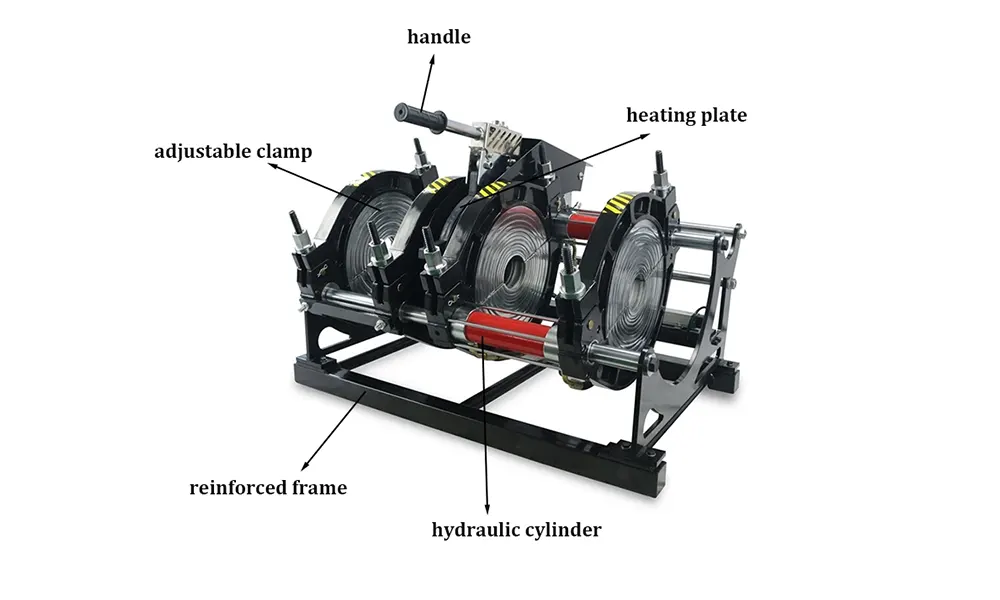
When project teams compare HDPE pipe joining equipment, the question is not simply which machine is “best,” but which model delivers the right balance of stability, productivity, precision, and long-term value for a specific application. A butt fusion machine is expected to create consistent, leak-free joints under demanding site conditions, and performance can vary significantly across manual, hydraulic, and CNC automatic models. For contractors, distributors, and pipeline installers, understanding these differences helps reduce downtime, control welding quality, and improve the overall efficiency of water, gas, mining, and industrial pipeline projects.
At the most basic level, HDPE welding machine performance should be evaluated by heating accuracy, clamp alignment, pressure stability, ease of operation, cycle repeatability, and suitability for pipe diameter ranges. A machine that performs well in a small municipal water job may not be the right choice for a large-scale gas distribution project. Likewise, a fully automatic model may offer exceptional consistency, but a hydraulic or manual machine could be more practical when flexibility, portability, or budget control matters more. This is why model comparison is essential before purchasing.
One of the biggest performance differences among HDPE welding machines is control precision. Manual machines rely heavily on operator experience, which can be an advantage in simple jobs but a risk in projects that require repeated accuracy. Hydraulic models add more stable pressure control and reduce the burden on the operator, making them better for medium and large pipe diameters. CNC automatic machines go further by standardizing the entire process, helping minimize human error and delivering highly repeatable results. In applications where weld quality must remain consistent across many joints, automation can make a major difference.
Key point: the best machine is not always the most advanced one. The best-performing model is the one that matches the pipe size, welding frequency, project environment, and technical skill level of the team using it.
Temperature stability is another critical factor. During butt fusion, the heating plate must maintain a precise and even temperature across the entire contact surface. If the temperature fluctuates too much, the fusion bead may become uneven, weak, or inconsistent. Better-performing machines use high-quality heating systems and better insulation to preserve temperature accuracy. This matters especially in cold climates, windy outdoor conditions, or high-volume production environments where the machine runs for long periods without pause.
Hydraulic pressure performance also separates mid-range machines from premium models. In larger diameter HDPE pipe welding, pressure consistency is essential for forming strong, aligned, and durable joints. Machines with stable hydraulic systems can maintain the required force during heating, joining, and cooling stages. Poor pressure control can lead to ovality, joint deformation, or weak fusion results. For contractors working on critical infrastructure, pressure stability is often one of the most important indicators of real-world machine quality.
Below is a practical comparison of common model types:
| Model Type | Performance Strengths | Best For |
|---|---|---|
| Manual Butt Fusion Machine | Simple structure, lower cost, easy maintenance | Small projects, basic installations, budget-sensitive buyers |
| Hydraulic Butt Fusion Machine | Better pressure control, improved consistency, stronger productivity | Medium to large pipe projects, professional contractors |
| CNC Automatic Butt Fusion Machine | High precision, repeatable welding, reduced operator error | High-demand projects, standardized production, critical infrastructure |
The speed of the welding process also affects performance perception. A fast machine is not automatically a better machine if it sacrifices alignment, pressure accuracy, or cooling discipline. High-performance models should streamline preparation and joining without reducing weld integrity. On busy sites, productivity depends on both cycle time and reliability. A machine that completes each weld in a well-controlled manner can outperform a faster machine that creates more rework or quality issues.
Ease of operation is often underestimated, yet it directly affects output quality. Machines with clear interfaces, intuitive controls, and stable clamping systems help operators work more efficiently and reduce mistakes. This is especially important in projects where technicians may rotate between tasks or where labor training time is limited. A model that is difficult to set up or adjust may slow down the entire workflow, even if its technical specifications appear strong on paper.
Another important comparison point is durability. In industrial pipeline work, machines are exposed to dust, vibration, moisture, frequent transport, and long operating hours. Durable models with strong frames, precision-machined components, and well-protected electrical or hydraulic systems generally maintain performance longer. Over time, durability can be more valuable than a lower purchase price because it reduces replacement costs, repairs, and unexpected project interruptions.
Performance tip: if two models look similar in specs, compare the stability of their heating plate, clamp accuracy, and hydraulic system first. These details usually determine whether the machine performs well in real field conditions.
Customization is another area where models may differ in practical performance. A standard machine can work well for general use, but customized configurations often perform better in project-specific environments. For example, voltage options, clamp sizes, control upgrades, branding, and machine color may all seem secondary, yet they can improve convenience, integration, and marketability for distributors. Companies like JQ-Fusion provide flexible OEM and ODM support, helping buyers align the machine’s configuration with local standards and customer expectations.
For global buyers, compliance and certification also influence the evaluation of performance. A machine that is structurally strong but lacks consistent quality control can still create risk in the field. Products certified by recognized organizations and tested for temperature accuracy, hydraulic stability, and clamp alignment often offer better confidence in long-term use. This is especially relevant for projects with strict engineering requirements, where reliability is just as important as raw output.
In terms of application, different models fit different working environments. Manual machines can perform well on smaller-diameter HDPE pipelines, temporary sites, and lower-volume projects. Hydraulic machines are often preferred for municipal networks, agricultural systems, and commercial pipeline installations where consistency is more important. CNC automatic machines are ideal for larger infrastructure projects, standardized production lines, and users who need repeatable welding with minimal variation from operator to operator.
JQ-Fusion focuses on supplying manual, hydraulic, and CNC automatic butt fusion welding machines for pipe sizes ranging from small to large diameters. With more than 20 years of industry experience, its product range is designed for water supply systems, gas distribution networks, mining projects, and industrial pipeline installations. This broad model coverage makes it easier for buyers to compare performance based on project scale rather than selecting a one-size-fits-all solution.
Support and after-sales service should also be part of performance comparison. A machine may have excellent technical capabilities, but if technical support is slow or spare parts are difficult to obtain, actual performance in a project environment will suffer. Reliable global support, fast response, installation guidance, and training resources all help ensure the equipment performs as intended over time. For many international buyers, service quality is a decisive part of the value equation.
When comparing models from a procurement perspective, buyers should look beyond the headline specifications and assess the complete operating experience. That includes how easily the machine can be transported, how stable it is during fusion cycles, whether it handles repeated use without drift, and how much operator skill is required to maintain quality. In real project work, the most successful machine is the one that consistently produces strong welds under real conditions, not just in a brochure.
From a long-term investment standpoint, better-performing models often deliver lower total cost of ownership. Although automatic systems may require a higher initial investment, they can reduce labor costs, training time, and welding errors. Hydraulic models often strike a strong balance between price and productivity. Manual machines remain attractive for buyers who need a practical, budget-friendly option with straightforward maintenance. The right choice depends on whether the buyer values upfront affordability, long-term efficiency, or high-level precision.
In practical terms, the comparison should follow three questions:
- Does the machine match the pipe diameter and project scale?
- Can it maintain stable temperature, pressure, and alignment?
- Will the team be able to use and support it efficiently over time?
These questions often reveal more than any single product specification. A model that answers “yes” to all three will usually outperform a cheaper or more advanced-looking alternative in actual field use. This is why experienced contractors tend to judge HDPE welding equipment by job outcomes, not just machine categories.
Another aspect worth noting is maintenance. Machines with accessible components, clear operating systems, and robust build quality tend to maintain performance more easily. Regular inspection of the heating plate, hydraulic system, clamps, and electrical connections helps preserve output quality. In this sense, performance is not only built at the factory; it is also sustained through correct use and simple maintenance routines on the job site.
For buyers seeking dependable equipment, a manufacturer with stable stock, technical support, and customization capability can make the comparison process much easier. JQ-Fusion’s focus on strict quality control, fast delivery, and practical engineering support gives customers a more complete solution than equipment alone. In many cases, the real advantage of a stronger model is the confidence it brings to every stage of pipeline installation.
Final performance takeaway: manual models prioritize simplicity, hydraulic models balance control and productivity, and CNC automatic models maximize repeatability and precision. The right model depends on how demanding the project is.
FAQ
1. Which HDPE welding machine model is best for small projects?
Manual butt fusion machines are usually the most practical choice for small projects because they are affordable, simple to operate, and easy to maintain. They work well when production volume is low and the pipe diameter range is limited.
2. Why do hydraulic models perform better than manual models in many cases?
Hydraulic models provide more stable pressure control and reduce the risk of operator inconsistency. This improves weld repeatability, especially when working with medium and large pipes or when multiple joints must meet the same quality standard.
3. Are CNC automatic machines always the best choice?
Not always. CNC automatic machines offer excellent precision and consistency, but they are most valuable in projects that require repeatable welding, higher output, or strict quality control. For smaller or simpler jobs, a manual or hydraulic model may be more cost-effective.
4. What should buyers check before comparing different models?
Buyers should review temperature accuracy, hydraulic stability, clamp alignment, pipe diameter compatibility, ease of operation, durability, and after-sales support. These factors usually matter more than a single feature or headline specification.
5. How does manufacturer support affect machine performance?
Good manufacturer support helps ensure correct setup, easier maintenance, and faster problem solving. Even a high-quality machine can underperform if training, technical guidance, or spare parts are not available when needed.



