
Choosing the right pipe joining method is not only a technical decision, but also a financial one. In projects involving HDPE pipelines, contractors, distributors, and site managers often compare butt fusion and electrofusion to determine which method delivers the best long-term value. While both joining technologies are widely used in water supply, gas distribution, mining, and industrial pipeline systems, their total costs can differ significantly depending on the project scale, labor conditions, equipment needs, and installation environment.
For many buyers, the main question is simple: Which pipe joining method costs less? The answer is not always the same for every project. Butt fusion typically offers lower cost per joint in large-scale applications, while electrofusion may reduce labor complexity in tight spaces or repair work. To make the right choice, it is essential to compare equipment investment, consumables, labor efficiency, training requirements, and long-term maintenance performance.
Key insight: The cheapest method is not always the one with the lowest machine price. The real cost depends on the complete installation cycle, including equipment, fittings, labor, and project schedule.
Understanding Butt Fusion and Electrofusion
Butt fusion and electrofusion are both heat-based methods used to join thermoplastic pipes, especially HDPE. Their shared purpose is to create a strong, leak-resistant connection, but the way they achieve that result is different.
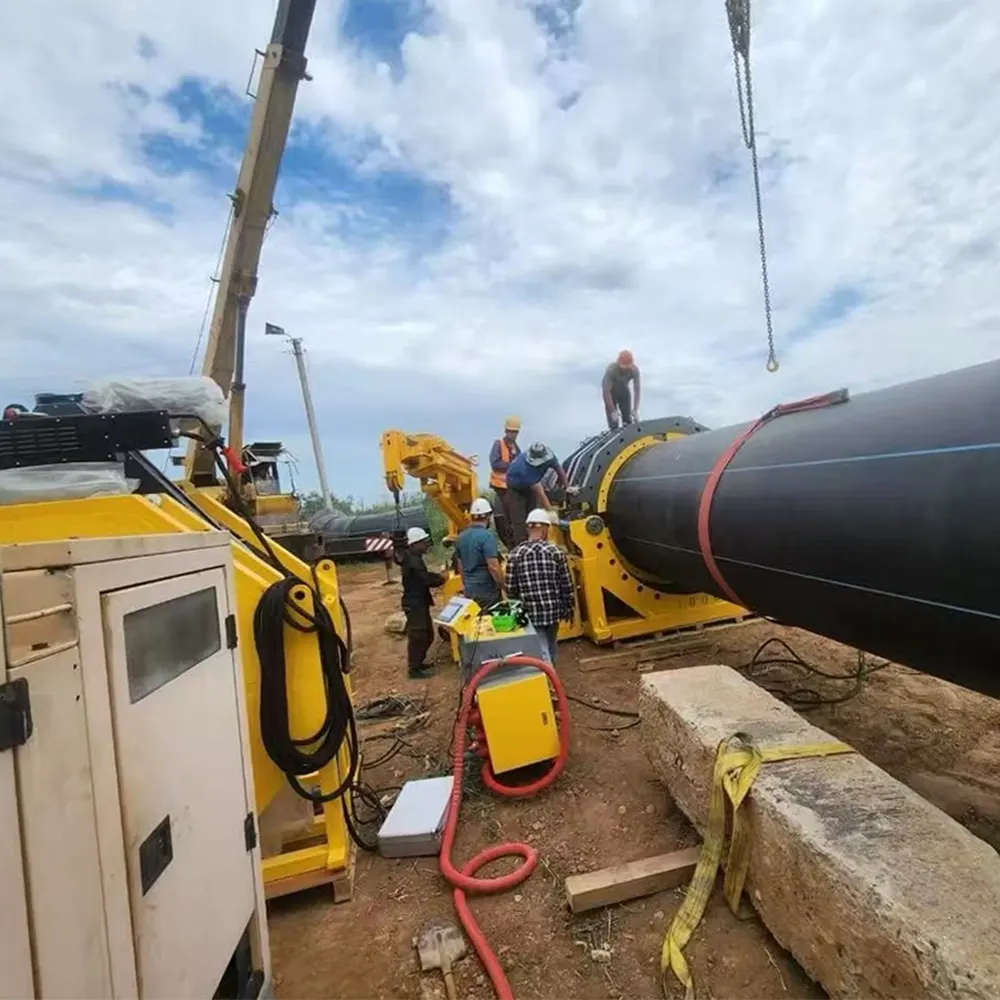
Butt fusion joins two pipe ends by heating them against a plate and then pressing them together under controlled pressure. The result is a single, continuous pipe structure with excellent mechanical strength. This method is commonly used for mainline construction, long pipeline runs, and projects where consistent joint quality is required over many sections.
Electrofusion uses special fittings embedded with resistance wire. When electrical current passes through the fitting, heat is generated internally and melts the pipe surface to form a bond. This method is especially useful in confined spaces, repairs, branch connections, and situations where full pipe movement is difficult.
Both methods are trusted in global pipeline construction, but the cost structure is very different. A project manager evaluating a butt fusion machine will usually focus on efficiency, machine durability, and large-volume output, while electrofusion buyers may pay closer attention to fitting cost and electrical control systems.
Initial Equipment Cost: Which Method Requires Less Investment?
When comparing upfront investment, butt fusion equipment often provides a more economical solution for medium and large projects. A single machine can serve a wide range of pipe sizes and join many sections efficiently. Manufacturers such as JQ-Fusion offer manual, hydraulic, and CNC automatic models that support different project budgets and construction demands.
In contrast, electrofusion equipment may appear smaller and simpler, but the system depends heavily on specialized fittings. The welding unit itself may not be expensive, but the total ecosystem can become costly because each joint requires a dedicated electrofusion fitting. For projects with many connections, the fitting cost can quickly exceed the machine savings.
Practical comparison: If you are building long straight pipelines, butt fusion usually has the advantage in overall equipment efficiency and joint economy. If you are performing branch work or compact-site repairs, electrofusion may be easier to deploy.
Consumables and Per-Joint Cost
The cost difference becomes more visible when looking at consumables. Butt fusion generally requires only the pipe ends, heating plate, clamps, and operator time. Once the machine is available, the per-joint material cost stays relatively low. That is why this method is often preferred in projects with hundreds or thousands of joints.
Electrofusion, however, requires fittings with built-in heating elements. These fittings are accurate and reliable, but they are also more expensive than a simple butt fusion joint. In large-scale construction, the repeated purchase of electrofusion fittings can significantly increase the total project budget.
For this reason, many contractors use electrofusion strategically, rather than for every connection. They reserve it for locations where butt fusion is impractical, such as narrow trenches, complex layouts, or tie-ins where pipe movement is limited.
Labor Cost and Installation Speed
Labor cost is one of the most important parts of the total equation. Butt fusion generally requires trained operators, but once the team is experienced, the process is fast and efficient. A skilled crew can complete multiple joints in a short time, especially when using hydraulic or CNC automatic machines.
Electrofusion is often seen as easier to learn in some situations, because the process is highly guided by the fitting and controller. However, preparation is critical. Pipe surfaces must be cleaned, scraped, aligned, and secured correctly before welding. If the preparation is poor, the joint may fail even if the fusion cycle itself is automatic.
In terms of total labor efficiency, butt fusion often wins on large repetitive projects. Electrofusion can save labor in difficult installations, but its fitting preparation and component cost can reduce the savings.
Important: A low-cost method is only effective when the crew is trained to use it correctly. Poor installation increases rework, waste, and downtime, which quickly destroys the original savings.
Equipment Durability and Maintenance Cost
Durability matters because pipeline equipment must perform in harsh working environments. Butt fusion machines are built for repeated use and are often designed with strong frames, hydraulic systems, and precision alignment features. JQ-Fusion, for example, emphasizes stable performance, long service life, and strict quality control in every machine it produces.
Maintenance for butt fusion machines is usually straightforward: the operator checks the heating plate, hydraulic pressure, clamps, and alignment system. With proper care, these machines can serve for years and support many project cycles. That reduces the cost of ownership over time.
Electrofusion machines may require less mechanical maintenance, but the controller, cables, and accessories must remain in good condition. In addition, the ongoing need for specialized fittings means that the operational cost can remain high even if the machine itself is simple.
Project Scale: When Butt Fusion Becomes the Cheaper Choice
Project scale is one of the biggest factors in deciding cost. For large pipelines, butt fusion often becomes the most economical method because the machine cost is spread across many joints. Once the machine is on site, the cost per connection drops dramatically.
This is especially true in water supply systems, gas distribution networks, mining projects, and industrial pipeline installations where long straight runs are common. In these environments, the speed, repeatability, and strength of butt fusion help contractors control expenses while maintaining high quality.
Electrofusion may be more cost-effective in small jobs or complex repair tasks, but for large-volume construction, its fitting cost can become a major expense driver. As the number of joints increases, the economic gap between the two methods usually widens.
Cost rule of thumb: The larger the pipeline project, the more likely butt fusion will deliver lower total joining cost.
Project Flexibility and Site Conditions
Cost is not only about materials and equipment. Site conditions can change the economics completely. Butt fusion requires enough space for pipe alignment and machine operation. If the site is open and organized, it is usually the most efficient choice. If the site is cramped, uneven, or highly obstructed, productivity may decrease.
Electrofusion performs better in restricted environments because it requires less pipe movement and less machine footprint. For maintenance teams working on existing systems, this flexibility can save time and lower indirect costs. That is why electrofusion is often chosen for branch saddles, tie-ins, and emergency repairs.
The smartest buyers understand that both methods have a place. The goal is not to choose one method for everything, but to use the right method where it makes the most financial sense.
Why JQ-Fusion Solutions Help Reduce Total Cost
JQ-Fusion focuses on reliable HDPE pipe welding solutions designed for global pipeline projects. With more than 20 years of industry experience, the company provides manual, hydraulic, and CNC automatic machines for different pipe diameters and working conditions. That flexibility helps contractors match machine type to project scale, which can reduce unnecessary spending.
The company’s modern manufacturing system, precision machining equipment, and strict inspection process support stable welding performance. Each machine is tested for temperature accuracy, hydraulic stability, and clamp alignment before delivery. This lowers the risk of failure in the field and helps customers avoid costly rework.
JQ-Fusion also offers OEM and ODM customization, which is valuable for distributors and project teams that need specific voltage, color, branding, or machine configuration. By tailoring the machine to the job, buyers can improve efficiency and reduce waste.
In addition, fast delivery and global support help reduce project delays. When equipment arrives on time and technical guidance is available, installation teams can move forward without costly downtime.
How to Choose the Lower-Cost Method for Your Project
If your project involves long straight pipelines, repeated joints, and open construction space, butt fusion is usually the cheaper choice over the full life of the project. It delivers lower per-joint cost, strong mechanical performance, and high installation efficiency.
If your project includes repairs, tight access areas, small branch connections, or limited pipe movement, electrofusion may be the smarter option even if the fitting cost is higher. It can reduce site complexity and make difficult work manageable.
The best cost decision comes from balancing all of the following:
Checklist:
• Pipe diameter and pipeline length
• Number of joints required
• Labor skill and crew size
• Site access and working space
• Equipment purchase and maintenance cost
• Fitting or consumable expenses
Final Verdict: Which Pipe Joining Method Costs Less?
In most large-scale pipeline projects, butt fusion costs less overall. It offers a lower cost per joint, fewer consumable expenses, and strong long-term durability. For contractors building extensive HDPE systems, it is usually the most cost-efficient solution.
Electrofusion can still be the better choice in special conditions where access is limited or where complex connections are required. Its convenience has value, but that value comes with a higher fitting cost in many cases.
So the most accurate answer is this: butt fusion is generally cheaper for large and repetitive work, while electrofusion is more suitable for specialized or space-restricted applications.
FAQs
1. Is butt fusion always cheaper than electrofusion?
No. Butt fusion is usually cheaper for large pipeline projects, but electrofusion can be more practical for repairs, branch connections, and confined spaces.
2. Why do electrofusion projects often cost more?
The fittings themselves are more expensive, and each joint requires a dedicated electrofusion fitting, which raises the total material cost.
3. Does butt fusion require more skilled labor?
Yes, trained operators are important for consistent results. However, once the crew is experienced, butt fusion can be very fast and cost-efficient.
4. Which method is better for long-distance HDPE pipelines?
Butt fusion is usually the better choice for long-distance pipelines because it offers strong joints, high speed, and lower per-joint cost.
5. Can one project use both methods?
Yes. Many projects use butt fusion for mainline construction and electrofusion for special joints, tie-ins, or repairs.



