
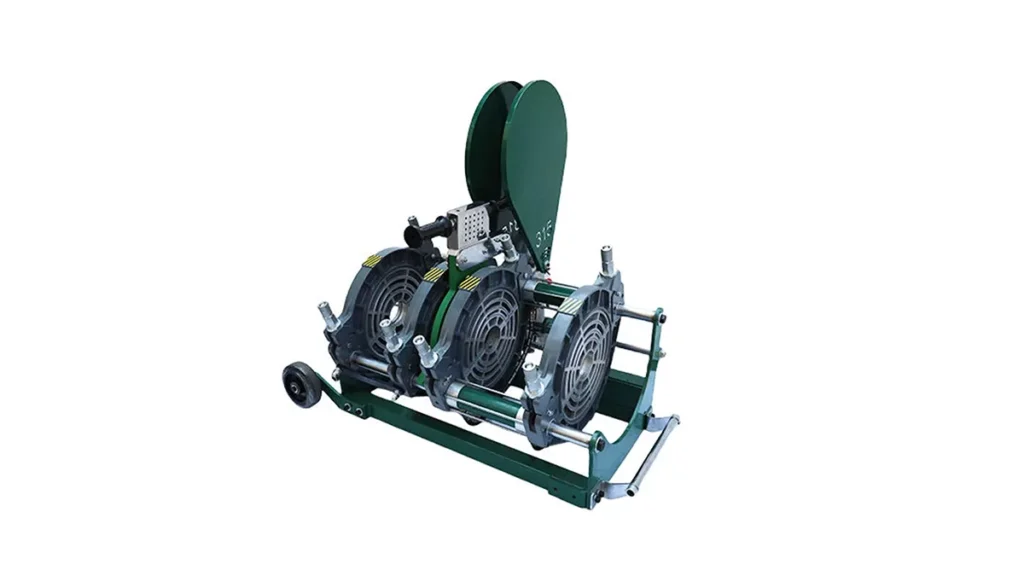
HDPE welding is one of the most important joining methods in modern pipeline construction. Whether you are working on water supply systems, gas distribution networks, mining lines, or industrial piping, a strong and leak-free joint is essential for long-term performance. For beginners, the process may seem technical at first, but the basics are easy to understand once you learn the core ideas behind pipe preparation, heating, alignment, pressure control, and cooling.
In simple terms, HDPE welding connects two polyethylene pipes by heating their ends to a specific temperature and pressing them together under controlled force. When done correctly, the joint becomes as strong as the pipe itself. This is why the method is trusted worldwide for projects that require durability, flexibility, and resistance to corrosion.
For contractors, engineers, and distributors looking for reliable equipment, selecting the right butt fusion machine is just as important as mastering the welding procedure. Good machines help maintain stable temperature, accurate pressure, and proper clamp alignment, which are all critical for high-quality fusion results.
What Is HDPE Welding?
HDPE stands for high-density polyethylene, a material widely used in pipeline systems because it is lightweight, tough, chemically resistant, and easy to transport. HDPE welding refers to the process of joining two HDPE components through heat and pressure so that the materials fuse together at the molecular level. This creates a continuous pipeline with excellent sealing performance.
The most common method is butt fusion welding, which is suitable for straight pipe-to-pipe connections and many large-diameter pipeline applications. Other methods, such as electrofusion welding, are used for fittings, repair points, and special installations. For beginners, understanding the difference between these methods is a good first step before choosing the right tool and workflow.
Key point: HDPE welding is not about “gluing” or mechanical fastening. It is a thermal fusion process that forms a single continuous joint when temperature, pressure, and cooling time are properly controlled.
Why Butt Fusion Is So Popular
Butt fusion has become the preferred joining method for many HDPE pipeline projects because it offers strong, economical, and reliable connections. It is especially useful in long-distance pipe installations where leak resistance and structural integrity are essential. The process is also repeatable, which helps teams maintain consistent quality across large projects.
Advantages of butt fusion welding:
• Strong, leak-resistant joints
• No need for adhesives or solvents
• Suitable for a wide range of pipe diameters
• Long service life with proper operation
• Cost-effective for large pipeline systems
In addition, butt fusion is often favored because it can be performed in the field with portable equipment. This makes it practical for construction sites, remote projects, and environments where prefabricated pipe sections need to be joined quickly and securely.
Basic Equipment You Need
Beginners should first become familiar with the main tools used in the welding process. The basic setup usually includes a fusion machine, heater plate, facing tool, hydraulic or manual drive system, and pipe clamps. Depending on the project size, the machine may be manual, hydraulic, or fully automatic CNC-controlled.
A professional manufacturer like JQ-Fusion focuses on producing equipment for different working conditions and pipe sizes. Their product range includes hydraulic butt fusion welding machine, automatic butt fusion welding machine, electrofusion welding machine, and multi-angle pipe fitting welding machine. This variety allows contractors to choose the right machine for their specific pipeline application.
If you are starting a new project, it is important to evaluate the pipe diameter, voltage requirements, jobsite conditions, and expected production volume before choosing the machine model. A well-matched machine can improve efficiency and reduce welding errors.
Important: A good machine should maintain stable heating, accurate pressure, and proper pipe alignment. These three factors directly affect joint quality.
Step-by-Step Basics of HDPE Butt Fusion
1. Prepare the Pipe Ends
The first step is cleaning and preparing the pipe ends. Remove dirt, dust, moisture, and any surface contamination. The pipe ends should be cut evenly and placed securely in the clamps. Accurate preparation is essential because uneven or dirty surfaces can weaken the final joint.
2. Align the Pipes
Once the pipe ends are ready, they must be aligned perfectly. Misalignment can cause stress concentration and poor sealing. The clamps help hold the pipes in place while the operator checks that both ends are centered and level before facing begins.
3. Face the Pipe Ends
Facing means trimming the pipe ends to create smooth, parallel surfaces. This step removes oxidation and minor surface irregularities. A clean, even face is necessary for achieving full contact during fusion. If the surfaces are not properly faced, the heater cannot transfer heat evenly.
4. Heat the Surfaces
The heater plate is placed between the pipe ends to raise the material temperature to the correct fusion range. The pipe ends are pressed against the heater with controlled force until a uniform melt bead forms. This stage requires precision, because overheating or underheating can affect the weld strength.
5. Join Under Pressure
After heating, the heater is removed and the pipe ends are brought together quickly under the correct joining pressure. The melted surfaces merge into one joint. The pressure must be enough to create a solid bond, but not so high that it causes distortion or excessive bead formation.
6. Cool Naturally
Cooling is just as important as heating. The joint should be left undisturbed until it reaches sufficient strength. Moving the pipe too early can damage the fusion zone. Patience during cooling helps ensure the finished weld remains strong and stable in service.
Common Mistakes Beginners Should Avoid
Many beginner mistakes are easy to prevent once you know what to watch for. Some operators rush the process, skip cleaning, or use the wrong pressure settings. Others fail to check pipe compatibility or ignore calibration of the equipment. These errors can lead to weak joints, leaks, or project delays.
Avoid these mistakes:
• Welding on dirty or wet pipe surfaces
• Using incorrect heating temperature
• Applying uneven pressure
• Moving the joint before it cools
• Ignoring machine maintenance and inspection
A disciplined workflow and regular machine checks will prevent most of these problems. That is why many professional manufacturers emphasize quality control, pressure stability, and clamp alignment inspection before equipment leaves the factory.
How to Choose the Right Welding Machine
Choosing the right equipment depends on your project requirements. For small jobs and limited budgets, manual machines may be enough. For larger diameter pipes or higher productivity, hydraulic or CNC automatic systems are usually better. The right choice can improve consistency and reduce operator fatigue.
Manufacturers with strong engineering and production capability can also provide OEM and ODM customization. This is useful for distributors and contractors who need specific voltage, color, branding, design, or functional upgrades for different markets. Reliable supply, fast shipping, and technical support are also important when projects are time-sensitive.
JQ-Fusion is known for more than 20 years of industry experience and offers solutions for global pipeline applications. Its machines are used in water supply, gas distribution, mining, and industrial installations, supported by quality testing, certified compliance, and professional technical guidance. For buyers, this kind of support can make a significant difference in project success.
Tip: If your project includes many pipe sizes or changing site conditions, choose a machine with flexible configuration and dependable after-sales support.
Quality Control and Safety Considerations
Quality control is not optional in HDPE welding. Every successful weld depends on predictable machine performance and careful operator discipline. Check temperature accuracy, hydraulic pressure stability, and clamp alignment before starting work. Also make sure the pipe materials are compatible and meet project specifications.
Safety is equally important. Operators should wear appropriate protective gear and work in a clean, organized area. Heated components can cause burns, and heavy pipes can create lifting hazards. A safe working environment helps reduce mistakes and keeps the welding process efficient.
Why Beginners Should Practice With Guidance
Although HDPE welding is straightforward in principle, consistent results come from practice and training. Beginners should learn from experienced technicians whenever possible. Understanding machine settings, timing, and visual inspection techniques can significantly improve weld quality over time.
Technical support from the equipment supplier can also help shorten the learning curve. Good manufacturers provide installation guidance, usage training, and after-sales service so that customers can operate the machine confidently and efficiently in real projects.
Conclusion
The basics of HDPE welding are simple: prepare the pipe correctly, align it carefully, heat it properly, join it with the right pressure, and allow enough cooling time. When these steps are followed consistently, the result is a strong, durable, and leak-resistant connection that supports long-term pipeline reliability.
For beginners, the key is not only learning the process but also using dependable equipment and maintaining strict attention to detail. With the right training, quality machine selection, and proper site practice, HDPE welding becomes a highly efficient method for modern pipeline construction.
Frequently Asked Questions
What is the main purpose of HDPE welding?
It is used to join HDPE pipes and fittings into a single continuous system with strong, leak-resistant performance.
Is butt fusion suitable for beginners?
Yes, as long as the operator follows the correct steps, uses proper equipment, and receives basic training.
How do I know if the weld is good?
A good weld has proper alignment, uniform bead formation, and no visible contamination or distortion.
What type of machine should I choose?
Choose based on pipe diameter, project scale, automation needs, and your required power supply or jobsite conditions.
Why is machine quality so important?
Because stable temperature, accurate pressure, and proper alignment are essential for producing reliable HDPE fusion joints.



