
When contractors, pipeline installers, and career welders search for the best ways to build a long-term future in the trade, one topic always comes up: pipe welding certification. A strong certification can open doors to better jobs, higher pay, and more demanding industrial projects. It can also prove that a welder has the skill to join pipe safely, accurately, and consistently under real-world conditions. For companies working on water supply systems, gas networks, mining lines, and industrial piping, certified welders are often a must.
Pipe welding certification programs are designed to test not only manual ability, but also knowledge of materials, welding positions, safety rules, quality standards, and inspection requirements. The best programs do more than issue a paper credential. They prepare welders for actual jobsite conditions, where pressure, temperature, alignment, and durability matter every day.
Key idea: the right certification program should match the type of pipe work you want to do, whether that is structural piping, industrial pipelines, or HDPE fusion projects.
What Pipe Welding Certification Really Means
Pipe welding certification is a formal verification that a welder can complete welds to a defined standard. In most cases, the welder must pass a practical test under controlled conditions. The test may include specific pipe diameters, wall thicknesses, materials, positions, and welding processes. Some certifications are issued by private training schools, while others follow recognized industry codes and testing standards.
The most valuable certifications usually focus on real performance. They confirm that the welder can produce sound welds that pass visual inspection, bend testing, radiographic testing, or other acceptance criteria. Employers trust these certifications because they reduce risk and help ensure that piping systems can operate safely for years.
Best Pipe Welding Certification Programs and What They Offer
There is no single “best” program for every welder. The best choice depends on your career path, the materials you work with, and the industries you want to enter. However, several categories stand out as especially valuable.
★ Industry-recognized programs are usually the most respected because they align with common jobsite standards and employer expectations.
1. AWS Pipe Welding Certifications
The American Welding Society offers widely recognized credentials that are respected across many industries. These programs often assess a welder’s ability to work with pipe in different positions and with different welding processes. For welders seeking broad employment opportunities in fabrication shops, industrial maintenance, or field construction, AWS-based certification can be a strong foundation.
One major advantage is that AWS-aligned testing is familiar to many employers. Another advantage is the emphasis on quality, process control, and repeatability. If you want to work on projects where standards matter, this type of certification can help demonstrate professional credibility.
2. ASME-Style Qualification Programs
ASME-related qualification pathways are often associated with pressure piping, power plants, and other high-responsibility environments. These programs can be demanding because they are built around performance under strict requirements. Welds may need to meet code-based acceptance levels, making them especially useful for welders who want to move into advanced industrial work.
These programs are ideal for experienced welders who already have a strong foundation and want to prove they can handle more technical pipe applications. They are also useful for employers who need welders capable of meeting regulated project specifications.
3. NCCER and Trade-Based Qualifications
NCCER-style programs are popular in the construction and industrial trades because they combine classroom learning with hands-on skill development. They often cover blueprint reading, safety, welding theory, and practical pipe work. For newer welders, this can be a clear pathway from entry-level training to job-ready skill.
These programs are especially helpful for workers who want a structured learning process. They also make it easier for employers to identify welders who have been trained in standardized methods.
4. Specialized HDPE Fusion and Pipeline Training
Not all pipe joining is traditional metal welding. In modern pipeline projects, especially water, gas, and mining systems, HDPE fusion plays a major role. That is why specialized training on fusion methods is increasingly valuable. A welder or technician who understands joining temperature, alignment, pressure control, and cooling time can help prevent system failures.
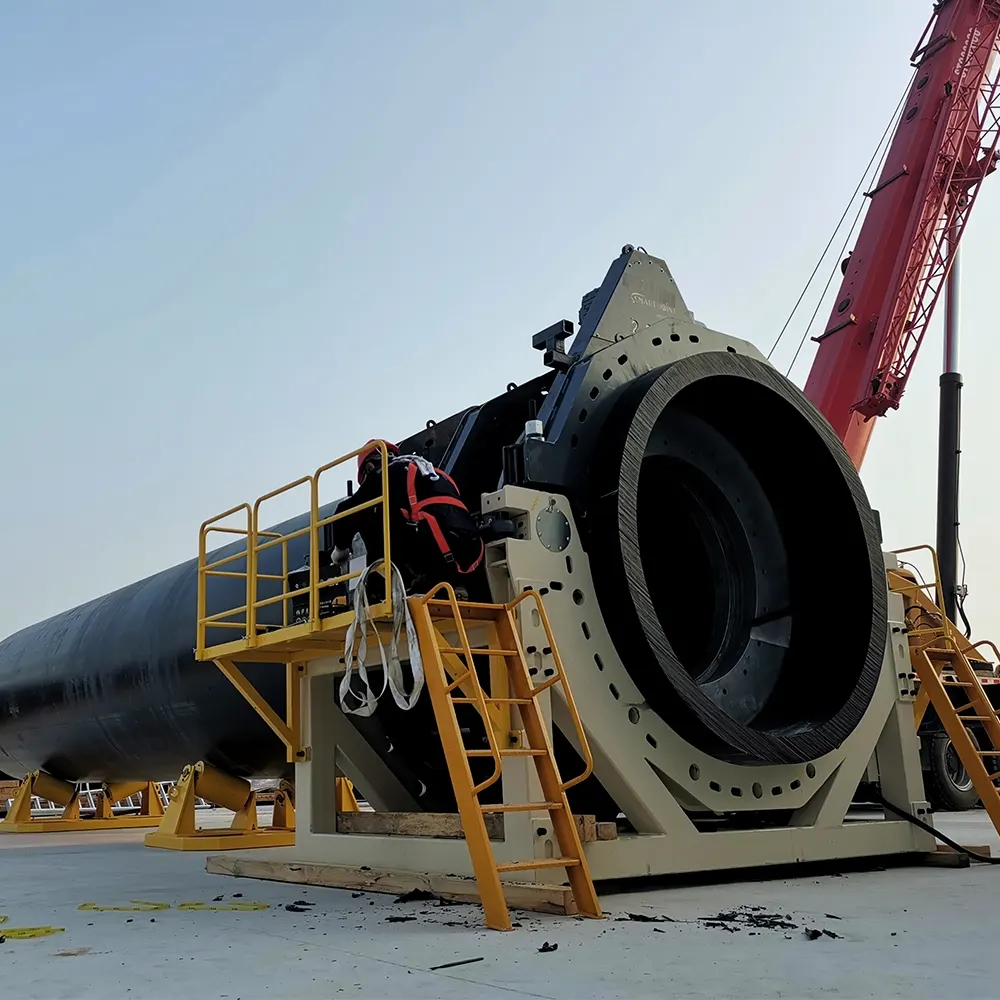
For companies working on thermoplastic piping, training that includes fusion procedures is just as important as metal pipe welding. Many contractors also look for equipment knowledge, because the quality of the machine directly affects joint reliability. In this area, resources related to a butt fusion machine can be especially useful for learning how machine setup influences weld quality.
How These Certification Programs Work
Although each program has its own structure, most follow a similar path. First, the candidate studies the welding process, safety rules, and relevant standards. Then, they complete hands-on practice in a shop or training facility. After preparation, the welder takes a practical test under specified conditions.
During testing, inspectors or evaluators check key factors such as bead appearance, alignment, penetration, fusion quality, and defect control. In some cases, welds are cut and tested mechanically. In others, they are examined using non-destructive testing methods. If the candidate passes, they receive certification for the defined process and conditions.
Important: certification is usually limited to the exact variables tested. A welder certified on one pipe size or position may need additional testing for another application.
What Makes a Certification Program Worth It
When evaluating a program, look at industry recognition, test realism, instructor quality, and the usefulness of the credential in the job market. A strong program should mirror actual workplace demands, not just classroom theory. The best certifications are practical, respected by employers, and relevant to the type of work you want to do.
Another important factor is renewal and continuity. Some certifications require periodic retesting or updated qualification records. That may seem inconvenient, but it helps keep skills current and proves that the welder still meets performance expectations. In industries where safety matters, this is not optional — it is a professional standard.
Skill Areas Tested in Pipe Welding Certification
Most programs focus on a combination of technical and practical ability. Common assessment areas include:
- Material understanding — knowing how different metals or thermoplastics behave during joining.
- Joint preparation — beveling, cleaning, alignment, and fit-up accuracy.
- Welding position control — completing welds in horizontal, vertical, overhead, or fixed pipe positions.
- Heat management — controlling penetration and distortion.
- Defect prevention — avoiding porosity, undercut, lack of fusion, and cracking.
- Safety discipline — following PPE, ventilation, and site procedures.
Why Employers Value Certified Welders
Employers value certified welders because certification reduces uncertainty. A certified worker has already proven the ability to perform under standard conditions. That means less risk of rework, fewer inspection failures, and more confidence when working on critical systems. For contractors, this can translate into better productivity and stronger client trust.
Certified welders also tend to adapt more quickly to new projects. They understand testing expectations, documentation, and quality control. This can be especially important on large infrastructure jobs where multiple teams must work under the same standards.
For companies that use advanced fusion equipment on pipeline jobs, pairing trained personnel with reliable tools is just as important as certification. Manufacturers with long-term experience, such as JQ-Fusion, support these needs by providing stable welding solutions for HDPE projects and industrial pipe installation environments.
How to Choose the Right Program for Your Career
If you are just starting out, choose a program that builds a broad foundation and includes plenty of supervised practice. If you already have field experience, choose a certification that aligns with your target industry, such as pressure piping, construction, or fusion-based pipeline work. If your goal is to work internationally, look for credentials that are widely recognized and easy for employers to verify.
It is also smart to consider the type of pipe work in your region. Water, gas, mining, and industrial systems often have different expectations. The more closely a program matches your real work environment, the more valuable it will be.
Pro tip: choose a program that includes both testing and feedback. Knowing why a weld passed or failed is often more valuable than the certificate itself.
The Role of Equipment and Training Together
Good certification programs do not replace good equipment. In real pipeline work, machine stability, pressure control, clamp alignment, and heat consistency all affect joint quality. That is why training should include an understanding of the tools being used, not just the manual motion of joining materials.
For HDPE and fusion-based systems, machine setup, calibration, and process control are critical. Even a skilled technician can struggle if the equipment is unreliable or poorly maintained. The best programs and projects therefore combine skilled people with dependable machines, clear procedures, and strong quality control.
Many global contractors also prefer suppliers who can provide customization, fast shipping, and technical support. These factors reduce downtime and help maintain project schedules, especially when pipeline work is spread across multiple regions.
Common Mistakes Candidates Make
One common mistake is choosing a certification only because it looks impressive, without checking whether it fits the job market. Another is assuming that a single certificate covers every pipe application. In reality, testing is usually specific to process, material, and position. Some welders also underestimate preparation, skipping practice time or ignoring joint fit-up discipline.
Another issue is focusing only on speed. In pipe welding, precision matters more than rushing. A carefully prepared and properly executed weld is far more valuable than a fast weld that fails inspection. Programs that teach patience, consistency, and inspection awareness often create better long-term welders.
Final Thoughts on the Best Programs
The best pipe welding certification programs are the ones that combine recognized standards, hands-on testing, and job-relevant training. Whether you choose AWS, ASME-style qualification, trade-based training, or specialized fusion instruction, the goal is the same: prove that you can produce reliable, high-quality pipe joints under real conditions.
For welders, certification is a career investment. For employers, it is a quality safeguard. And for pipeline projects, it is one of the clearest ways to improve safety, consistency, and long-term performance. If your work involves HDPE piping or fusion systems, pairing proper training with dependable tools and experienced suppliers can make an even bigger difference.
FAQ
Q1: How long does pipe welding certification take?
It depends on your experience level and the program format. Some candidates need only a few days of preparation and testing, while beginners may require weeks or months of training.
Q2: Is one certification enough for every pipe job?
No. Certifications are usually limited to specific materials, positions, and processes. You may need additional qualifications for different project requirements.
Q3: Which certification is best for industrial work?
AWS and ASME-style pathways are often valued for industrial and pressure-related applications, but the best option depends on the exact job and employer expectations.
Q4: Do HDPE fusion jobs require the same certification as metal pipe welding?
Not always. HDPE fusion often needs specialized training and qualification based on fusion methods, machine operation, and project standards.
Q5: Why do employers prefer certified welders?
Because certification helps prove skill, reduces rework risk, supports safety, and improves confidence in the quality of the finished pipeline system.



