
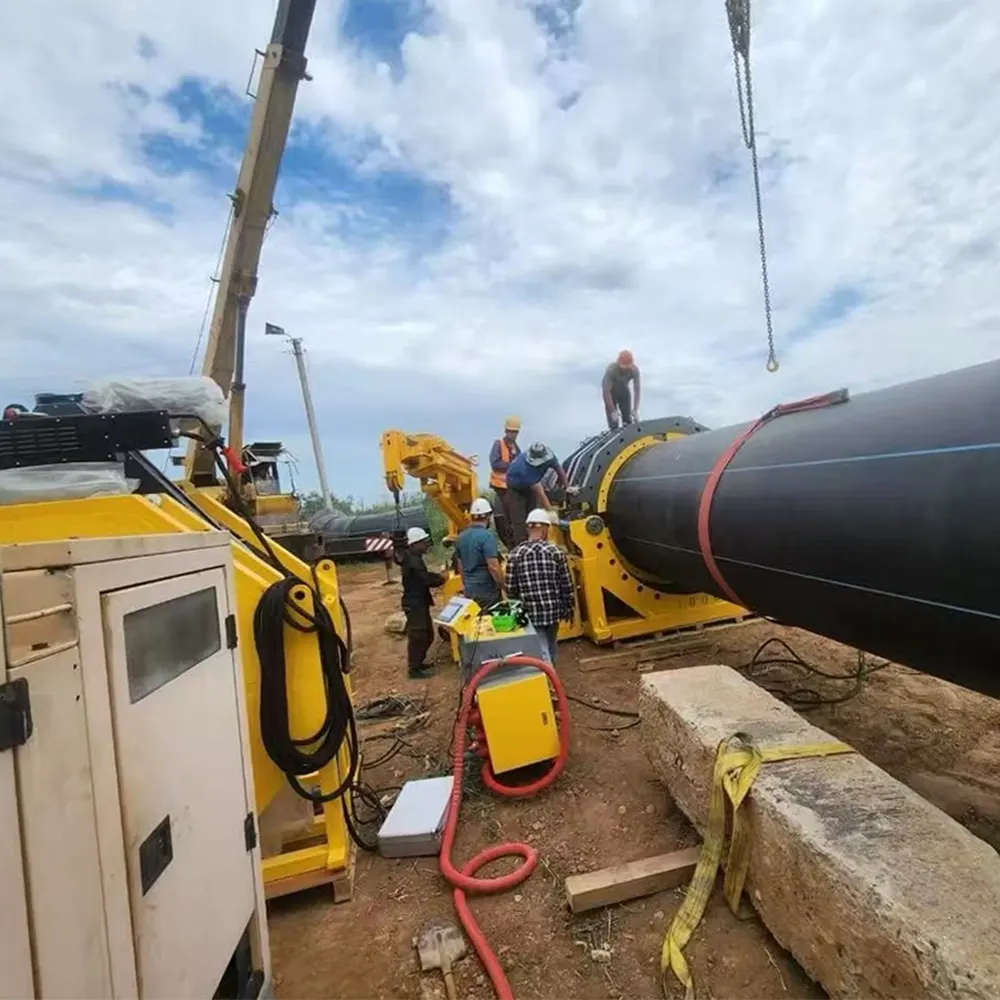
Refurbished HDPE welding machines have become a practical option for contractors, distributors, and pipeline teams who want dependable performance without the cost of brand-new equipment. In many projects, especially those with tight budgets or urgent delivery timelines, a well-refurbished machine can provide a smart balance of value, functionality, and availability. Still, like any industrial purchase, choosing refurbished equipment requires careful evaluation. The real question is not only whether the machine works, but whether it can deliver stable fusion quality, safe operation, and long-term reliability in real-world conditions.
For buyers working in water supply, gas distribution, mining, or industrial pipeline installation, the decision often comes down to risk versus reward. A refurbished unit may offer major savings, but only if the refurbishing process is thorough and the machine is supported by proper testing, replacement parts, and technical service. That is why understanding both the advantages and disadvantages is essential before making a purchase.
What Is a Refurbished HDPE Welding Machine?
A refurbished HDPE welding machine is a used fusion machine that has been inspected, repaired, cleaned, tested, and restored to working condition. Depending on the supplier, refurbishment may include replacing worn hydraulic parts, calibrating temperature systems, adjusting clamp alignment, updating electrical components, and repainting the frame. Some machines are lightly refurbished, while others are rebuilt in a more comprehensive way. The quality of the refurbishment process determines whether the machine behaves like a reliable work tool or a costly shortcut.
When sourced from a professional manufacturer or experienced supplier, a refurbished unit can still meet demanding project needs. For example, companies with decades of experience in HDPE pipe welding equipment, such as JQ-Fusion, often focus on stable welding performance, strict testing, and technical support, which are all critical for buyers considering a used or refurbished solution.
The Main Advantages of Refurbished HDPE Welding Machines
1. Lower Purchase Cost
Cost savings are the most obvious benefit. A refurbished machine typically costs significantly less than a new one, making it easier for smaller contractors, startup distributors, and project-based companies to access essential welding equipment. This lower entry price can free up budget for consumables, site transport, training, or other project-critical expenses. In some cases, the savings are large enough to allow a buyer to choose a higher-capacity machine than they could afford if purchasing new.
Best for: companies that need reliable equipment but want to control upfront investment.
2. Faster Availability
Refurbished machines are often available sooner than newly manufactured units, especially during peak demand periods. If a project timeline is tight, buying refurbished may help avoid long lead times. This is especially useful for urgent pipeline repairs, seasonal construction windows, or temporary project expansion. In industries where downtime is expensive, fast delivery can be just as valuable as a lower price.
3. Reduced Depreciation Risk
New equipment often loses value quickly after purchase. Refurbished machines, however, have already gone through the steepest part of depreciation. That makes them more attractive for buyers who may later resell, upgrade, or rotate equipment between projects. For distributors, this can also improve inventory flexibility and reduce capital pressure.
4. Practical for Short-Term or Secondary Use
A refurbished machine can be an excellent fit for secondary jobs, backup use, training programs, and smaller-scale installations. Many teams do not need the absolute newest model for every task. If the machine is properly restored and tested, it can perform well in less demanding work environments while helping the buyer preserve budget for core operations.
✅ Tip: Ask for test records, calibration details, and replacement-part documentation before purchasing any refurbished machine.
5. Environmentally Responsible Choice
Choosing refurbished equipment supports reuse and reduces waste. Instead of discarding a machine that still has useful life left, refurbishment extends the product lifecycle and lowers the environmental footprint associated with manufacturing new industrial equipment. For companies with sustainability goals, this can be a meaningful advantage.
The Disadvantages of Refurbished HDPE Welding Machines
1. Unknown Usage History
One of the biggest concerns is the machine’s previous working life. Even if the exterior looks clean and the unit passes basic testing, hidden wear may remain in hydraulic components, heating elements, electrical systems, or clamp mechanisms. A machine that has been heavily used in harsh conditions may perform inconsistently later, even after refurbishment. Without a transparent service history, the buyer must rely heavily on the credibility of the supplier.
2. Limited Warranty or Support
Refurbished products sometimes come with shorter warranty coverage than new models. In some cases, after-sales support is limited or not clearly defined. That can create risk for buyers who depend on the machine daily. If a critical part fails on-site, even a small issue can lead to downtime and extra labor costs. Buyers should confirm exactly what service support is included before placing an order.
3. Variable Refurbishment Quality
Not all refurbishment work is equal. Some suppliers replace only visible parts, while others perform deep mechanical and electrical restoration. A poorly refurbished machine may have unstable temperature control, weak pressure consistency, or misaligned clamping, all of which can affect weld quality. Since HDPE fusion depends on precision, even small defects can become serious production problems.
Important: Stable temperature, accurate hydraulic pressure, and correct clamp alignment are not optional in HDPE welding—they are essential.
4. Shorter Remaining Service Life
Even a well-refurbished machine usually has less remaining lifespan than a brand-new one. Some components may already be partially worn, which means the machine may need repairs sooner than a fresh unit. For buyers planning long-term continuous use, this should be considered carefully. A lower upfront price can be offset by more frequent maintenance over time.
5. Technology May Be Outdated
Older machines may lack the efficiency, automation, or control features found in newer models. This may not matter for every project, but it can affect productivity, operator convenience, and energy efficiency. For teams looking for CNC automation, advanced data logging, or improved safety functions, a refurbished older model may not be the best solution.
How to Judge Whether a Refurbished Machine Is Worth It
The value of a refurbished machine depends on the supplier’s process, the machine’s original quality, and the buyer’s application. Before making a decision, it helps to evaluate a few key points. First, inspect the mechanical condition, especially the clamp system, heating plate, and hydraulic unit. Second, ask for testing evidence showing temperature stability and pressure performance. Third, confirm whether the machine has been recalibrated to meet real welding requirements. Finally, check whether spare parts and technical support are available.
Buying checklist: service history, replacement parts, warranty terms, test results, and after-sales support.
For buyers who want dependable pipeline solutions, it can also be useful to compare refurbished options with new equipment from a trusted manufacturer. A professional supplier of butt fusion equipment, including manual, hydraulic, and CNC automatic models, can help buyers understand whether refurbished equipment is suitable for the pipe diameter, job frequency, and operating environment. In many cases, the right choice is not simply the cheapest one, but the one that offers the best performance-to-risk ratio.
When quality control is strong, refurbished machines can still support water supply systems, gas distribution networks, and industrial pipeline installation with solid results. However, when refurbishment is rushed or poorly documented, the machine may create more problems than it solves. That is why the buyer should focus on the condition of critical systems rather than surface appearance alone.
Who Should Consider a Refurbished HDPE Welding Machine?
Refurbished machines are often a strong fit for contractors with limited budgets, businesses entering a new market, and teams needing a backup welding unit. They are also suitable for distributors looking to offer lower-cost options to customers who do not require the latest model. If the machine is from a trusted source and the application is not highly specialized, refurbished equipment can be a very sensible purchase.
On the other hand, buyers with high-volume production needs, strict compliance requirements, or remote field operations may prefer new equipment for greater predictability and support. In these cases, the security of longer warranty coverage and modern technology may outweigh the savings of refurbished purchase.
The Bottom Line
Refurbished HDPE welding machines offer a clear set of advantages: lower cost, faster availability, reduced depreciation, and practical value for many project types. At the same time, they carry real drawbacks such as uncertain history, limited warranty, possible wear, and uneven refurbishment quality. The best choice depends on how thoroughly the machine has been restored and how demanding the application will be.
If the supplier is transparent, the testing is rigorous, and the support is reliable, a refurbished machine can be a strong investment. If not, the short-term savings may lead to long-term operating problems. Buyers should think beyond price alone and focus on reliability, service support, and the machine’s ability to deliver consistent fusion results in the field.
Frequently Asked Questions
Is a refurbished HDPE welding machine reliable?
It can be reliable if it has been professionally refurbished, tested, and supported by a reputable supplier. Reliability depends more on refurbishment quality than on the fact that the machine is used.
What should I check before buying one?
Check the machine’s service history, hydraulic condition, heating accuracy, clamp alignment, warranty terms, and availability of spare parts. Ask for test results whenever possible.
Are refurbished machines suitable for critical pipeline projects?
They can be, but only if the refurbishment is thorough and the machine is proven to perform consistently. For highly critical or large-scale projects, many buyers still prefer new equipment for added confidence.
Do refurbished machines come with technical support?
Some do, but support varies by supplier. Always confirm what kind of after-sales service, training, and spare-parts assistance is included before purchase.
Is buying refurbished better than buying new?
It depends on your budget, project requirements, and risk tolerance. Refurbished is better when savings and fast delivery matter most; new is better when long-term performance and warranty coverage are the top priorities.



