
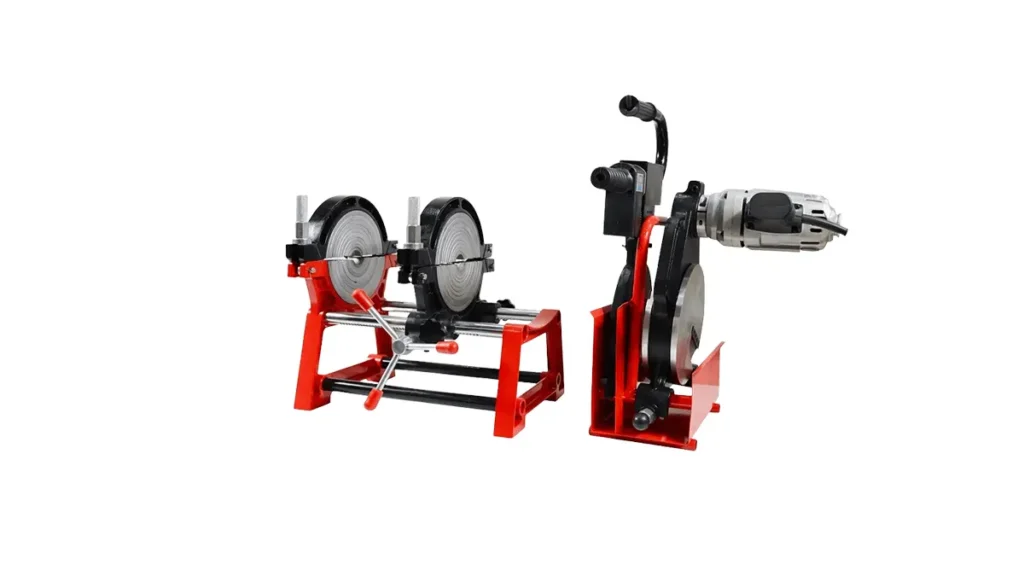
In offshore pipeline projects, welding is more than a joining process; it is a critical engineering step that determines long-term reliability, operational safety, and cost efficiency. When HDPE pipes are selected for marine environments, the quality of every joint becomes especially important because offshore conditions expose pipelines to pressure changes, vibration, saltwater corrosion, and difficult installation logistics. This is where butt fusion machine technology plays a major role by creating strong, seamless, and highly durable connections for HDPE pipeline systems.
HDPE, or high-density polyethylene, is widely used in offshore and nearshore pipeline applications because of its flexibility, chemical resistance, and long service life. Unlike metal piping systems, HDPE does not rust, and it can better tolerate movement caused by waves, seabed shifts, and temperature variation. However, these benefits can only be fully realized when the welding method is precise and dependable. HDPE welding, especially butt fusion welding, ensures that pipe sections become a continuous line with uniform strength throughout the project.
Offshore pipeline projects are often associated with water intake lines, seawater discharge systems, floating platform connections, aquaculture infrastructure, and auxiliary marine utility pipelines. In all of these applications, the pipeline must remain leak-free and structurally stable over many years. A poor weld can create weak points that may fail under pressure or during installation. For this reason, contractors and engineering teams pay close attention to welding equipment, operator skill, and process control before starting field work.
Why HDPE Welding Matters in Offshore Construction
Offshore environments place unique demands on pipeline systems. Unlike land-based installations, marine projects must handle movement, moisture, limited workspace, and difficult transport conditions. HDPE welding provides a practical answer because it allows prefabricated pipe sections to be joined into long, reliable strings before they are deployed at sea. This reduces the number of connection points exposed to the environment and improves installation efficiency.
One of the main reasons HDPE welding is used offshore is its ability to create a homogeneous joint. During butt fusion, the pipe ends are heated to a controlled temperature and pressed together, forming a molecular bond. The result is a weld zone that can perform nearly as well as the pipe itself when the process is completed correctly. This is a major advantage in offshore work, where maintenance access may be limited and repair costs can be extremely high.
Key advantage: HDPE fusion joints can help reduce corrosion-related failures, which is especially valuable in saltwater exposure and submerged installations.
Another important factor is flexibility. Offshore pipelines are often exposed to dynamic loads, and HDPE can absorb movement better than rigid materials. When the welding is done properly, the fused pipeline can support these movements without separating at the joints. This makes HDPE welding especially suitable for applications where floating structures, tidal variation, or seabed instability are concerns.
How Butt Fusion Welding Is Applied in Offshore Projects
Butt fusion is the most common welding method for HDPE pipeline construction. It is widely used because it produces strong and consistent joints while remaining relatively simple to inspect and control. In offshore projects, the process usually begins onshore or at a staging area where pipe sections are aligned, cleaned, heated, and fused under controlled conditions before being transported to the installation site.
The procedure starts by clamping the pipe ends into a fusion machine. The surfaces are then faced to ensure they are clean, flat, and perfectly aligned. A heating plate raises the pipe ends to the correct fusion temperature. Once the material reaches the required condition, the heater is removed and the pipe ends are pressed together with regulated force. After cooling, the weld solidifies into a strong and continuous joint.
This method is particularly useful for long pipeline strings because it reduces the number of separate mechanical connections. In offshore construction, fewer connection points mean less risk of leakage and less time spent on difficult subsea installation tasks. It also supports prefabrication, which is a major advantage when weather windows are limited and project schedules are tight.
⚙ Practical value: Butt fusion welding helps project teams build longer pipe sections before offshore deployment, improving productivity and reducing marine installation complexity.
For contractors working on marine projects, machine stability is essential. A fusion machine must maintain accurate temperature, steady hydraulic pressure, and proper clamp alignment. If any of these elements are inconsistent, the weld quality may be compromised. This is why reliable equipment from experienced manufacturers is preferred in demanding offshore applications.
Advantages of HDPE Welding for Offshore Pipeline Systems
HDPE welding offers several technical and operational advantages that make it suitable for offshore pipelines. The first is corrosion resistance. Since HDPE does not react with seawater in the same way that metal pipes do, it helps reduce maintenance requirements over the service life of the project. This is particularly useful in marine environments where corrosion can cause serious operational problems.
The second advantage is leak prevention. Fusion welding eliminates the need for many mechanical joints, gaskets, or threaded connections that can loosen over time. A properly executed fusion weld provides a sealed connection that supports long-term fluid transport without frequent intervention. In offshore systems, where access may require special vessels or diving operations, this reliability is highly valuable.
Third, HDPE welding supports cost efficiency. Although specialized welding equipment is required, the long-term savings can be significant because the pipeline system typically needs less maintenance and fewer repairs. The ease of handling HDPE pipes also helps reduce installation time. Compared with heavier materials, HDPE can lower lifting and transportation demands, which is useful in offshore logistics.
Fourth, HDPE pipelines can better tolerate movement. Offshore seabeds are not always stable, and floating installations can create additional mechanical stress. A well-welded HDPE system can adapt to these conditions better than more rigid piping materials. That flexibility helps protect the pipeline from stress concentration at joints.
Performance Factors That Influence Weld Quality
The success of HDPE welding in offshore pipeline projects depends on several key factors. Temperature control is one of the most important. If the heating plate is too hot or too cold, the fusion result can be weak. Accurate temperature management ensures that the pipe ends soften correctly and form a uniform bond.
Clamp alignment is equally important. Pipes must be positioned precisely to avoid uneven pressure distribution. Misalignment can create stress points that weaken the finished weld. This is why well-maintained machines with strong alignment systems are essential for offshore work.
Hydraulic pressure also plays a critical role. During the fusion cycle, pressure must be applied consistently to create the correct bead formation and molecular bonding. If pressure is unstable, the joint may not achieve full strength. Experienced operators typically rely on equipment with stable hydraulic performance and easy-to-read controls.
Inspection tip: A properly formed fusion bead is an important visual indicator, but it should be paired with process records and quality testing for offshore applications.
Surface preparation should never be overlooked. Moisture, dust, oil, or debris can interfere with the fusion process. Because offshore work often involves changing weather and humid conditions, teams must be disciplined about cleaning and preparation before welding begins. Even when the machine is advanced, the process depends heavily on operator attention and procedure compliance.
Why Equipment Quality Is Important
In offshore pipeline construction, the welding machine is not just a tool; it is a core part of project reliability. A professional butt fusion system needs to perform consistently over long working hours and in different site conditions. Machines designed for industrial use typically include stable heating systems, durable clamping structures, and accurate control interfaces that support repeatable results.
JQ-Fusion, as a professional manufacturer specializing in HDPE pipe welding machines, provides solutions that are suitable for a wide range of pipeline projects. With over 20 years of industry experience, the company focuses on manual, hydraulic, and CNC automatic butt fusion welding machines. This range is helpful for contractors because offshore and marine projects may require different levels of automation, pipe diameters, and production capacity.
Quality control is another major reason why equipment choice matters. Machines used for offshore projects should undergo thorough testing for temperature accuracy, hydraulic pressure stability, and clamp alignment. When a machine is built and inspected with these priorities, the result is better welding consistency in real-world conditions.
Factory strength matters: advanced manufacturing technology, strict quality control, and fast global support can significantly improve offshore project execution.
Project Planning and Offshore Welding Strategy
A successful offshore pipeline project begins long before installation. Engineering teams must consider pipe diameter, wall thickness, transport route, environmental exposure, and deployment method. Welding strategy should be planned alongside the overall marine construction schedule so that prefabrication, testing, and shipment all happen in the correct sequence.
For many projects, a combination of onshore welding and offshore placement is the most efficient approach. Long pipe strings can be fused at a controlled location, inspected carefully, and then moved to the installation area. This reduces the amount of welding that must be done in difficult offshore conditions and improves overall safety.
When selecting equipment, project managers often prefer machines that can be customized for voltage, color, branding, and specific operational requirements. OEM and ODM flexibility is especially useful for contractors and distributors serving different international markets. It also helps project teams match the machine setup to local power standards and jobsite preferences.
For reference and product selection, project teams can review the following resources: butt fusion machine, HDPE welding solutions, fusion welding equipment.
Common Offshore Applications for HDPE Fusion
HDPE fusion welding is used in several offshore and marine-related scenarios. One common application is seawater intake and discharge pipelines, where corrosion resistance and structural reliability are essential. Another is aquaculture infrastructure, where HDPE is favored for its durability and ease of installation.
It is also used in temporary marine utility systems, floating platform support lines, and remote water transport projects near coastal zones. In these cases, the ability to produce long, dependable fused sections makes project delivery easier and more predictable. Many contractors also value the repeatability of butt fusion because it simplifies quality assurance across large pipeline networks.
Another benefit is versatility. The same welding principles can be adapted across different pipe sizes and project types. This is useful for companies that serve multiple industries, including water supply, gas distribution, mining, and industrial pipeline installation. The underlying value remains the same: a stable, strong, and efficient fused joint.
How JQ-Fusion Supports Global Pipeline Projects
JQ-Fusion is committed to delivering high-quality, durable, and customizable welding equipment that meets the diverse needs of global contractors and distributors. Its product range includes hydraulic butt fusion welding machines, automatic butt fusion welding machines, electrofusion welding machines, and multi-angle pipe fitting welding machines. These solutions support different levels of automation and project complexity.
The company’s strength lies not only in manufacturing capability but also in service support. Reliable global logistics, technical guidance, and after-sales assistance are important for offshore projects, where downtime can be costly. Fast response and professional support help customers keep projects moving smoothly.
With strong engineering capability and experienced technicians, the company maintains strict control over every production stage. This helps ensure that each unit is reliable, precise, and ready for demanding construction environments. For offshore pipeline work, this kind of consistency is crucial because the welding equipment must perform under pressure without interruption.
Frequently Asked Questions
Q1: Why is butt fusion preferred for offshore HDPE pipelines?
It creates a strong, continuous joint with excellent leak resistance and reduces the number of mechanical connections that could fail in marine conditions.
Q2: Can HDPE pipelines handle seawater exposure?
Yes. HDPE is highly resistant to corrosion and performs well in saltwater environments when installed and welded correctly.
Q3: What is the most important factor in fusion weld quality?
Temperature control, clamp alignment, hydraulic pressure stability, and clean surface preparation all play major roles in weld quality.
Q4: Are HDPE fusion systems suitable for large offshore projects?
Yes. With the right equipment and planning, HDPE fusion welding is suitable for both small marine utility lines and large pipeline installations.
Q5: How can contractors improve reliability in offshore welding?
By using certified equipment, training operators, maintaining strict inspection routines, and prefabricating sections under controlled conditions whenever possible.



