
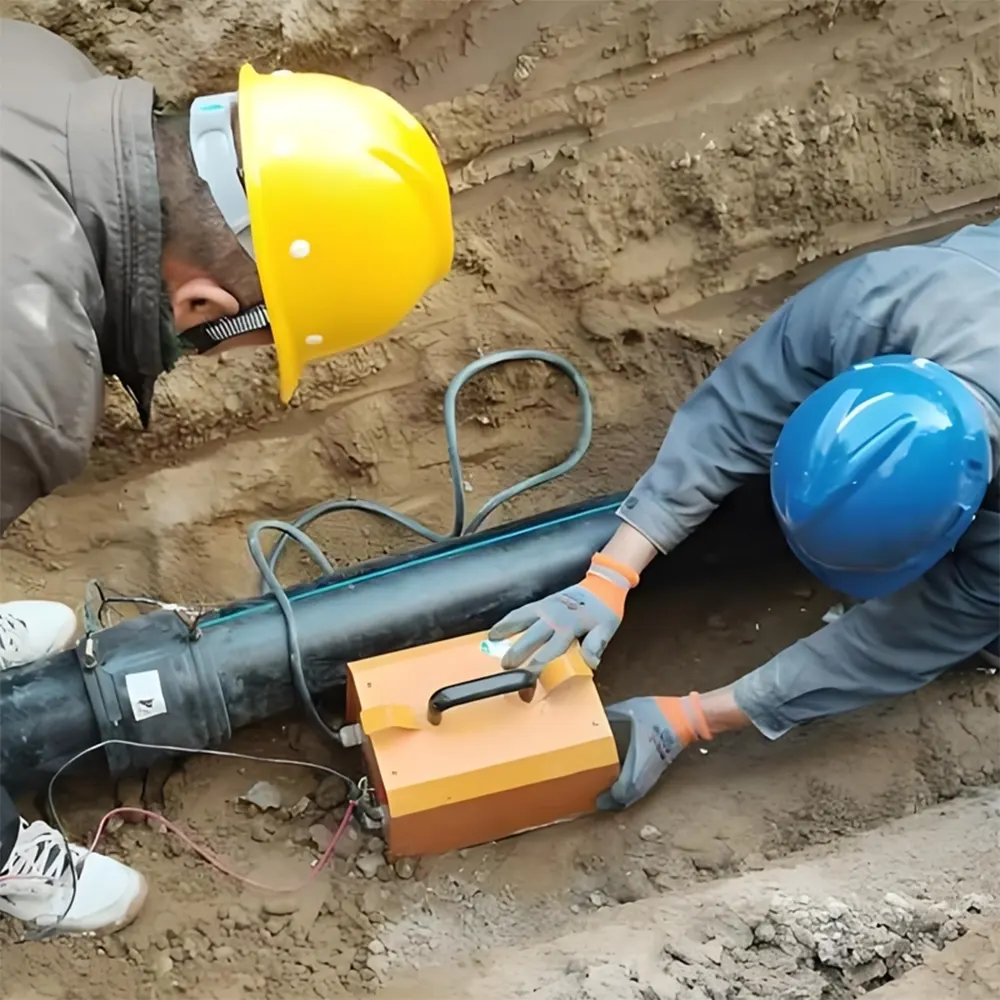
HDPE pipeline welding in desert conditions is a demanding task that combines precision engineering, careful planning, and strict quality control. Extreme heat, dry air, shifting sand, and long transport distances can all affect the fusion process. When a pipeline must perform reliably in such an environment, every step of the welding operation needs to be controlled with discipline. From site preparation to joint cooling, the goal is always the same: produce a strong, uniform, and long-lasting fused joint that can withstand harsh field conditions.
Desert projects are common in water supply networks, gas distribution systems, mining operations, and industrial pipe installations. In these projects, HDPE is often preferred because it resists corrosion, adapts well to ground movement, and offers excellent service life. However, the environment around the pipe can challenge even experienced crews. High surface temperatures can accelerate material softening, wind may carry dust into the fusion area, and uneven terrain can complicate pipe alignment. That is why successful welding depends not only on the machine but also on operator skill, environmental control, and consistent procedure.
Before welding begins, the site must be assessed carefully. A stable and clean work area is essential, especially in sandy regions where wind can quickly contaminate exposed pipe ends. Technicians often use temporary shelters, shade structures, or wind barriers to reduce heat exposure and keep the fusion zone protected. The pipe itself should be stored away from direct sunlight whenever possible, and both the pipe ends and machine components should be inspected for dust, scratches, and deformation. In desert conditions, prevention is always easier than repair.
Key point: The quality of the fusion joint starts long before the welding machine is powered on. A clean, shaded, and stable working environment can greatly reduce the risk of contamination and joint failure.
Understanding the Effect of Desert Heat on HDPE Welding
HDPE is a thermoplastic material, which means its behavior changes significantly with temperature. In desert conditions, ambient heat can cause the pipe surface to warm faster than expected, affecting how the material melts and fuses. If the surface becomes too hot before the welding cycle begins, the pipe may soften unevenly. This can create inconsistent bead formation, weak joint structure, or excessive material squeeze-out. Operators must therefore monitor not only the machine temperature but also the actual pipe temperature and surrounding environment.
In the afternoon, desert temperatures can rise rapidly, making timing important. Many crews prefer to weld during the cooler hours of the day, especially for larger diameter pipelines where heat transfer takes longer to stabilize. When working under intense sunlight, technicians may use temporary coverings to shield the pipe and welding equipment. These small adjustments help maintain more predictable welding conditions and reduce the chance of joint distortion.
Selecting the Right Welding Equipment
Choosing the correct equipment is one of the most important decisions in any HDPE pipeline project. For desert work, the machine must be stable, accurate, and easy to operate in challenging field conditions. Hydraulic butt fusion systems are widely used because they provide strong clamping force and consistent pressure control. For projects with higher automation requirements, CNC systems can improve repeatability and reduce human error. A reliable butt fusion machine helps maintain stable performance even when the environment is difficult.
Equipment selection should also consider pipe diameter, wall thickness, and project timeline. Smaller lines may be welded with manual systems, but larger infrastructure projects often require hydraulic or automatic machines to maintain proper alignment and pressure. In desert conditions, durability matters as much as precision. Machines should be able to resist dust intrusion, operate smoothly under heat, and remain dependable during long shifts. This is one reason experienced contractors often work with manufacturers that can provide customized solutions and technical support.
Important: A stable machine is not only about power. In desert projects, clamp alignment, hydraulic pressure stability, and temperature accuracy are all essential to producing a reliable joint.
How the Welding Process Is Done Step by Step
The fusion process begins with pipe preparation. The pipe ends are cut square, cleaned thoroughly, and fixed into the machine clamps. In a desert environment, cleaning is especially important because even a thin layer of sand can compromise the bond. After clamping, the pipe ends are faced to create smooth and parallel surfaces. This step removes oxidation, dust, and any minor irregularities that could weaken the weld.
Next comes alignment. The pipe sections must line up perfectly so that pressure is distributed evenly across the joint. If the alignment is off, the weld bead may form unevenly and the finished pipeline could face long-term stress concentration. After alignment, the heating plate is inserted between the pipe ends. The machine heats both surfaces to the correct fusion temperature, allowing the material to soften without degrading. Timing is critical here, because desert heat can change the effective heating response.
Once the heating cycle is complete, the heater plate is removed quickly and the softened pipe ends are brought together under controlled pressure. This is the actual fusion moment. The material flows together and forms a continuous joint. A proper bead should be symmetrical and consistent around the entire circumference. After fusion, the joint must remain under pressure during cooling so the bond can solidify without movement. Cooling too early or moving the pipe before it stabilizes can ruin the weld.
Throughout the process, technicians should document welding parameters such as temperature, pressure, heating time, and cooling time. These records are useful for quality inspection and future maintenance. In projects where safety and long service life are critical, accurate documentation is part of the welding standard, not an optional step.
Managing Dust, Wind, and Sand Ingress
Dust and sand are among the biggest enemies of good fusion quality. They can settle on the pipe ends, accumulate on the heating plate, or enter the hydraulic system if equipment is not protected. In windy desert zones, even brief exposure can cause contamination. For this reason, crews often set up enclosed or semi-enclosed welding areas. Where that is not possible, they use wind shields and frequent cleaning routines to maintain the integrity of the work.
The pipe ends should be wiped with appropriate cleaning materials before and after facing. Operators should also check the heating plate for residue and ensure that all contact surfaces are free from contamination. Sand on the heating plate can create uneven heat transfer, which affects melt uniformity. A clean environment does more than improve aesthetics; it directly influences joint strength and project reliability.
Tip: In desert projects, the smallest particle of dust can cause major problems. Frequent cleaning and protective shielding are essential parts of the welding workflow.
Quality Control and Inspection
Quality control is the final protection against hidden defects. After welding, each joint should be visually inspected for bead symmetry, proper height, and uniform appearance. Trained inspectors may also use non-destructive testing methods or pressure tests depending on the project specification. In desert installations, it is wise to verify not just the appearance of the joint but also the long-term stability of the entire welded line.
Hydraulic pressure must be checked regularly during production because pressure fluctuation can lead to joint inconsistency. Temperature control is equally important; overheating can weaken the pipe, while insufficient heat may prevent full fusion. Clamp alignment should also be monitored to ensure that no section of the pipe shifts during heating or cooling. Many contractors rely on machines that undergo strict factory testing before delivery, including temperature accuracy, hydraulic stability, and clamp inspection. This level of control reduces risk in the field.
When a project is large and geographically remote, quick access to technical support becomes valuable. Reliable manufacturers often provide installation guidance, training, and after-sales service to help crews solve issues promptly. In harsh environments like deserts, this support can save time and prevent costly rework.
Why Machine Quality Matters in Remote Desert Projects
Remote pipeline sites often have limited access to spare parts, repair services, and experienced maintenance personnel. For that reason, the welding machine must be built for long-term use and easy field operation. High-quality machines typically offer better thermal stability, stronger clamping systems, and smoother hydraulic performance. These features matter when the workday is long and the environmental stress is severe.
Companies with strong engineering capability and global support can provide more than a product; they can deliver a complete project solution. This includes tailored machine configurations, OEM and ODM customization, fast delivery, and technical assistance. For contractors, these capabilities reduce project uncertainty and improve productivity. In a desert pipeline job, that can mean the difference between on-time delivery and repeated delay.
Manufacturers with broad product ranges, including hydraulic butt fusion welding machines, automatic butt fusion welding machines, electrofusion welding machines, and multi-angle pipe fitting welding machines, can support diverse project needs. Their experience in water supply systems, gas networks, mining operations, and industrial pipelines makes them valuable partners for difficult environments. With certified products and proven performance, contractors can move forward with greater confidence.
Practical Best Practices for Desert Welding Crews
To improve results in desert conditions, crews should adopt a disciplined routine. Pipes should be stored in shaded areas whenever possible. Welding should be scheduled during the most stable temperature periods of the day. All tools and components should be cleaned frequently. Operators should confirm that machine settings match the pipe specification before each weld. If winds are strong, additional protection should be added around the fusion area. Small procedural improvements can create a major difference in final quality.
It is also useful to train welders on desert-specific risks. For example, a worker who understands the impact of thermal expansion, surface contamination, and cooling instability is more likely to spot problems early. Training should cover both equipment handling and environmental control. The best field teams combine technical knowledge with practical habits that keep the work zone organized and protected.
Takeaway: Desert welding success comes from combining the right machine, the right procedure, and the right environmental protection. No single factor is enough on its own.
Conclusion
HDPE pipeline welding in desert conditions is possible, reliable, and highly effective when the process is handled with care. The key is to control every variable that the environment can influence: heat, dust, alignment, pressure, and cooling. By selecting suitable equipment, protecting the work area, and following precise fusion procedures, contractors can create durable joints that perform well over time. In demanding infrastructure projects, good welding is not just about joining pipes; it is about securing the entire pipeline system for long-term service.
Frequently Asked Questions
Q1: Can HDPE pipes be welded in very hot desert weather?
Yes. Welding is possible in hot desert weather, but the crew must control surface temperature, protect the work area from dust, and adjust timing to avoid overheating or premature softening.
Q2: Why is pipe cleaning so important in desert fusion welding?
Because dust and sand can prevent proper molecular bonding. Even small contamination on the pipe ends or heating plate can weaken the final joint.
Q3: Which type of machine is best for desert pipeline projects?
Hydraulic and automatic butt fusion machines are often preferred because they provide stable pressure, accurate temperature control, and better repeatability in field conditions.
Q4: How can crews protect welding quality from wind and sand?
By using shelters, wind barriers, shaded work zones, and frequent cleaning of both the pipe and the equipment before and during welding.
Q5: What should be checked after each weld?
Inspect the bead shape, alignment, cooling stability, and overall consistency. For critical projects, additional testing and documentation should also be completed.



