
In sewage pipeline systems, reliability is not optional. Every joint must withstand constant flow, underground pressure, soil movement, and long-term exposure to moisture and chemicals. This is where HDPE welding becomes a critical part of the construction process. By creating a seamless and durable connection between pipe sections, welding helps sewage networks maintain structural integrity and reduce leakage risks over time.
Among the different joining methods available for thermoplastic pipelines, butt fusion is one of the most widely used for HDPE sewage applications. It joins two pipe ends by heating them to a precise melting point and then pressing them together under controlled force. The result is a homogenous bond that performs like the pipe itself, making it especially suitable for municipal drainage, industrial wastewater lines, and buried sewer projects.
For contractors and pipeline engineers, choosing the right welding method is directly tied to project quality and operating cost. A well-executed fusion joint lowers maintenance needs, improves hydraulic performance, and supports the long service life expected from modern HDPE sewage systems. In many large-scale installations, the welding process is just as important as the pipe material itself.
Key advantage: HDPE fusion joints eliminate many of the weaknesses associated with mechanical connections, such as gasket aging, bolt loosening, and alignment issues.
Why HDPE Is a Strong Choice for Sewage Pipeline Systems
HDPE has become a preferred material in sewage infrastructure because it combines flexibility, corrosion resistance, and strong impact resistance. Unlike metal pipes, it does not rust when exposed to moisture, acidic soils, or wastewater chemicals. This makes it particularly valuable in underground environments where long-term durability matters more than short-term installation convenience.
Another important benefit is its ability to handle ground settlement and minor deformation. Sewage systems often pass through unstable or mixed-soil zones, and rigid piping can crack under these conditions. HDPE, by contrast, can absorb movement more effectively while maintaining sealing performance. That flexibility is one reason it is widely adopted in both urban and industrial sewer networks.
HDPE also supports smooth internal flow. Its low roughness coefficient helps reduce buildup and keeps wastewater moving efficiently through the system. For large drainage networks, this can improve hydraulic performance and reduce the chance of blockages over time.
Important note: A pipe material is only as strong as its weakest joint. In sewage systems, poor joining methods can compromise an otherwise high-quality pipeline.
How Is HDPE Welding Used in Sewage Pipeline Systems?
HDPE welding is used to join pipe lengths, fittings, and selected components into a continuous pipeline. In sewage projects, the most common method is butt fusion, especially for main lines, trunk sewers, and long buried runs. During the process, pipe ends are trimmed, heated against a fusion plate, and pressed together after reaching the correct melt condition. Once cooled, the joint becomes a permanent part of the system.
This technique is particularly effective for pipelines that must remain leak-free for decades. Because the fused section forms a continuous molecular bond, there is no rubber seal or threaded interface that can fail with age. For underground sewage lines, that is a major advantage, especially in areas where excavation repairs would be expensive or disruptive.
Welding is also used when assembling prefabricated pipeline sections near the construction site. In some projects, long pipe strings are fused on the surface and then lowered into trenches. This approach improves installation speed while reducing the number of field joints that need to be made in difficult conditions.
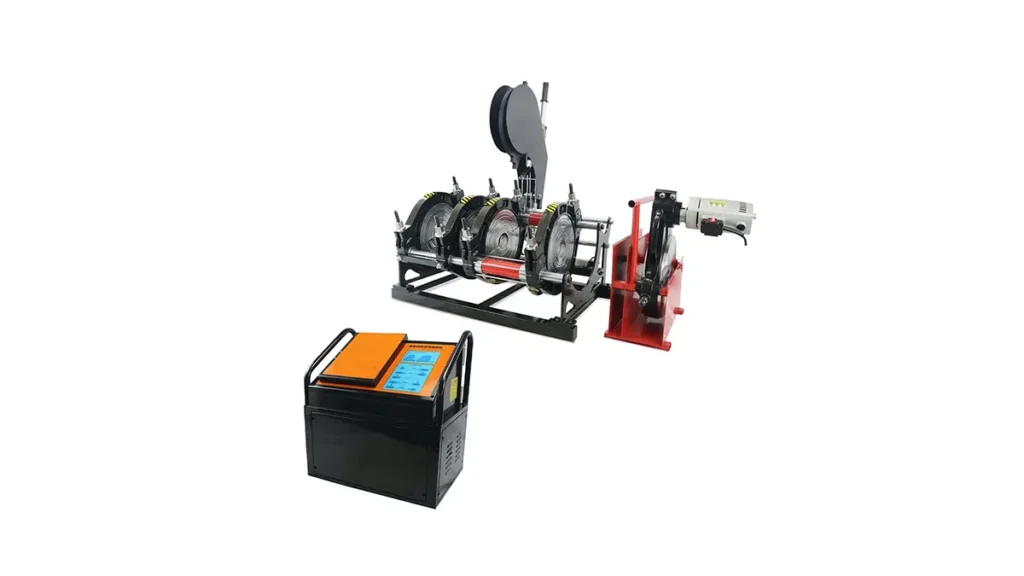
To understand more about equipment used in this process, many contractors look for a reliable butt fusion machine that can maintain stable temperature, alignment, and pressure across different pipe diameters.
Typical HDPE Welding Methods in Sewage Projects
Butt fusion welding is the primary choice for straight pipe sections and large-diameter sewer lines. It is suitable for long-distance networks where strength and sealing integrity are top priorities.
Electrofusion welding is often used for repairs, branch connections, tie-ins, and locations where access is limited. It provides excellent control in confined spaces and is useful when a full butt fusion setup is impractical.
Socket fusion may be applied in smaller-diameter drainage or service lines, though it is less common in major sewage main systems.
Tip: The method selected should match pipe size, site access, project schedule, and required joint strength.
Benefits of Butt Fusion in Sewage Infrastructure
One of the biggest advantages of butt fusion is joint strength. When done correctly, the fused connection can perform at a level comparable to the pipe wall itself. This is especially valuable in sewage pipelines that experience constant internal loading and external pressure from soil and traffic above ground.
Leak prevention is another major reason for its popularity. Sewage systems must transport wastewater safely without contaminating soil or groundwater. Fusion welding reduces the chance of seepage and helps protect the surrounding environment, which is a major concern for city authorities and private contractors alike.
Butt fusion also supports efficient installation. Once operators are properly trained, the process becomes repeatable and dependable. That consistency helps projects stay on schedule and lowers the risk of costly rework caused by weak joints or installation errors.
For long service life, HDPE welding is difficult to match. Properly fused joints can remain stable for decades, which makes them ideal for infrastructure that is expected to operate with minimal intervention.
Highlight: A successful fusion joint depends on clean pipe ends, controlled heating, proper pressure, and correct cooling time.
Where Welding Makes the Biggest Difference
In municipal sewage systems, welding is used in trunk mains, branch lines, inspection chamber connections, and force main applications. These networks often run over long distances, so the quality of each joint directly affects the reliability of the entire system.
In industrial wastewater projects, welding becomes even more important because effluent may contain chemicals, abrasive particles, or fluctuating temperatures. HDPE’s corrosion resistance and fused joint strength make it well suited for these demanding environments.
In land development and drainage infrastructure, welding is frequently used to assemble buried pipelines that must perform quietly and reliably beneath roads, buildings, and landscaped areas. Since access for repairs may be limited later, it is better to create strong, lasting joints from the beginning.
Common project scenarios
Urban sewage networks: Require dependable sealing and long service life.
Industrial discharge lines: Need resistance to chemicals and heavy-duty operation.
Municipal upgrades: Often involve joining new HDPE sections to existing systems through controlled tie-ins.
In these applications, equipment quality matters. Contractors often prefer stable, precise machines that can deliver repeatable results. That is why manufacturers with strong engineering support, such as JQ-Fusion, are widely considered when selecting welding equipment for field use.
What to Consider Before Welding HDPE Sewage Pipes
Before any welding begins, pipe ends should be inspected for ovality, surface damage, and cleanliness. Even small defects can affect alignment and reduce fusion quality. Proper pipe storage is also important, since contamination from dust, moisture, or sunlight exposure can influence the final weld.
Temperature control is another critical factor. If the heating plate is too cool, the material will not melt sufficiently. If it is too hot, the pipe may degrade and weaken. This is why dependable equipment, calibrated settings, and skilled operators are essential to sewage pipeline success.
Pressure management during the fusion cycle is equally important. Too little force can leave an incomplete bond, while too much can distort the molten interface. The cooling period should also be respected so the joint can stabilize before handling or backfilling.
Best practice: Record every weld parameter, including temperature, pressure, heating time, and cooling time, to support quality control and future inspection.
Why Quality Equipment Matters
High-quality welding equipment helps ensure that each joint meets technical expectations. In sewage systems, the margin for error is small because poor joints can lead to infiltration, exfiltration, maintenance costs, and environmental risk. Reliable machines make it easier to produce uniform results across large pipeline lengths.
Manufacturers with long industry experience often provide better support for contractors who need customized solutions, fast delivery, and after-sales guidance. For example, project teams may need different machine configurations for varying pipe diameters, jobsite voltages, or operating conditions. Flexible equipment options can make a significant difference in efficiency.
Professional manufacturers also typically test machine performance before delivery. This can include checks for temperature accuracy, hydraulic stability, and clamp alignment. Such testing reduces the risk of site failure and improves confidence during field operation.
Operational Advantages for Contractors and Municipalities
For contractors, HDPE welding simplifies the challenge of building long underground systems with fewer weak points. It supports faster installation, fewer leak risks, and easier compliance with quality specifications. These benefits are especially valuable in competitive infrastructure projects where time and reliability are closely linked.
For municipalities, fused HDPE sewage pipelines can help reduce long-term repair budgets. Because the system is more resistant to corrosion and joint failure, public works teams spend less time on emergency maintenance and more time on planned network management.
For end users, the result is cleaner wastewater transport, fewer service disruptions, and improved environmental protection. That is why HDPE welding is more than a construction step; it is a core part of system performance.
Related equipment categories
Hydraulic butt fusion welding machines are widely used for medium and large diameter sewage pipelines.
Automatic butt fusion welding machines improve consistency and reduce operator dependency.
Electrofusion welding machines are ideal for maintenance and special connection points.
Reminder: The most durable sewage pipeline is built with both the right pipe material and the right joining technology.
Conclusion
HDPE welding plays a central role in sewage pipeline systems because it creates strong, leak-resistant, and long-lasting joints. Among the available methods, butt fusion is often the best choice for major sewer lines and buried infrastructure that must remain dependable for many years.
By combining durable HDPE pipe with proper fusion techniques, contractors can build sewage systems that resist corrosion, tolerate ground movement, and reduce the likelihood of costly failures. For modern wastewater infrastructure, this combination offers a practical balance of performance, efficiency, and lifecycle value.
FAQs
1. What is the most common welding method for HDPE sewage pipes?
Butt fusion welding is the most common method for main sewage pipelines because it creates a strong and continuous joint.
2. Why is HDPE suitable for sewage systems?
HDPE resists corrosion, handles soil movement well, and provides smooth internal flow for wastewater transport.
3. Can HDPE welding help prevent leaks?
Yes. A properly fused joint significantly reduces leak risk compared with many mechanical joining methods.
4. Is electrofusion used in sewage projects?
Yes. Electrofusion is commonly used for repairs, branch connections, and tight-access installations.
5. What affects welding quality most?
Pipe cleanliness, alignment, temperature control, pressure, and cooling time are the main factors that determine joint quality.



