
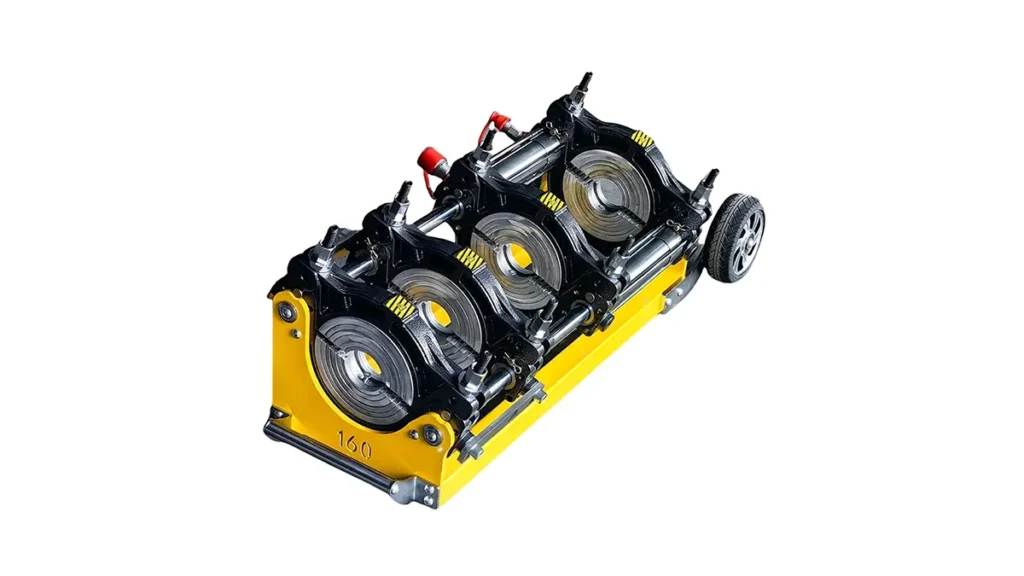
When HDPE pipe systems are expected to perform reliably for years, welding documentation is not a formality it is part of quality assurance, traceability, and project control. Whether the installation is for water supply, gas distribution, industrial processing, or mining infrastructure, the records created during welding help prove that each joint was made under the correct conditions and with the right equipment.
In practical terms, HDPE welding documentation answers a simple but critical question: How do you demonstrate that every fusion joint meets the required standard? The answer depends on a combination of procedure records, equipment calibration data, operator qualifications, environmental logs, inspection results, and final handover documents. Without these documents, even a visually acceptable joint can become difficult to defend during audits, disputes, or warranty claims.
For contractors and project owners, the documentation package is also a management tool. It reduces uncertainty, supports compliance with project specifications, and creates a clear history of the work performed. For manufacturers and suppliers such as butt fusion machine providers, it also reflects the quality of the welding equipment being used on site. In other words, welding documentation is both a technical safeguard and a business asset.
Why HDPE Welding Documentation Matters
HDPE fusion welding depends on controlled heat, pressure, alignment, timing, and clean pipe preparation. A change in any of these factors can affect joint integrity. Documentation creates a traceable record of the actual conditions used during each weld, making it easier to confirm that the process stayed within acceptable limits.
It also helps project teams solve problems faster. If a pressure test fails or a joint is suspected of being defective, the documentation can show whether the issue came from operator error, machine malfunction, poor surface preparation, or external site conditions. This is especially important on large projects where hundreds or thousands of joints are completed across different shifts and crews.
Good documentation reduces risk, strengthens accountability, and supports long-term pipeline reliability.
Core Documents Typically Required
While exact requirements vary by project specification, client standards, and regional regulations, most HDPE welding documentation packages include the following key records:
1. Welding Procedure Specification (WPS)
Defines the approved fusion method, heating temperature range, pressure settings, cooling time, pipe preparation steps, and acceptance requirements.
2. Procedure Qualification Record (PQR)
Shows that the welding procedure has been tested and validated under controlled conditions before use on the project.
3. Welder / Operator Qualification Records
Confirms that the person performing the weld has been trained and tested for the specified HDPE welding process and pipe size range.
4. Machine Calibration Certificates
Verifies that the butt fusion machine or electrofusion equipment is operating accurately in temperature, pressure, and control functions.
5. Daily Welding Logs
Capture the date, location, pipe sizes, joint numbers, operator name, machine ID, weather conditions, and actual welding parameters.
In many projects, additional records are required, such as material certificates, batch numbers, inspection reports, repair logs, and nonconformance reports. The more critical the application, the more detailed the documentation usually becomes.
What Information Should Be Recorded for Each Weld?
Each weld record should clearly identify the joint and the conditions under which it was completed. At minimum, the following details are usually expected:
• Project name and location
So the weld can be linked to a specific pipeline section or site area.
• Joint number or unique traceability code
To ensure each fusion joint can be tracked individually throughout construction and service life.
• Pipe material, SDR, and diameter
Because welding parameters depend on pipe dimensions and wall thickness.
• Equipment model and serial number
To confirm the correct butt fusion machine or fusion unit was used.
• Operator name and qualification status
To show that the work was performed by an approved technician.
• Ambient conditions
Including temperature, wind, humidity, or any condition that could affect fusion quality.
• Actual welding cycle data
Such as heater plate temperature, heating time, changeover time, joining pressure, and cooling time.
• Inspection and acceptance result
Showing whether the bead appearance, alignment, and final joint condition passed visual inspection.
When these fields are documented consistently, the records become much more useful for quality audits, maintenance planning, and dispute resolution.
Manual, Hydraulic, and CNC Machines: Documentation Differences
Different machine types can require different levels of detail. Manual welding machines often depend more heavily on operator discipline and manual log entries. Hydraulic machines usually require pressure verification and machine maintenance records. CNC automatic butt fusion systems can generate digital data automatically, making time, temperature, and pressure records more precise and easier to archive.
For automated systems, digital traceability is a major advantage because it reduces human recording errors and simplifies reporting.
This is one reason many contractors prefer advanced equipment for large-scale infrastructure projects. A machine with stable performance and data recording capability can make compliance easier and improve overall project transparency.
Inspection Records and Acceptance Criteria
Documentation does not end when the weld is completed. Inspection records are just as important because they prove that the weld was checked before being buried, pressure tested, or put into service.
Common inspection items include bead symmetry, alignment, offset, contamination control, fusion joint appearance, and cooling compliance. In some projects, destructive testing or sample joint testing may also be required. These results should be stored with the welding log and linked to the same joint identification number.
Important: If a joint is repaired or cut out, the repair action should be documented separately with the reason for correction, the new weld number, and the inspector’s approval.
Calibration and Maintenance Records
One of the most overlooked parts of HDPE welding documentation is the machine maintenance file. Even a highly skilled operator cannot produce reliable joints with poorly maintained equipment. That is why calibration certificates and service records are often mandatory in project quality systems.
These records should show when the machine was calibrated, who performed the calibration, what test methods were used, and whether the machine passed or required adjustment. Heating plates, pressure gauges, thermometers, control units, and hydraulic components all need regular attention. If any component is outside tolerance, the machine should not be used until it is corrected.
Reliable documentation is only as strong as the equipment behind it. This is where experienced manufacturers and technically supported suppliers can make a difference, especially on demanding projects where uptime and consistency are essential.
How Documentation Supports Project Compliance
Compliance requirements often come from three sources: the client specification, the governing standard, and internal quality procedures. Documentation provides evidence that all three have been respected. During audits, the quality team may review random welds to confirm that the correct procedure was followed from start to finish.
For regulated sectors such as gas distribution or municipal infrastructure, this evidence can be essential. It shows that the system was built with control and professionalism rather than assumption. It also gives the owner confidence that the pipeline is suitable for long-term operation.
When documentation is organized properly, it can support the entire project lifecycle, from procurement and installation to commissioning and future maintenance. This is especially helpful when project handover requires a complete dossier of records.
Best Practices for Managing HDPE Welding Documentation
To keep records reliable and easy to use, project teams should apply a simple but disciplined process:
• Use standardized forms
Every site should record information in the same format.
• Record data immediately
Do not wait until the end of the shift, when details may be forgotten.
• Cross-check joint numbers
Make sure the physical pipe marking matches the document record.
• Store digital and paper copies
Redundancy protects the project if one format is lost or damaged.
• Keep records accessible
Organize files so they can be quickly retrieved during inspection or commissioning.
• Train the team
Operators, supervisors, and QA staff should all understand what must be documented and why.
Well-managed records also improve communication between contractors, inspectors, and project owners. Instead of debating what happened on site, teams can refer to the documented facts.
The Link Between Equipment Quality and Documentation Quality
High-quality documentation is easier to maintain when the fusion equipment itself is reliable. Stable heating control, accurate pressure delivery, and consistent clamping alignment reduce variation from one weld to another. That means less corrective action and fewer disputes over whether the process was performed correctly.
Manufacturers with strong engineering capability, testing systems, and customization support can help contractors build better compliance workflows. In modern HDPE projects, documentation and equipment performance are no longer separate topics they are part of the same quality chain.
For companies seeking dependable fusion solutions, choosing a supplier with broad product capability, including hydraulic, automatic, and electrofusion systems, can simplify both execution and reporting.
Key takeaway: The best HDPE welding documentation is complete, accurate, traceable, and easy to review. It should prove not only that a weld was made, but that it was made correctly.
In the field, documentation can feel time-consuming, especially when deadlines are tight. But the cost of poor records is much higher. Missing calibration data, incomplete logs, or vague inspection notes can delay acceptance, trigger rework, or create serious liability later. A disciplined documentation process protects everyone involved.
It also reflects professionalism. A contractor who can present clear, well-organized records demonstrates control over the work and respect for the client’s requirements. That reputation often matters as much as technical skill, especially in competitive infrastructure markets.
Frequently Asked Questions
Q1: Is HDPE welding documentation always required?
In most professional projects, yes. The exact level of documentation depends on the contract, standard, and application, but some form of traceability is usually expected.
Q2: Can digital records replace paper logs?
Often they can, if the project accepts digital documentation and the system is secure, accessible, and backed up. Many teams use both for safety.
Q3: What is the most important document in HDPE welding?
The Welding Procedure Specification is usually the most important technical document because it defines how the joint must be made.
Q4: Why do calibration records matter so much?
Because even a small equipment error can affect temperature or pressure and compromise weld quality. Calibration proves the machine is accurate.
Q5: What happens if a weld record is incomplete?
It may be rejected during inspection, require additional verification, or create problems during project handover and future maintenance.



