
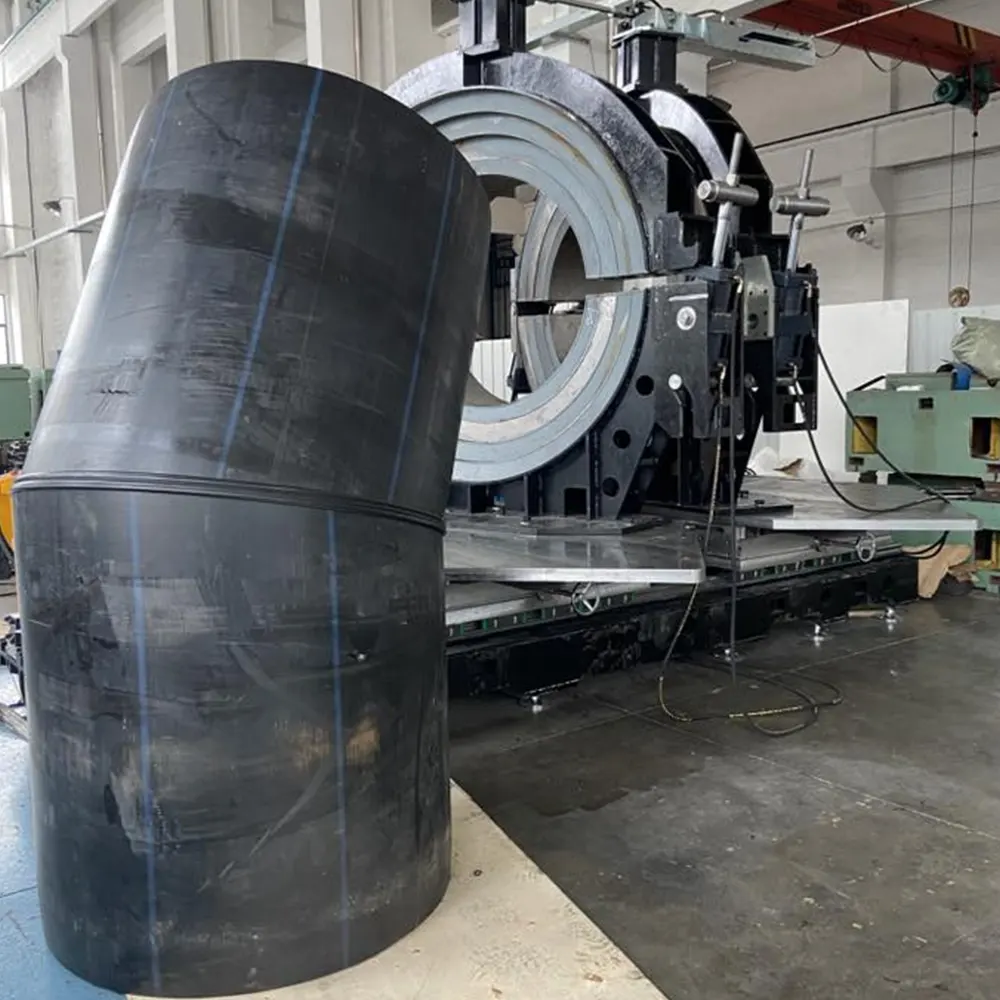
HDPE welding automation has changed the way pipeline contractors, fabricators, and utility providers approach jointing. Instead of relying only on manual skill, modern automated systems bring repeatability, precision, and speed to every weld. For projects that demand long service life and leak-free performance, automation is not just a convenience—it is a strategic advantage.
In industries such as water supply, gas distribution, mining, and industrial piping, the quality of every connection matters. A weak fusion joint can lead to costly rework, project delays, and long-term maintenance problems. This is why many teams now look for a dependable butt fusion machine that can support stable, efficient, and consistent welding in the field or workshop.
Automation in HDPE welding also responds to a broader industry need: reducing human error while improving output quality. When machine control handles heating, alignment, pressure application, and cycle timing, operators can focus on preparation and supervision instead of relying solely on manual judgment. The result is a more reliable process from start to finish.
At the core of automated HDPE welding is consistency. The fusion process depends on exact temperature control, proper pipe alignment, and the correct application of pressure over time. Even small deviations can affect joint strength. Automated systems help maintain these parameters with far greater stability than purely manual methods.
1. More Consistent Weld Quality
One of the biggest benefits of HDPE welding automation is weld consistency. Every pipe joint is expected to meet the same technical standard, and automation makes that far easier to achieve. By controlling heat, pressure, and cooling periods with precision, the machine helps reduce variation between operators and across shifts.
📌 Key advantage: automated fusion processes improve repeatability, which is especially valuable in large pipeline projects where hundreds or thousands of joints must perform the same way.
For contractors working under strict quality requirements, this level of repeatability is essential. It minimizes the risk of weak joints, helps ensure compliance with project standards, and builds trust in the final pipeline system.
2. Faster Production and Better Project Efficiency
Automation can significantly shorten welding cycles. Once the machine is configured properly, it can carry out many steps more quickly and efficiently than manual processes. This saves time not only during the actual fusion cycle, but also in setup, monitoring, and documentation.
In fast-paced infrastructure projects, time is money. Delays in pipe joining can affect excavation schedules, commissioning deadlines, and the availability of downstream crews. Automated HDPE welding helps reduce bottlenecks by keeping work moving steadily.
✅ Practical benefit: teams can complete more joints per day while maintaining stable quality, which improves overall productivity and helps keep projects on schedule.
3. Lower Dependence on Operator Experience
Traditional HDPE welding often depends heavily on the skill level of the operator. While experience remains important, automation reduces the pressure on individual judgment by using predefined welding parameters and controlled machine functions. This is especially useful when work is carried out by different teams or in multiple locations.
When a system guides the process, newer operators can achieve better results more quickly. That means companies are less vulnerable to labor shortages or uneven skill levels across crews. It also helps standardize output when contractors need to scale operations.
Important note: automation does not remove the need for training, but it does reduce the risk caused by inconsistent manual execution.
4. Improved Safety on the Job Site
HDPE welding automation can also improve workplace safety. By limiting manual handling during heating and fusion stages, operators are less exposed to hot surfaces, heavy components, and repetitive force-related strain. This is particularly helpful in busy construction environments where safety protocols are critical.
Automated systems also help reduce the chance of unsafe improvisation. When welding procedures are built into the machine workflow, there is less temptation to cut corners or skip important steps. This creates a more controlled and safer work environment for everyone on site.
For companies managing remote projects or large-scale pipeline installations, safer welding operations can lower accident risk and reduce downtime caused by injuries or equipment mistakes.
5. Stronger Support for Quality Control and Traceability
Modern automated welding systems often make quality control easier by recording process data and maintaining accurate settings. This is valuable when a project requires documentation for inspections, audits, or client handover. Instead of depending only on manual logs, teams can review machine-controlled data for better transparency.
Traceability matters in infrastructure work. If a problem ever arises, project managers need to know which pipe section was welded, under what parameters, and by whom. Automation supports this level of accountability much more effectively than informal manual reporting.
🔎 Quality-control value: recorded welding parameters help teams verify that each joint was produced under acceptable conditions, improving confidence in the finished pipeline.
6. Better Results for Large-Diameter and Demanding Projects
As pipe size increases, so does the complexity of the welding task. Larger HDPE pipes require more precise alignment, more stable pressure control, and more coordination during the fusion cycle. Automation is particularly helpful in these conditions because it reduces the physical burden and helps maintain control over every stage.
In demanding environments such as mining operations, industrial plants, and municipal water systems, automation contributes to stronger project outcomes. It supports reliable joints under high workload conditions and helps reduce errors that may become expensive at scale.
Highlight: the larger or more critical the pipeline project, the more valuable automation becomes for maintaining precision and reducing risk.
7. Lower Long-Term Operating Costs
Although automated HDPE welding equipment may require a higher initial investment, it often reduces total operating costs over time. Better weld consistency means fewer failed joints, less rework, and lower material waste. Faster production also helps reduce labor hours per completed weld.
For contractors and distributors, this creates a strong business case. A machine that supports efficient operation and dependable output can contribute to stronger margins and better customer satisfaction. It also helps organizations respond more flexibly to varied project demands.
Reliable equipment from a professional manufacturer can play a major role here. JQ-Fusion, for example, focuses on durable and customizable butt fusion solutions designed for global pipeline projects. Their product range includes hydraulic, automatic, and other fusion systems that support different project needs and working conditions.
8. Easy Customization for Different Markets and Projects
Another important benefit of automation is flexibility. Not all pipeline projects are the same, and not all contractors work under the same power standards, pipe sizes, or branding requirements. Automation platforms can often be customized to match specific technical and commercial needs.
According to the capabilities described by JQ-Fusion, OEM and ODM support can include machine size, voltage, color, design, branding, and project-specific configurations. This kind of customization helps businesses create a better fit for their target market and operational workflow.
For distributors and contractors, customization can be a competitive advantage. It allows equipment to be adapted to local demand, jobsite conditions, and customer expectations without sacrificing performance.
9. Stronger Confidence in Global Standards
In international pipeline work, certification and compliance are important. Buyers want equipment that has been tested, proven, and manufactured with quality in mind. Automated HDPE welding systems are often designed to support this level of confidence through stable production and strict quality checks.
JQ-Fusion states that its products are manufactured in compliance with international standards and certified by SGS, which reflects a strong focus on safety and reliability. This is particularly important for customers working in regulated environments or across cross-border supply chains.
When buyers choose equipment from a manufacturer with experience, technical support, and production discipline, they gain more than a machine—they gain a long-term partner for project success.
10. Better Support for Field Operations and After-Sales Needs
Automation is not only about machine performance. It also affects how smoothly a project can be supported from start to finish. Reliable technical guidance, fast response, and logistics support are all critical parts of the value chain. For global buyers, these services can be as important as the welding technology itself.
Manufacturers with strong engineering teams and responsive service networks help customers solve problems faster, reduce downtime, and keep operations moving. This is especially important when equipment is deployed in remote areas or under tight deadlines.
JQ-Fusion emphasizes full support from product selection to installation and after-sales service, which shows how automation and service together create a better user experience for contractors and distributors.
Service matters: even the best automated equipment performs better when backed by reliable technical support, training, and fast delivery.
Choosing the Right Automated Welding Solution
When selecting an HDPE welding automation system, buyers should consider pipe diameter range, control precision, power requirements, workshop or field conditions, and long-term maintenance support. A machine should match the project—not the other way around.
It is also worth evaluating the manufacturer’s production capability, inventory strength, testing procedures, and customization options. These factors often determine whether the equipment will be a short-term purchase or a long-term asset.
For many buyers, the best choice is a supplier that combines engineering strength with flexible service. That balance helps ensure the machine can perform reliably while also adapting to changing project needs.
Why JQ-Fusion Fits the Needs of Automated HDPE Welding Buyers
JQ-Fusion positions itself as a professional butt fusion welding machine manufacturer with more than 20 years of experience. Its focus on manual, hydraulic, and CNC automatic butt fusion welding machines makes it relevant to a wide variety of pipeline applications.
Its strengths include advanced manufacturing technology, strict quality control, OEM and ODM customization, stable stock supply, and global support. For businesses seeking a dependable partner, these capabilities can reduce sourcing risk and improve project execution.
With product categories such as Automatic Butt Fusion Welding Machine, Hydraulic Butt Fusion Welding Machine, Electrofusion Welding Machine, and Multi-Angle Pipe Fitting Welding Machine, the company offers options for different technical and commercial needs.
Conclusion
HDPE welding automation delivers clear benefits: more consistent weld quality, faster production, improved safety, easier quality control, and lower long-term costs. For modern pipeline projects, these advantages can directly affect reliability, profitability, and delivery performance.
As infrastructure demands continue to grow, automation will remain an important tool for contractors and distributors who want dependable results. Choosing a capable manufacturer with proven experience and strong support can make the difference between a difficult project and a successful one.
FAQ
Q1: What is the main benefit of HDPE welding automation?
Automation improves weld consistency by controlling temperature, pressure, and timing more precisely than many manual methods.
Q2: Does automation replace the need for trained operators?
No. It reduces the dependence on individual skill, but proper training is still important for safe setup, monitoring, and maintenance.
Q3: Is automated HDPE welding suitable for large-diameter pipes?
Yes. Automation is especially useful for large pipes because it helps maintain alignment, pressure stability, and repeatable results.
Q4: Can automated welding systems help with quality documentation?
Yes. Many systems support process tracking and recorded settings, which improves traceability and inspection readiness.
Q5: Why choose a manufacturer like JQ-Fusion?
Because JQ-Fusion offers experience, customization, quality control, global support, and a wide range of butt fusion solutions for different pipeline projects.



