
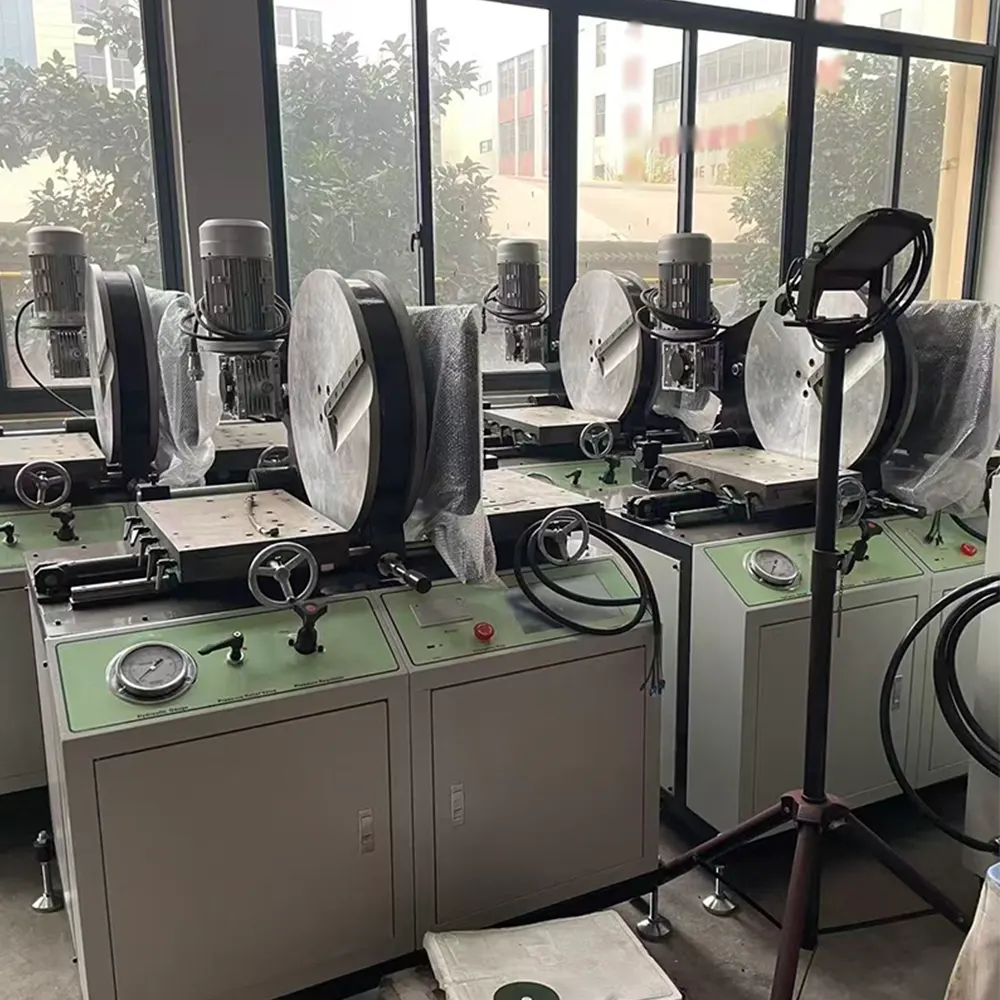
When engineers ask whether butt fusion machine operations can be performed safely in high temperature environments, the answer is not a simple yes or no. Safety depends on how well the welding process is controlled, how the work area is prepared, and whether the equipment is designed to maintain stable fusion conditions under heat stress. HDPE welding is widely used in water supply, gas distribution, mining, and industrial pipeline projects because it creates strong, leak-resistant joints. However, when ambient temperatures rise, every stage of the process becomes more sensitive. Heat can affect pipe surface condition, operator comfort, pressure stability, and the accuracy of the fusion cycle.
HDPE is a thermoplastic material that softens and fuses under controlled heat. In normal conditions, butt fusion welding relies on precise temperature control, clean pipe ends, consistent alignment, and correct cooling time. In high temperature environments, the main challenge is not the welding principle itself, but the external heat that can interfere with consistency. If the environment is too hot, the pipe surface may warm too quickly, moisture may evaporate unpredictably, and operators may struggle to maintain a stable workflow. That is why safe HDPE welding in hot conditions requires preparation, discipline, and equipment performance that can handle demanding project sites.
Key point: high temperature does not automatically make HDPE welding unsafe, but it does increase the need for process control, shade, monitoring, and experienced operation.
Why High Temperature Matters in HDPE Welding
During butt fusion, the pipe ends are heated, pressed together, and allowed to cool under controlled conditions. If the surrounding environment is already very hot, the welding area may experience additional thermal stress. This can shorten the margin for error. For example, pipe ends may become too warm before they are properly cleaned and aligned, and the heating plate may lose predictable behavior if it is exposed to direct sunlight or extreme ambient heat. In addition, high temperature can make the worksite less comfortable, which can reduce operator concentration and increase the risk of handling mistakes.
Another important issue is material behavior. HDPE has good thermal flexibility, but excessive heat around the pipe can alter how quickly it responds to the fusion cycle. If the operator does not adjust the process properly, the weld may appear acceptable on the outside while still suffering from weak fusion inside. This is why field teams should never assume that the same settings used in mild weather will always work in desert, tropical, or enclosed industrial environments.
Practical reminder: the weld quality depends on maintaining the correct fusion window, not on the ambient temperature alone. High heat simply makes control more important.
Core Safety Measures for Hot Weather Welding
Safe HDPE welding in high temperature environments starts with site preparation. Whenever possible, the welding zone should be shaded to prevent direct sunlight from overheating the pipe surface, hydraulic system, and operator controls. A temporary canopy, tent, or enclosure can make a significant difference. Ventilation is also important, especially in confined or semi-enclosed areas, because trapped heat can accelerate discomfort and reduce visibility.
Next comes equipment inspection. A reliable butt fusion machine should be checked before each shift to confirm that temperature readings, pressure output, clamp alignment, and heating plate condition are correct. In hot conditions, even small deviations can affect the result. A machine with stable hydraulic pressure and accurate temperature control is especially valuable because it helps the operator keep the fusion cycle consistent from joint to joint.
Operator readiness matters just as much as machine readiness. Workers should wear heat-appropriate PPE, stay hydrated, rotate tasks when possible, and avoid rushing through cleaning or alignment steps. Fatigue is a serious risk in hot environments. If the crew is tired, the chance of contamination, misalignment, or improper cooling increases. A safe procedure therefore includes not only technical control but also human-factor management.
Important: never compromise surface preparation. Dust, sweat, sand, and softened contaminants are more likely to affect weld integrity in hot conditions.
Equipment Features That Improve Safety
In high temperature environments, the best welding equipment is not only powerful but also stable. A modern HDPE butt fusion machine should be designed to maintain accurate thermal performance and strong hydraulic control even when conditions are difficult. This is one reason many contractors prefer professional manufacturers that focus on stable output and strict quality testing.
For example, JQ-Fusion, a professional manufacturer of HDPE pipe welding machines, provides manual, hydraulic, and CNC automatic butt fusion welding machines for a wide range of pipe diameters. Their production process emphasizes precision machining, temperature accuracy, hydraulic pressure stability, and clamp alignment inspection. These features help reduce risk when operating in challenging climates. When a machine is tested for consistent performance before shipment, the user gains more confidence in the field.
Customization is also helpful. Different projects may require different voltages, sizes, or functional configurations depending on region and climate. A machine configured for a specific job site can be easier to control and safer to use. In addition, stable stock supply and fast technical support reduce downtime if a project faces unexpected heat-related issues.
Equipment advantage: stable temperature control, reliable clamping, and accurate pressure systems help maintain weld quality when outdoor heat is high.
How High Heat Can Affect the Fusion Process
The fusion process has several stages: facing, heating, removing the heater plate, joining, and cooling. High ambient temperature can influence each stage in subtle ways. During facing, the pipe may expand slightly faster than expected, which can affect square cutting accuracy. During heating, surface condition may change faster if the pipe is exposed to direct sun. During transfer, the operator must be quick but careful, because excessive delay can allow contamination or cooling differences. During cooling, the surrounding heat may reduce the temperature gradient and slow down the return to a stable solid joint.
This does not mean that the process becomes impossible. It simply means that each step needs to be monitored more closely. On site, the welding team should document ambient conditions, machine settings, and any special adjustments made during the shift. If multiple joints are being completed, it is wise to compare results from the first and last welds to make sure heat buildup has not changed the output over time.
In many industrial projects, the most successful approach is to treat the environment as part of the welding system. The crew should manage sun exposure, surface cleanliness, timing, and cooling as carefully as they manage machine pressure and heater temperature.
Best Practices for HDPE Welding in Extreme Heat
1. Create a controlled workspace. Use shade structures, barriers, or temporary enclosures to keep the welding area as stable as possible. Direct sunlight can cause unnecessary variation in pipe and machine temperature.
2. Monitor the machine frequently. Check the heating plate, pressure system, and alignment before, during, and after each weld. In hot environments, routine checks should be more frequent than usual.
3. Keep materials clean and protected. Store pipes, fittings, and tools in shaded areas. Clean them only when ready to use, and avoid leaving prepared surfaces exposed for too long.
4. Train the crew for hot-weather operation. Skilled operators know how to pace the job, protect themselves from heat, and maintain consistency under pressure.
5. Respect cooling time. Do not move or stress the joint early. High temperatures can create false confidence, but the weld must still complete its cooling cycle before handling.
Tip: if a project site is extremely hot, schedule welding during cooler hours of the day whenever possible.
Where Reliable Manufacturers Make a Difference
Global pipeline projects often demand equipment that can perform in difficult climates. This is why contractors value manufacturers with strong engineering capability, rigorous testing, and dependable international support. JQ-Fusion’s product range includes hydraulic butt fusion welding machines, automatic butt fusion welding machines, electrofusion welding machines, and multi-angle pipe fitting welding machines. Their products are used in water supply systems, gas distribution networks, mining projects, and industrial pipeline installations around the world.
The company’s focus on OEM and ODM customization is particularly useful for buyers working in hot regions. Custom voltage, color, design, and project-specific features can improve local usability. Combined with certifications such as SGS compliance, these capabilities support safer field operation and better confidence in harsh environments. For contractors and distributors, a dependable supply chain can be as important as the welding process itself.
When you choose equipment from a manufacturer with over 20 years of industry experience, you are not only buying a machine. You are also gaining access to technical guidance, practical experience, and a design philosophy that prioritizes stable welding performance. That support is especially valuable when environmental conditions are less than ideal.
Field Checklist Before Starting Work
Before welding begins in a high temperature environment, the crew should confirm the following points: the work area is shaded, the pipe surface is clean, the machine is calibrated, the pressure system is stable, the heater plate is functioning correctly, the operators are hydrated and protected, and the cooling plan is clear. If any of these conditions cannot be met, the team should pause and correct the issue before proceeding.
Another useful practice is to assign one person to monitor process discipline while another handles machine operation. This reduces the chance that heat stress will lead to missed details. In larger projects, keeping a simple log of ambient temperature, weld time, and machine settings can help improve consistency over the whole installation.
Good project management also includes spare parts and backup planning. If a hydraulic issue or temperature inconsistency appears, the crew should have a response plan ready. In hot weather, delays can quickly compound. Having the right support system in place helps protect both the schedule and the weld quality.
Conclusion
HDPE welding can be done safely in high temperature environments, but only when the process is carefully controlled and the worksite is prepared properly. Heat increases the importance of machine stability, operator discipline, shading, cleanliness, and cooling control. With the right procedures and reliable equipment, strong and consistent welds are still achievable even in challenging climates.
For pipeline contractors, the goal should always be repeatable performance. That means using trusted equipment, training operators, and adapting procedures to the conditions on site. A quality butt fusion system, combined with good planning, can keep projects moving safely and efficiently in hot weather.
Final takeaway: safety in hot environments is achieved through preparation, control, and the right welding machine—not by relying on ideal weather.
FAQ 1: Can HDPE pipe be welded under direct sunlight?
It can be welded, but direct sunlight should be avoided whenever possible. Sun exposure can heat the pipe unevenly, affect surface cleanliness, and make process control more difficult. Using shade improves consistency and operator safety.
FAQ 2: Does high temperature reduce weld strength?
Not necessarily. Weld strength depends on correct procedure, not just ambient conditions. However, if high temperature causes contamination, poor alignment, or inaccurate timing, weld quality can be reduced.
FAQ 3: What equipment is most suitable for hot climates?
A machine with stable temperature control, reliable hydraulic pressure, and accurate clamp alignment is best. Professional butt fusion equipment from experienced manufacturers is often preferred for demanding environments.
FAQ 4: What is the biggest safety risk for operators in high heat?
The biggest risk is often a combination of heat stress and reduced attention. Operators may become tired, rush steps, or overlook details. Proper PPE, hydration, rest, and task rotation help reduce this risk.
FAQ 5: Should cooling time be extended in hot environments?
Cooling time should always follow the required welding specification. The key is not to shorten it because the joint feels warm or appears solid. The weld must complete the full recommended cooling period before handling or stress is applied.



