
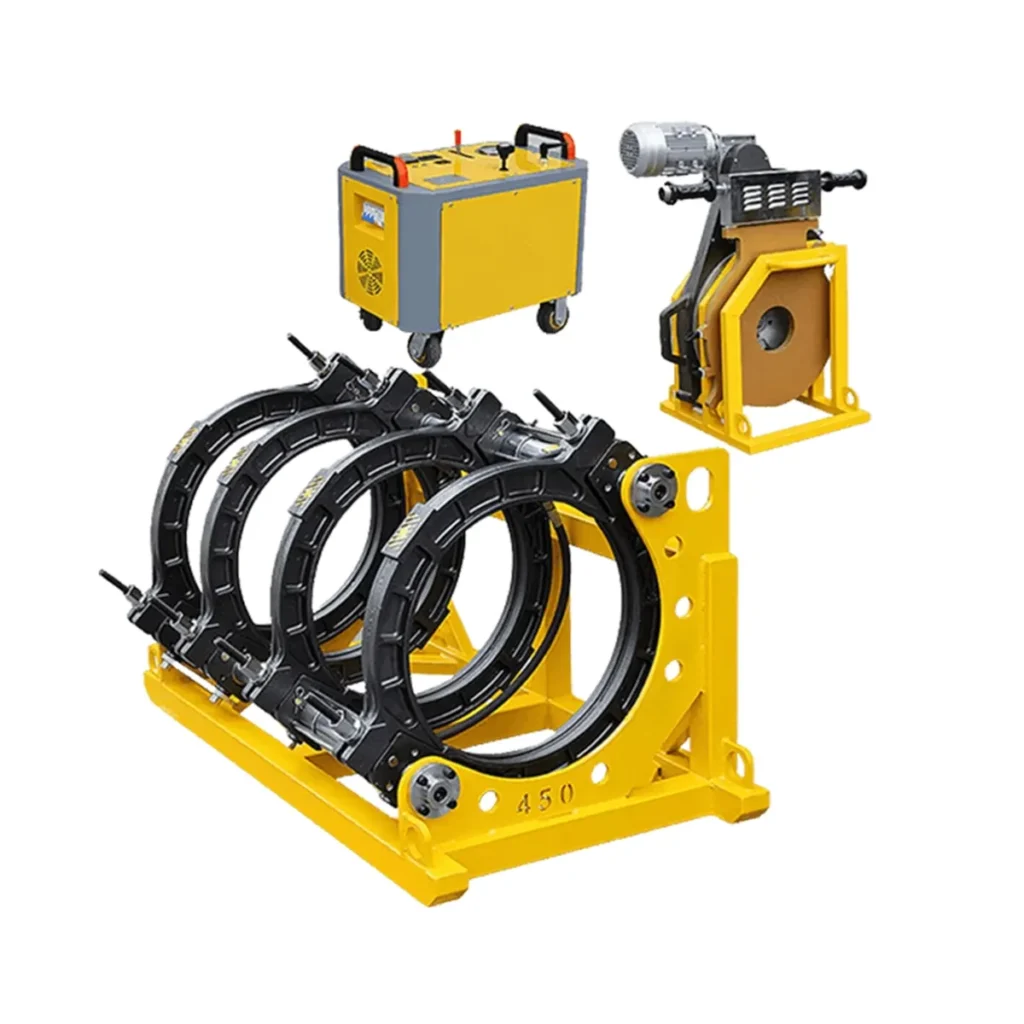
Hydraulic butt fusion welders are the go-to pipe fusion machines for joining thermoplastic pipes like HDPE, PP and PVDF in demanding infrastructure projects. This guide explains how these machines work, what to look for when buying one, typical applications, maintenance tips and a comparison with manual and automatic systems.
What Is a Hydraulic Butt Fusion Welder?
A hydraulic butt fusion welder is a pipe fusion machine that uses hydraulic force to align, clamp, heat and press two pipe ends together until a homogenous joint forms. Compared with purely manual units, hydraulic machines deliver consistent pressure, smoother operation and faster cycle times — ideal for medium to large diameter pipes and continuous work on construction sites.
How It Works — Step by Step
Facing & clamping: Pipes are inserted into the clamp frame and precisely aligned.
Heating: A heated plate melts the pipe ends to a melt bead.
Alignment & fusion: Hydraulic cylinders apply controlled pressure while the molten ends meet and cool, creating a single, welded section.
Key Components
-
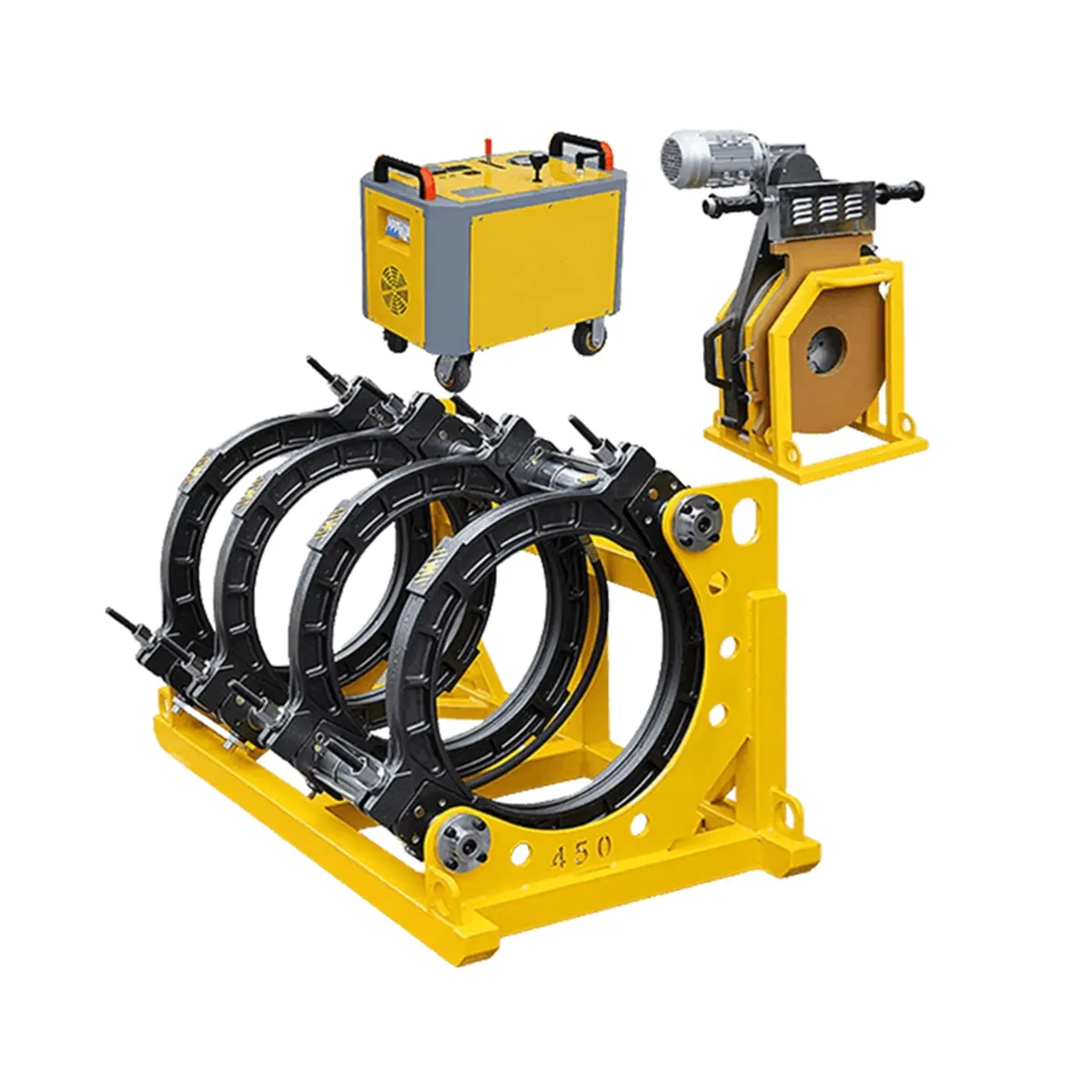
Hydraulic power unit: Generates the accurate pressure required for fusion.
-
Clamp frame & carriage: Holds pipes securely and ensures axial alignment.
-
Heating plate: Hardened, flat plate with accurate temperature control for even melting.
-
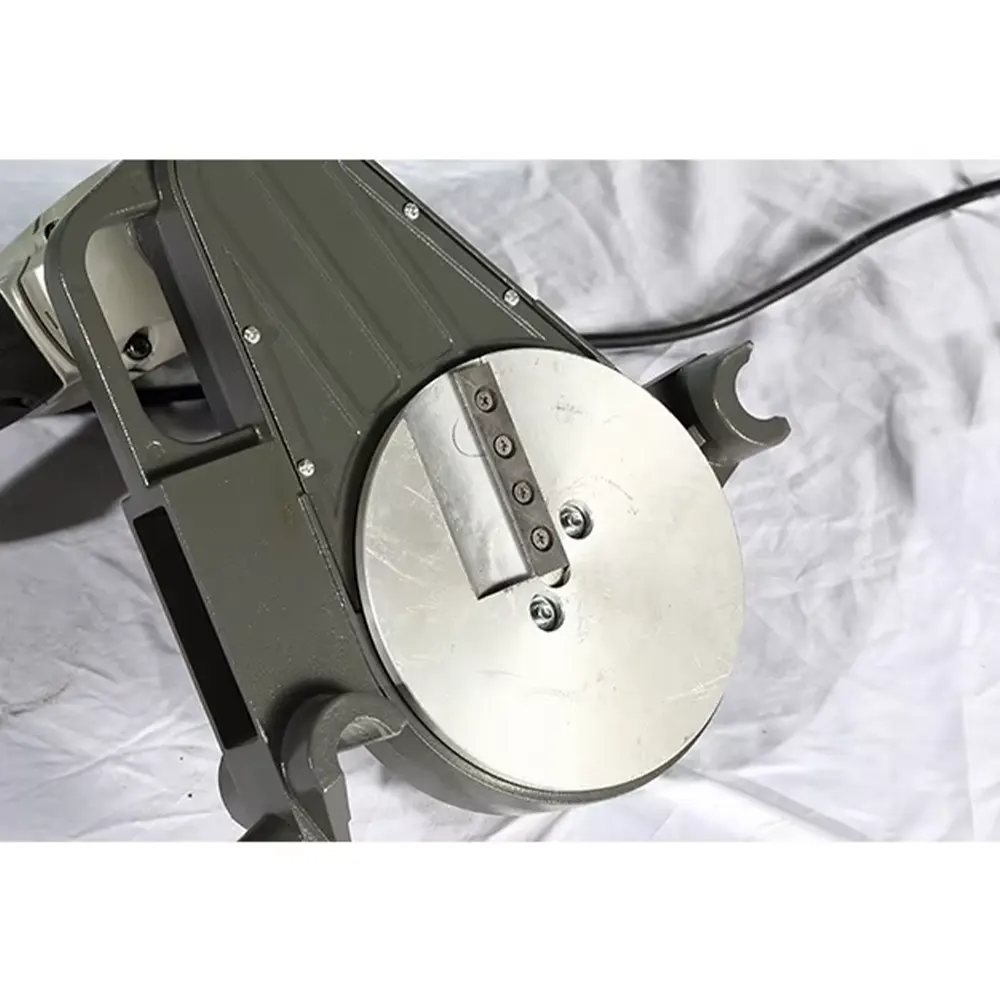
Facing tool: Precision trimmer to remove oxides and create square pipe ends.
-
Control valves & gauges: Allow regulation and monitoring of pressure and stroke.
Advantages of Hydraulic Machines
Consistency: Repeatable force and speed reduce joint variability. Efficiency: Faster cycle times for large projects. Power: Easy handling of large-diameter pipes and heavier clamps.
Common Applications
Hydraulic butt fusion welders are widely used in water supply networks, gas distribution, mining, sewage systems and industrial piping. They are especially valuable where long runs of HDPE or large-diameter sections require robust, leak-free joints.
Hydraulic vs Manual vs Automatic
Manual: Best for small-diameter, low-volume work; low cost but operator-dependent quality.
Hydraulic: Balanced choice for medium-to-large jobs — combines control and portability.
Automatic/CNC: Highest repeatability and data logging for critical or high-volume production, at higher cost and complexity.
How to Choose the Right Machine
Consider pipe diameter range, required pressure, site power availability, portability, hydraulic oil type and spare-parts access. Look for robust frames, hardened heating plates and easy-to-service hydraulics. Warranty and after-sales service are crucial for minimizing downtime.
Quick Specification Comparison
| Model Feature | Typical Range | Best For |
|---|---|---|
| Small Hydraulic Units | 16–160 mm | Local service connections, repairs |
| Medium Hydraulic Units | 160–630 mm | Municipal pipelines, gas mains |
| Large Hydraulic Units | 630–2250 mm+ | Major trunk lines, industrial installations |
Maintenance & Safety Tips
Daily checks: Inspect hydraulic oil levels, clamps, heating plate surface and facing blades.
Calibration: Verify temperature control and pressure gauges regularly to maintain joint quality.
Safety: Use PPE, lockout hydraulics when servicing, and allow proper cooling time after fusion to avoid burns.
Buying and Operational Tips
-
Request cycle-time and pressure data from manufacturers to compare real-world productivity.
-
Confirm availability of spare parts and local service support.
-
When possible, test a sample weld or review factory welding data to validate machine performance.
Manufacturer Profile
JQ-Fusion is a professional manufacturer specializing in HDPE pipe welding machines, providing reliable butt fusion solutions for global infrastructure projects. Visit https://jq-fusionwelding.com/ for product ranges and support.
FAQ — Fast Answers
Q: Can hydraulic welders handle very large diameters?
A: Yes — heavy-duty hydraulic units and frames are built specifically for large-diameter HDPE pipelines.
Q: Are hydraulic welds as reliable as automatic welds?
A: When properly operated and maintained, hydraulic welds provide excellent, repeatable quality comparable to automatic systems for many applications.
Choosing the right hydraulic butt fusion welder depends on pipe size, site conditions and required throughput. Proper training, routine maintenance and quality components will keep your pipe fusion operations efficient and reliable.



