
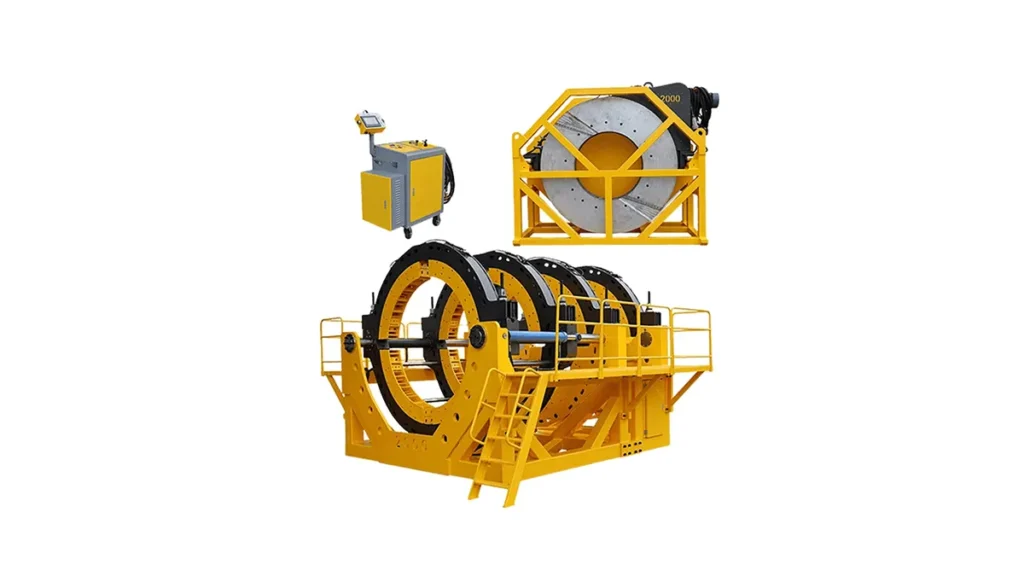
HDPE welding equipment plays a central role in building durable water, gas, and industrial pipeline networks. This troubleshooting guide helps technicians, contractors, and maintenance teams quickly identify common butt fusion and electrofusion machine issues, diagnose root causes, and apply practical solutions to reduce downtime and ensure weld integrity.
How to Approach HDPE Welding Problems
Start with safety: confirm power is isolated, wear PPE, and verify pipe handling is secure. Then use a logical workflow: observe symptoms → verify settings and consumables → test simple fixes → escalate for part replacement or service calibration.
Quick Diagnostic Checklist
- Machine power & controls: check mains voltage, fuses, emergency stop, and display errors.
- Heater plate condition: inspect for scratches, contamination, and correct temperature reading.
- Clamping and alignment: ensure pipes are parallel, clamped firmly, and facing tools/trimmers are clean.
- Hydraulics & pneumatics (if applicable): check oil level, leaks, and pressure gauges.
- Welding program & calibration: confirm fusion parameters (pressure, temperature, soak time) match pipe standard.
Common Problems and Practical Fixes
1. Poor Weld Bead or Cold Weld
Symptoms: bead irregularities, visible gaps, low tensile strength on test samples.
- Cause: incorrect heating plate temperature or insufficient soak time.
- Fix: verify plate temperature with a calibrated thermometer; clean the heater surface; increase soak time per material spec.
2. Excessive Flash or Over-Extrusion
Symptoms: large flash beyond expected bead, pipe deformation near joint.
- Cause: too much hydraulic pressure or excessive fusion time.
- Fix: reduce final fusion pressure and adjust fusion time to recommended values; inspect clamp alignment to avoid eccentric loading.
3. Uneven Heating or Hot Spots
Symptoms: asymmetric melt line, one-sided fusion, inconsistent bead height.
- Cause: damaged heating plate element, warped plate, or faulty thermostat.
- Fix: inspect plate surface for gouges; replace or service heating element; run a temperature mapping test and replace thermostat or control board if readings vary.
4. Machine Won’t Power On or Random Shutdowns
Symptoms: unit fails to start, display blank, or trips during welding.
- Cause: blown fuse, loose power connections, overheating protection, or faulty control module.
- Fix: check mains supply and fuses, tighten connectors, ensure adequate ventilation, and review error codes on the control panel. Replace control module if persistent faults appear.
5. Hydraulic Issues: Slow or No Movement
Symptoms: slow clamp travel, no hydraulic pressure, leaks from hoses.
- Cause: low hydraulic oil, contaminated fluid, faulty pump or relief valve.
- Fix: top up or replace hydraulic oil, bleed the system, inspect hoses and fittings for leaks, and test pump pressures. Replace seals or pump components as needed.
6. Alignment & Pipe Fit Problems
Symptoms: misaligned pipes, gaps at the joint, difficulty clamping.
- Cause: worn clamp inserts, incorrect fixtures, or damaged faces due to debris.
- Fix: inspect and replace clamp jaws/inserts, clean pipe ends and tools, use proper spacers, and verify pipe end-face squareness with a face gauge.
Troubleshooting Table: Fast Reference
| Issue | Likely Cause | Quick Fix |
|---|---|---|
| Cold or weak weld | Low plate temp / short soak | Calibrate temp; extend soak |
| Over-flash / deformation | Excess pressure/time | Reduce pressure/time; recheck specs |
| Uneven melt | Damaged heater / thermostat | Replace plate or control sensor |
| Hydraulic sluggish | Low oil / pump fault | Refill oil; test pump & valves |
Preventive Maintenance Best Practices
- Daily: clean heater plates, check clamps, inspect seals and hoses, verify display errors.
- Weekly: check hydraulic oil level, test temperature sensor accuracy, lubricate moving parts.
- Monthly: run calibration checks against reference thermometers, inspect electrical connections, replace worn clamp inserts.
- Recordkeeping: log weld cycles, parameter settings, and maintenance actions to spot trends before failures occur.
Operator Tips for Consistent Results
- Always use certified pipe material and follow SDR-specific fusion parameters.
- Use a clean, undamaged heater plate and avoid excessive scraping.
- Allow machines to warm up to stable operating temperature before critical welds.
When to Call for Professional Service
If after basic diagnostics and calibration the machine still shows inconsistent temperature control, repeated hydraulic failures, or electrical faults leading to shutdowns, schedule professional inspection and repair. Complex control board issues, deep heater element faults, or structural damage require certified technicians.
Quick Glossary
- Soak time: time heater touches pipe ends to bring surfaces to melt state.
- Flash: the extruded bead of molten material formed at the joint perimeter.
- Butt fusion: HDPE welding method joining two pipe ends with heat and pressure.
For equipment selection, spare parts, or advanced technical support, contact JQ-Fusion via their website: https://jq-fusionwelding.com/



