
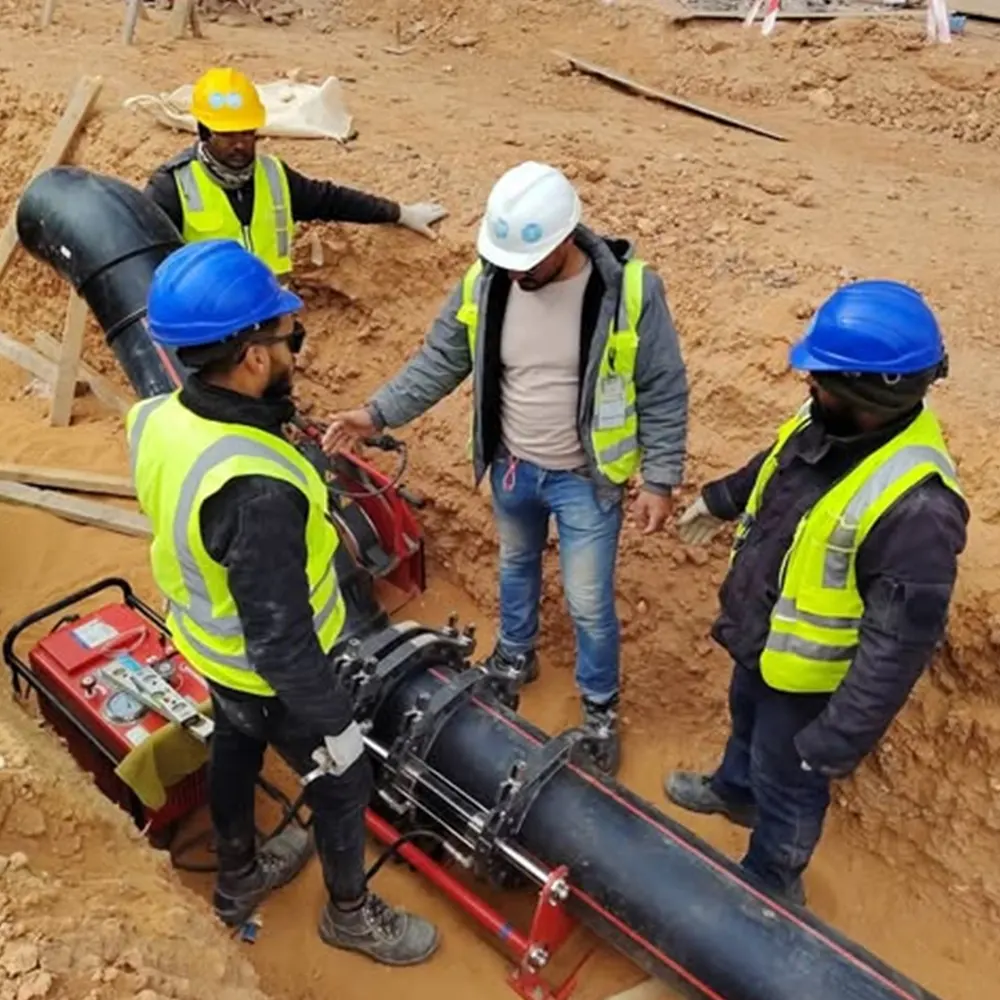
When a pipeline project starts to move from planning to execution, labor often becomes one of the biggest cost questions. Many buyers focus first on equipment prices, pipe material, or project deadlines, but the real field expense is usually found in the workforce needed to prepare, align, heat, fuse, inspect, and document each joint. If you are trying to estimate how much fusion welding labor costs, the answer depends on job complexity, pipe diameter, site conditions, crew skill level, and production targets. In practical terms, labor is not only the hourly wage of a welder; it also includes helpers, supervision, travel time, safety requirements, setup, and the time spent maintaining welding quality.
In butt fusion work, the labor budget can vary dramatically between a small irrigation line and a large industrial pipeline. A simple job in a controlled environment may require only a small team and predictable working hours, while a remote project with large-diameter HDPE pipe can require a more experienced crew, heavier handling equipment, and tighter quality control. That is why project managers often build their estimates around both direct labor cost and the hidden labor time that comes from preparation and inspection. For contractors and distributors comparing equipment and productivity, understanding the connection between welding speed and labor cost is essential.
Key idea: labor cost for fusion welding is usually calculated per hour, per joint, or per meter of installed pipeline, but the most accurate estimate combines all three perspectives. In many projects, the biggest savings come from reducing rework, improving alignment efficiency, and using the right machine for the pipe size and welding standard.
What Determines Fusion Welding Labor Cost?
The labor price for fusion welding is influenced by several core factors. The first is pipe size and wall thickness. Smaller pipe is faster to handle and heat, so labor hours are lower. As pipe diameter increases, operators need more time for preparation, clamp alignment, heating, changeover, and cooling. Larger pipe also usually requires more workers to move, position, and secure the sections safely.
Another major factor is jobsite complexity. A flat, open construction site with easy access will always cost less than a cramped trench, a mountain pipeline, or a project with strict access limits. Weather can also affect labor efficiency. In cold, windy, or rainy conditions, crews may need extra time to protect the fusion area and maintain stable welding temperature. Poor site organization can create delays that raise the labor bill even when the welding itself is straightforward.
Operator experience matters as well. A certified team with years of butt fusion work can complete joints more consistently and with fewer mistakes. In contrast, an inexperienced crew may need longer setup times, more supervision, and repeated welds. The cost of labor also changes by region. Local wage levels, overtime rules, travel allowances, and contractor markups all affect final pricing. Some projects require documentation and inspection records, which adds time to every joint and should be included in the estimate.
Typical Labor Cost Structure
Fusion welding labor is usually organized into a few categories. The most visible cost is the welder’s wage, but a realistic estimate should also include pipe fitters, machine operators, helpers, foremen, and quality inspectors. For small projects, one operator may handle both the machine and the welding record. For larger jobs, the crew can include multiple people to keep the process moving without sacrificing quality.
Common labor components include:
✅ Welder/operator time for machine setup, heating, joining, and cooling supervision
✅ Helper labor for pipe handling, cleaning, and positioning
✅ Supervisor or foreman time for coordination and productivity control
✅ Inspection and documentation for compliance and project reporting
✅ Mobilization and downtime such as waiting for materials, permits, or site access
In many estimating models, direct welding labor can look modest at first, but once helpers, supervision, and delay time are added, the real number rises quickly. That is why contractors often prefer to measure labor by production rate rather than by wage alone. A crew that seems more expensive per hour may actually be cheaper per completed joint if it works faster and delivers fewer defects.
How to Estimate Labor Cost Per Joint
A practical way to estimate fusion welding labor is to calculate the average time needed for one joint and multiply it by the labor rate of the crew. For example, if a project requires 20 minutes of active welding time plus 15 minutes of alignment, handling, and cleanup, the real labor time per joint is not 20 minutes but 35 minutes or more. Add cooling checks, documentation, and occasional repositioning, and the number becomes even higher.
For small-diameter pipe, one crew may complete multiple joints in an hour, especially when the site is organized and the machine is efficient. For larger pipe, each joint may take much longer, and the labor cost per joint rises accordingly. The best estimate method is to break the workflow into stages:
Estimation steps: pipe unloading, edge cleaning, machine setup, alignment, heating, fusion, cooling, visual inspection, and record keeping.
When you add all of these stages together, you can calculate both the labor cost per joint and the labor cost per project. This is especially useful for contractors bidding on fixed-price work, because it helps protect profit margins while still keeping the proposal competitive.
The Role of Equipment in Labor Savings
Labor cost is not only about people. The machine you choose can change productivity just as much as the crew size. A stable and accurate fusion welding machine reduces alignment errors, improves temperature control, and shortens the time needed for each weld. That means fewer interruptions and less wasted labor. For this reason, many contractors compare the cost of labor against the performance of the welding machine before making a purchase decision.
Using a reliable butt fusion machine can help reduce the time spent on setup and rework, especially when welding repeated pipe sizes across long pipeline sections. High-quality equipment is especially valuable in projects where consistency matters, such as water supply systems, gas distribution networks, mining lines, and industrial installations. Over the full project cycle, a better machine often lowers total labor cost even if the initial investment is higher.
JQ-Fusion, for example, focuses on providing manual, hydraulic, and CNC automatic butt fusion solutions for different project needs. For buyers working on global pipeline projects, equipment that supports stable performance and faster cycle times can directly improve jobsite productivity. If your crew is spending too much time adjusting clamps, fighting heat instability, or correcting misalignment, labor costs will rise quickly and may outweigh the savings from a lower-cost machine.
Labor Cost Range by Project Type
Although exact prices vary widely, it is helpful to think about labor cost in project categories. Small utility work usually has lower labor expenses because pipe size is smaller, handling is simpler, and the crew can work quickly. Medium infrastructure work may require more specialized workers and longer cycle times. Large industrial or transmission projects generally have the highest labor cost because the pipe sections are heavier, the schedule is stricter, and the quality requirements are more demanding.
A low-complexity job may only need a compact team and a short setup time. A mid-range project may need additional helpers and inspection support. A large-diameter project may require a fully coordinated crew with machine operators, signal workers, and logistics support. In all cases, the key question is not just “What is the wage?” but “How many labor hours are required to deliver each qualified weld?” That is the number that decides whether the project stays profitable.
Useful rule of thumb: the more complex the pipe handling and the stricter the inspection requirements, the more labor cost will rise relative to equipment cost. Projects that move fast, use standardized settings, and minimize rework tend to produce the best labor efficiency.
How to Control Fusion Welding Labor Cost
Controlling labor cost starts with preparation. Good site layout reduces movement, and clear staging areas keep pipe sections within easy reach. When the crew does not waste time searching for tools or repositioning material, productivity rises. Training is another powerful cost-control tool. A trained operator can work faster while maintaining quality, which reduces the chance of expensive rework.
It also helps to standardize your welding workflow. When settings, inspection points, and safety steps are documented, the crew can repeat the same process across multiple joints. This lowers variability and improves scheduling accuracy. Preventive maintenance is important as well. A machine that is calibrated and inspected regularly is less likely to create delays due to temperature errors, hydraulic instability, or clamp misalignment.
Finally, choose equipment that matches the job rather than overcomplicating the process. A project that only needs moderate pipe sizes may not require the most advanced automation, but it does need dependable performance. The right balance between machine capability and crew size is often the fastest path to lower labor cost.
Why Accurate Estimation Matters for Buyers and Contractors
Accurate labor estimation protects both the contractor and the client. For buyers, it helps compare equipment options based on real jobsite efficiency instead of marketing claims. For contractors, it supports stronger quotations and better project planning. When labor is underestimated, margins shrink quickly. When it is overestimated, bids may become uncompetitive. The goal is to understand actual productivity under realistic field conditions.
For global projects, this is even more important because labor rates, certification requirements, and shipping schedules can vary from country to country. A machine supplier with strong technical support and customization ability can make the process easier by matching the equipment to the actual pipeline requirements. That is one reason many buyers look for manufacturers with proven experience, stable stock supply, and reliable after-sales support.
Bottom line: the cheapest labor quote is not always the most economical choice. A higher-quality crew using a reliable machine can complete more joints per day, reduce defects, and lower the total cost of installation.
Working with the Right Fusion Equipment Partner
If you are estimating labor for a real project, it helps to work with a manufacturer that understands both the machine and the field conditions. JQ-Fusion provides welding solutions designed for different pipeline applications, including hydraulic butt fusion welding machines, automatic butt fusion welding machines, electrofusion welding machines, and multi-angle pipe fitting welding machines. With over 20 years of industry experience, the company supports contractors and distributors who need reliable performance, customization, and technical guidance.
That support can indirectly reduce labor cost because the crew can get faster training, better equipment matching, and more stable welding output. In practical field work, those advantages matter. When a machine is built for efficiency and backed by responsive service, the project team spends less time solving equipment problems and more time completing quality welds.
Frequently Asked Questions
Q1: Is fusion welding labor charged per hour or per joint?
It can be charged either way. Many contractors track both hourly labor and cost per joint so they can estimate project profitability more accurately.
Q2: What makes labor more expensive on large-diameter pipe?
Large pipe takes longer to handle, align, heat, and cool. It may also require more workers and more inspection time, which increases total labor cost.
Q3: Can better equipment really reduce labor cost?
Yes. A stable and accurate machine can reduce setup time, improve welding consistency, and lower rework, all of which reduce labor hours.
Q4: Should travel and mobilization be included in labor cost?
Absolutely. Travel time, setup time, and waiting time are part of the real labor expense and should be included in any complete estimate.
Q5: What is the best way to estimate labor for a new project?
Break the work into steps, estimate the time for each step, and multiply by the crew’s labor rate. Then add a margin for site delays, inspection, and possible rework.



