
Hot melt welding machines (commonly used for HDPE pipe butt fusion, electrofusion, and other thermoplastic joining methods) are robust on-site tools — but like any heavy equipment they can develop faults that slow projects and raise costs. This guide explains the most common problems, a practical troubleshooting workflow, and a simple maintenance plan to keep your welding machine reliable and productive.
Common Problems You May Encounter
Heating plate not reaching target temperature — often caused by bad thermostat, damaged heating element, or poor power supply. Check voltage at the machine and inspect the heating element for breaks or hotspots.
Poor melt bead or weak joint — uneven face preparation, wrong temperature/time settings, contaminated surfaces, or worn clamping jaws. Always verify pipe ends are square, clean, and aligned before welding.
Hydraulic failure or slow clamp movement — low hydraulic oil, air in the system, or worn seals. Look for leaks and check oil level/condition and filter state.
Control panel errors or intermittent readings — loose sensors, wiring corrosion, or faulty PCB. Inspect connectors, cable routing, and sensor mounts before replacing electronics.

Quick Troubleshooting Workflow
Step 1 — Stop and assess: Immediately halt welding if temperature or pressure is abnormal. Document error codes and take photos of the setup for later review.
Step 2 — Power & sensors: Verify incoming voltage and ground. Test thermocouples and pressure transducers with a multimeter to confirm accurate signals to the controller.
Step 3 — Mechanical inspection: Check clamp jaws, face trims, heater plate surface, and carriage rails for wear or debris. Misalignments often cause repeat failures.
Step 4 — Hydraulic system check: Inspect hydraulic hoses, fittings, reservoir level, and relief valves. Bleed air pockets and confirm pump performance under load.
Step 5 — Test run with controlled settings: Use a short test weld at recommended parameters after each corrective action to ensure the issue is resolved.
Essential Tools for Repair & Diagnostics
Multimeter, infrared thermometer, handheld clamp gauge, hydraulic pressure gauge, spare thermocouples, replacement fuses, and a portable heater element tester. Keep a compact toolkit in the machine’s service box to cut downtime.
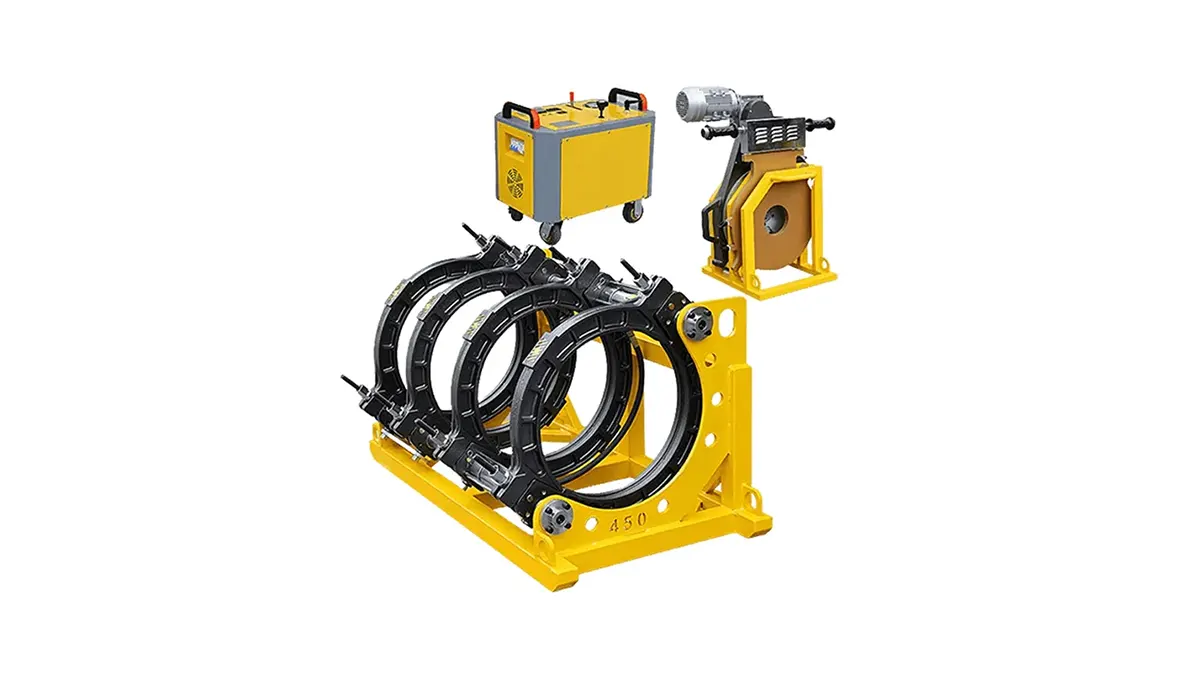
Maintenance Checklist — Daily, Monthly, and Annual
Daily: Clean heater plate and trims, inspect clamps for debris, verify cables are intact, and confirm temperature readings before starting. Record cycle counts and any anomalies.
Monthly: Verify hydraulic oil level & cleanliness, lubricate guide rails, check and tighten electrical connectors, and test safety interlocks and emergency stops.
Annually: Replace hydraulic oil and filters, calibrate temperature sensors, inspect and possibly replace heating elements and pressure transducers, and perform a full electrical inspection.
Safety & Best Practices
Always follow PPE protocols (heat-resistant gloves, eye protection, and insulated footwear). Never bypass safety switches, and ensure the machine is on a stable, level surface. For outdoor worksites, protect the machine from rain and extreme dust when idle.
Troubleshooting Table — Fast Reference
| Problem | Possible Cause | Quick Fix |
|---|---|---|
| Heater not heating | Burnt element / loose power cable | Check fuse, test element resistance, replace if open |
| Uneven weld bead | Misaligned pipe or dirty surfaces | Realign clamps and clean pipe faces with approved solvent |
| Slow hydraulic action | Low oil / clogged filter | Top up or replace oil; change filter and bleed system |
| Controller alarms | Sensor fault or wiring issue | Inspect connectors, measure sensor signals, replace sensor if needed |
Preventive Tips to Extend Machine Life
Keep a maintenance log tied to hours of operation, replace wear parts on a schedule, and train operators on proper face preparation and alignment. Store the machine in a dry, ventilated area and cover heating elements when not in use.
When to Call in Professional Repair
If electrical boards show repeated faults, hydraulic pumps lose efficiency despite maintenance, or you face calibration drift that affects weld integrity, schedule professional service. Complex PCB or hydraulic rebuilds are usually best handled by a certified technician to ensure safety and warranty compliance.
About JQ-Fusion: JQ-Fusion is a professional manufacturer specializing in HDPE pipe welding machines, providing reliable butt fusion solutions for global infrastructure projects. With experience across manual, hydraulic, and CNC automatic butt fusion machines, they support applications from water supply to gas distribution and mining.



