
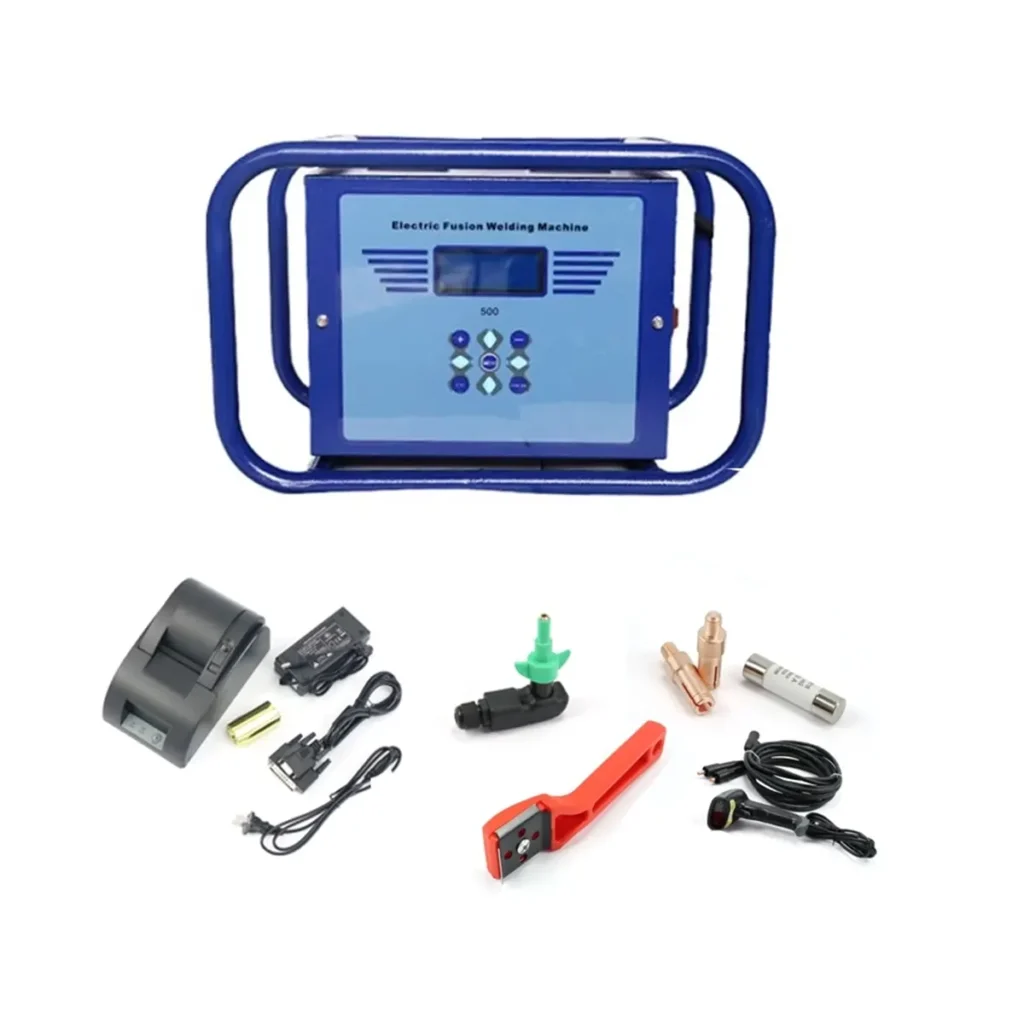
Understanding Electrofusion Welding Machines
Electrofusion welding machines are specialized devices used to join polyethylene (PE/HDPE) pipes and fittings using electrofusion couplers. Unlike butt fusion, which melts pipe ends together, electrofusion uses fittings with embedded heating coils; the machine supplies controlled electrical current that heats these coils, melting the fitting and pipe surfaces to form a permanent, leak-proof joint. This method is widely used across water, gas, and industrial pipeline projects for its reliability and ease of use.
How Electrofusion Works
1. Prepare: Clean and scrape the pipe surfaces to remove oxidation and contaminants. Proper surface prep is critical for a strong weld.
2. Insert fitting: Slide the electrofusion fitting onto the prepared pipe ends and clamp or secure it to prevent movement.
3. Connect the machine: Attach the machine’s electrodes to the fitting’s terminals or use an integrated connector. The machine reads the fitting code (often via barcode or sticker) and sets welding parameters automatically if supported.
4. Weld cycle: The machine delivers the programmed current and time. The embedded coil heats the fitting, melting the polymer and creating a molecular bond with the pipe.
5. Cooling & verification: After the heating phase, an enforced cooling time ensures joint strength. Most machines provide a weld report that documents time, current, and error codes.
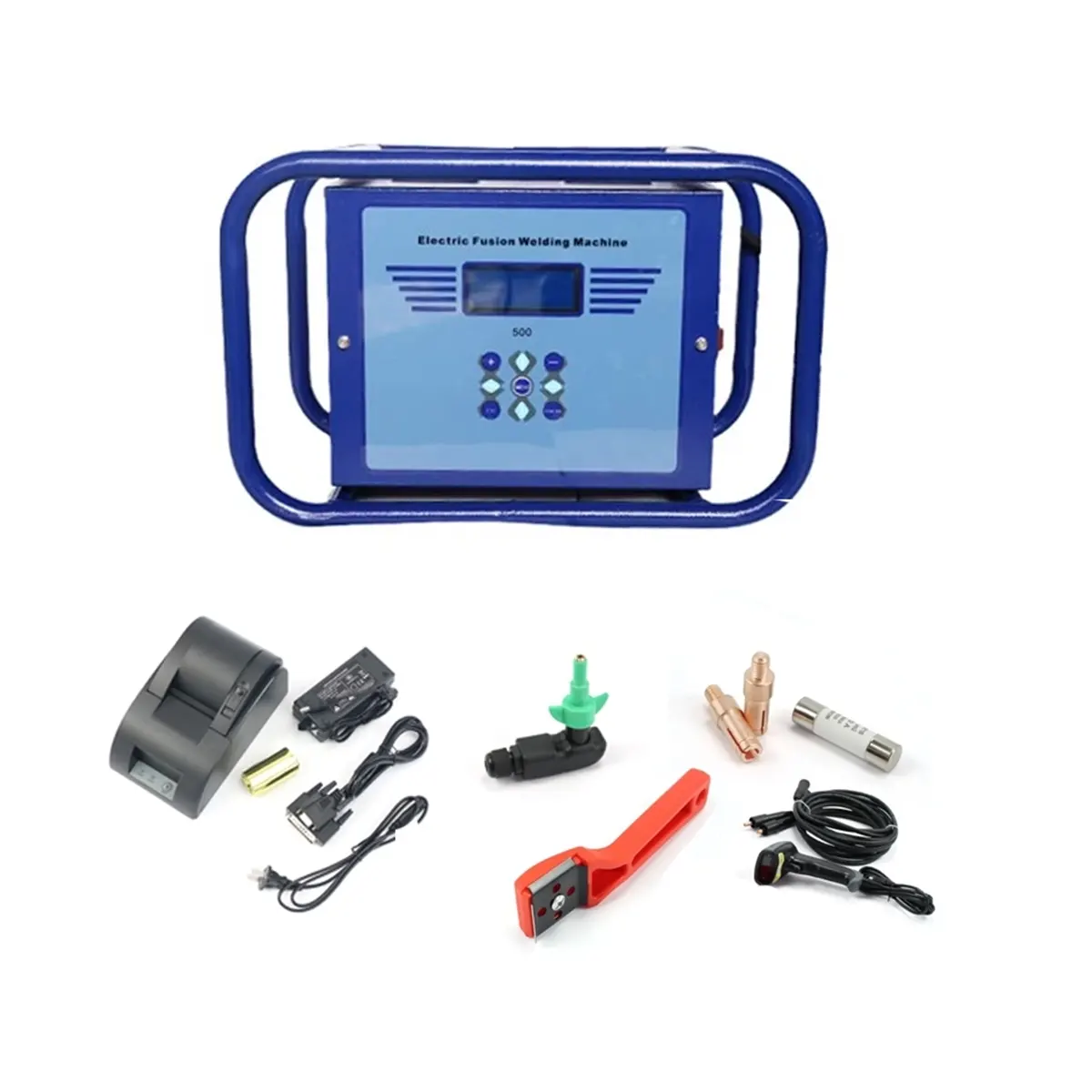
Key Components of an Electrofusion Welding Machine
Control unit: Programmable electronics that regulate current, time, and log weld data. Advanced units display weld programs, barcodes, and diagnostics on-screen.
Power supply: Stable voltage and current delivery are essential. Some models include battery packs for remote field work.
Cables and connectors: High-quality leads and clamps ensure reliable contact with fitting terminals and minimize losses.
Clamping system and alignment tools: Keeps pipes and fittings perfectly aligned during welding. Portable clamps are common for field repairs, while bench systems support production environments.
Types of Electrofusion Machines
Portable/handheld units: Lightweight for service crews and small repair jobs. Ideal for on-site connections where mobility matters.
Bench or workshop units: Designed for consistent production in fabrication shops, with stronger power supplies and greater precision.
Automatic/programmable systems: Offer barcode scanning, weld data storage, network connectivity, and advanced diagnostics for critical infrastructure projects.
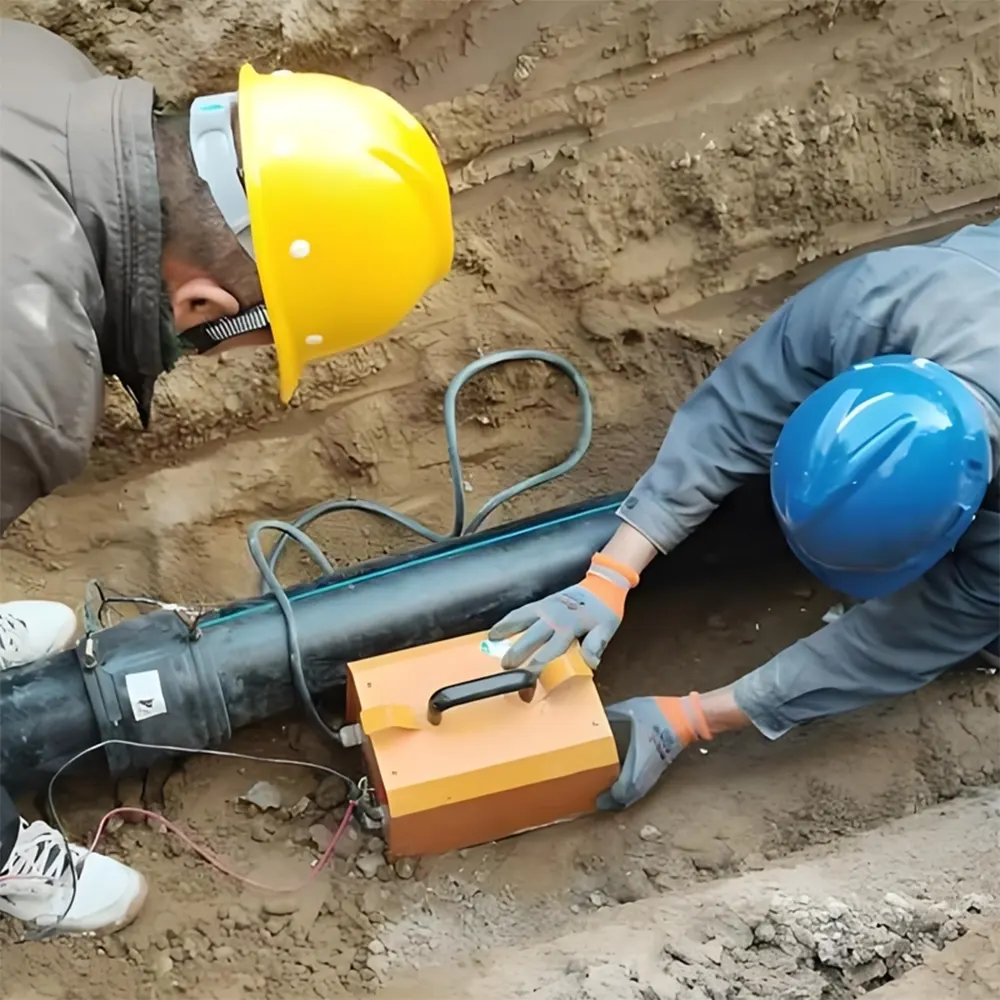
Common Applications
Electrofusion is widely used for connecting HDPE mains and service lines in municipal water and gas networks, trenchless installations, mining pipelines, and industrial chemical lines. Its advantages for repair work, tight spaces, and where mechanical coupling is impractical make it a go-to solution for many contractors.
Advantages at a Glance
Reliable seals: High-quality molecular bonds with excellent long-term performance.
Ease of use: Minimal operator skill required compared to some fusion methods; barcode/programmed welding reduces human error.
Versatility: Effective for fittings, couplers, tees, and saddle connections across varied diameters.
Electrofusion Machine Comparison
| Feature | Portable Units | Automatic/Bench Units |
|---|---|---|
| Typical Use | Field repairs & service | Shop fabrication & large projects |
| Power Source | Battery or small mains | High-capacity mains |
| Automation | Manual parameter input | Barcode & program-driven |
| Best for | Rapid field response | High-volume, traceable welds |
Installation and Safety Tips
Always read manufacturer instructions and follow local pipeline codes. Ensure proper personal protective equipment: gloves, eye protection, and insulated tools. Verify that clamps are secure and the fitting code matches the machine parameters. Avoid welding in wet conditions without appropriate protection for electronics and personnel.
Maintenance and Troubleshooting
Regularly inspect cables, connectors, and clamps for wear or corrosion. Keep the control unit firmware updated and back up weld logs when possible. If a weld fails, check for improper surface preparation, loose connections, or incorrect program selection. Many machines display error codes—refer to the manual for quick diagnostics.
Selecting the Right Machine for Your Project
Consider the pipe sizes, mobility needs, weld traceability requirements, and available power. For municipal and utility projects where documentation and repeatability matter, choose an automatic electrofusion unit with barcode scanning. For emergency repairs or remote locations, a robust portable machine with sufficient battery life is preferable.
Why Choose JQ-Fusion Electrofusion Equipment
JQ-Fusion manufactures a full range of pipe fusion equipment, including electrofusion machines designed for reliability and field performance. Our products support precise weld control, durable connectors, and traceable weld records—ideal for water, gas, and industrial pipeline projects worldwide.
For detailed specifications, model availability, and custom solutions, visit JQ-Fusion.



