
Pipe fusion machines are the backbone of modern thermoplastic pipeline installation. Whether joining HDPE mains for water and gas or connecting industrial process lines, these machines create strong, leak-free joints that last for decades. This guide explains how a pipe fusion machine works, the main types, where they matter most, and how to choose the right equipment for your project.
What Is a Pipe Fusion Machine?
A pipe fusion machine is specialized equipment designed to heat and join thermoplastic pipes—most commonly HDPE—by melting the pipe ends and pressing them together until the material fuses into a continuous, homogeneous joint. This process eliminates mechanical connectors and creates joints with strength comparable to, or greater than, the pipe itself.
Core Fusion Methods: How They Work
Butt Fusion
Butt fusion is the most common technique for larger-diameter pipes. The process includes aligning pipe ends in a clamp frame, facing them with a trimmer, heating both ends against a flat heating plate, and then pressing them together under controlled pressure and time to form a molecular bond.
Electrofusion
Electrofusion uses fittings embedded with resistance coils. The fitting is clamped around pipe ends and connected to a power-controlled unit. When energized, the coil heats the fitting and pipe surface, melting the interface and creating a sealed joint after cooling.
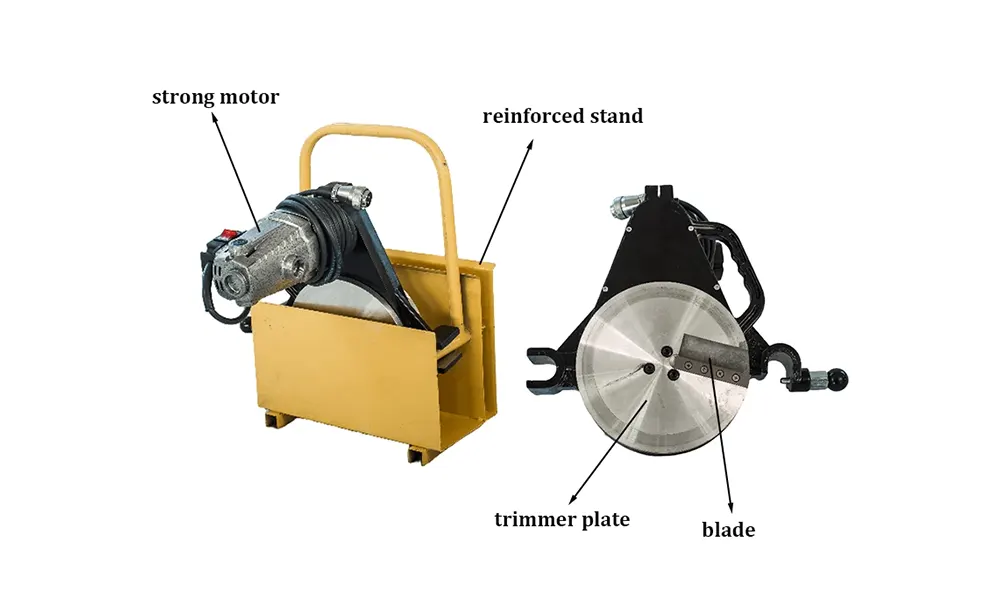
Main Components of a Butt Fusion Machine
Most butt fusion machines share several core parts: clamp/frame for pipe alignment, facing/trimming tool, heated plate, hydraulic or mechanical pressure system, and a control unit that manages temperature, pressure and timing. Advanced models add automatic cycle control and data logging for quality assurance.
Types of Pipe Fusion Machines
There are several styles to suit field and plant work. Each type targets different pipe sizes, project scales, and operator expertise levels.
| Type | Best For | Typical Pipe Range | Automation |
|---|---|---|---|
| Manual Butt Fusion | Small crews, remote sites | 20mm – 630mm | Low |
| Hydraulic Butt Fusion | Medium to large pipes, faster cycles | 63mm – 1600mm+ | Medium |
| Automatic/CNC Butt Fusion | High-volume production, precision joints | 63mm – 1600mm+ | High |
| Electrofusion Units | Repair work, branched connections | 20mm – 630mm (fitting dependent) | Medium |
Step-by-Step Butt Fusion Process
1. Preparation
Secure pipes in clamps and ensure ends are clean and square. Proper alignment is critical to avoid weak joints.
2. Facing
Use a facing tool to trim and square the pipe ends to a specified tolerance.
3. Heating
Bring the heating plate to the target temperature, then press both pipe ends to the plate for a controlled time to melt the surfaces.
4. Fusion and Cooling
Remove the plate, press pipe ends together at calculated force, and hold until the joint cools. Cooling time varies by pipe diameter and ambient conditions.
Why Pipe Fusion Matters: Benefits
Durability, leak-resistance, and long service life are the top advantages. Fusion joints are free from mechanical failure points, provide excellent chemical resistance, and reduce maintenance and lifecycle costs. For infrastructure projects like municipal water, gas distribution, mining, and industrial systems, fusion welding ensures reliable performance in harsh conditions.
Selecting the Right Machine
Consider project scale, pipe materials and diameters, site conditions, and required documentation. For high-volume or precision work, automatic/CNC fusion machines provide controlled cycles and data logs for quality assurance. For remote or occasional repairs, a manual or compact electrofusion unit might be more practical.
Maintenance and Safety Tips
Keep heating plates clean, verify calibration of temperature and pressure sensors, and inspect clamps and hydraulic systems regularly. Operators should be trained in standard fusion procedures and local safety standards. Consistent maintenance reduces downtime and ensures joint integrity.
Common Applications
Typical uses include potable water mains, gas distribution networks, sewer and drainage systems, mining slurry lines, and industrial chemical piping. HDPE pipelines fused with proper equipment are often preferred where corrosion resistance and flexibility are required.
Quick FAQ
Is fusion stronger than mechanical joining?
Yes. A properly executed fusion joint can be as strong as the parent pipe and eliminates gasketed or bolted failure points.
How long does a fusion joint last?
When performed according to standards and with quality equipment, fusion joints can last the lifetime of the pipeline—often 50 years or more depending on conditions.
Where to Find Reliable Equipment
For dependable HDPE pipe welding machines and support, JQ-Fusion supplies manual, hydraulic, and automatic butt fusion equipment across a wide size range to meet infrastructure and industrial needs.
Final Advice
Choose equipment that matches your project’s scale and quality requirements. Invest in training and regular calibration to ensure consistent results—proper fusion is the foundation of a leak-free pipeline system.



