
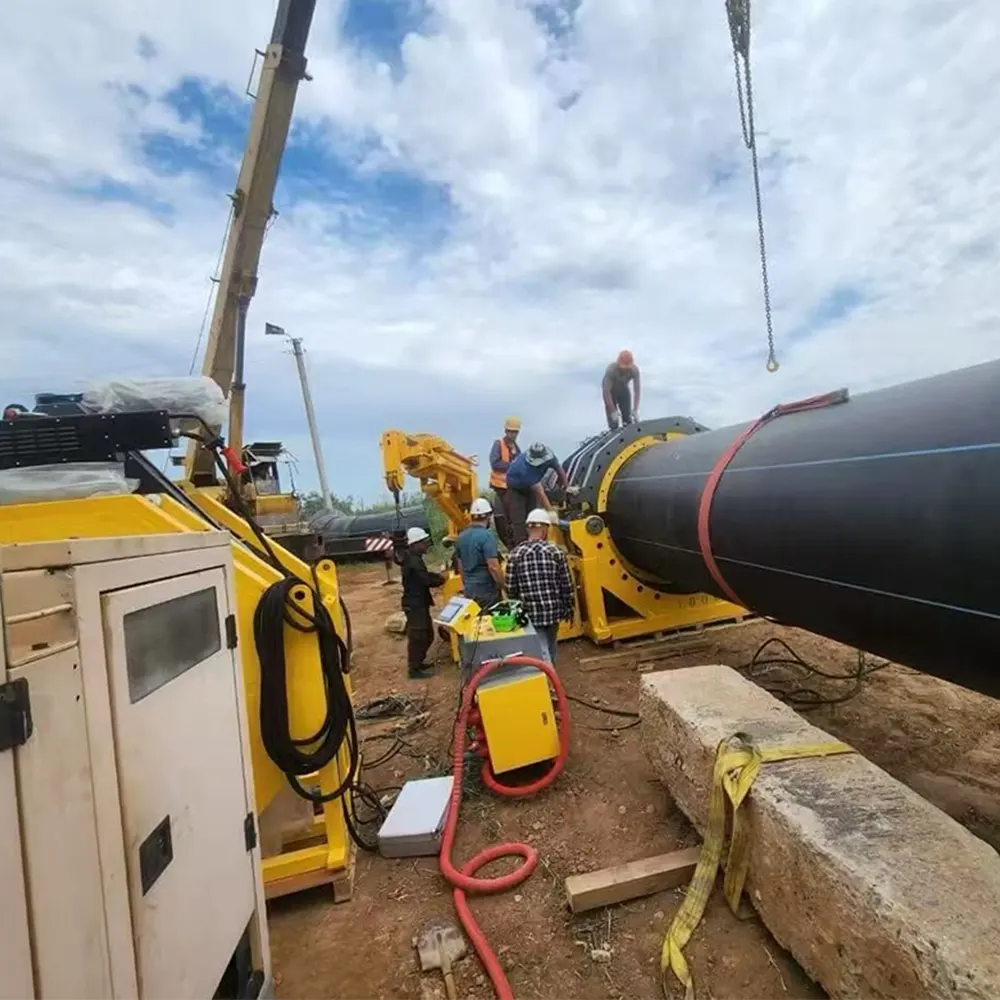
In modern pipeline construction, speed, precision, and consistency matter more than ever. That is why many contractors and fabricators are turning to an automatic pipe welding system for projects that demand reliable results and reduced manual labor. Whether the job involves water supply, gas distribution, mining, or industrial piping, automation helps teams maintain weld quality while improving efficiency on site.
An automatic pipe welding system is designed to streamline the butt fusion process from preparation to final joining. Instead of relying entirely on operator judgment, the machine controls key parameters such as heating time, pressure, alignment, and cooling cycles with high accuracy. This reduces human error and helps ensure that each weld meets the same standard, even across long project runs.
For companies that need dependable equipment, a trusted supplier such as butt fusion machine manufacturer JQ-Fusion can be a valuable partner. With more than 20 years of experience, JQ-Fusion provides manual, hydraulic, and CNC automatic solutions for a wide range of pipe diameters and project requirements.
What Is an Automatic Pipe Welding System?
An automatic pipe welding system is a specialized machine used to join thermoplastic pipes, most commonly HDPE pipes, through the butt fusion method. In this process, two pipe ends are heated until they reach a molten state, then pressed together under controlled force to form a strong, seamless connection after cooling. Automation adds a layer of control that makes the process more accurate and repeatable.
Unlike fully manual welding, automatic systems use digital control units, hydraulic assemblies, and temperature management technologies to manage the welding sequence. The operator still prepares the pipes and oversees the process, but the system takes over the critical technical steps. This is especially useful on large-scale installations where consistency across many joints is essential.
Key point: automation does not replace the welder entirely; it improves control, reduces variation, and supports safer, more efficient pipe joining.
Why Automatic Welding Matters in Pipeline Projects
Pipeline projects often involve long schedules, harsh environments, and strict quality standards. A small welding inconsistency can lead to expensive rework, downtime, or even system failure. Automatic pipe welding systems help reduce these risks by standardizing the fusion process. This makes them especially useful in infrastructure projects where every joint must be dependable.
Automated equipment also improves productivity. Because the welding cycle is programmed, crews can complete jobs faster and with fewer interruptions. That efficiency is valuable in remote project areas, emergency repairs, and large distribution networks where time and labor costs must be controlled carefully.
- Higher weld consistency across multiple joints
- Reduced operator fatigue during repetitive tasks
- Improved project efficiency for large installations
- Lower risk of human error in critical welding stages
How the Automatic Pipe Welding Process Works
Although different models may vary, the basic operating sequence of an automatic pipe welding system is similar. The process begins with pipe preparation, where the ends are cut, cleaned, and aligned in the machine clamps. Proper preparation is essential because even the best machine cannot compensate for poor surface condition or incorrect alignment.
Next, the machine performs facing, which removes a thin layer from the pipe ends to ensure they are smooth and parallel. After that, the heating plate is inserted between the pipe ends. The machine heats the surfaces to the required fusion temperature, which is monitored and regulated digitally to maintain stability.
When the correct melting stage is reached, the heating plate is removed and the pipe ends are brought together under controlled pressure. This creates a uniform fusion bead at the joint. The system then maintains pressure during cooling so the weld can solidify properly. Once the cycle is complete, the welded pipe can be removed and inspected.
Important: temperature, pressure, and time are the three most critical variables in butt fusion welding. Automatic systems help keep all three within the required range.
Main Components of an Automatic Pipe Welding System
A modern automatic pipe welding machine is made up of several interconnected parts, each contributing to the final weld quality. The frame and clamps hold the pipes securely in place. The hydraulic unit provides pressure during the fusion and cooling stages. The heating plate delivers consistent temperature across the pipe ends. The control system coordinates each stage of the operation.
In CNC automatic models, the control interface may store welding data and programs for different pipe sizes or materials. This is particularly useful for contractors handling multiple project specifications. By saving parameters, operators can repeat proven settings quickly and reduce setup time.
Highlighted benefit: digital control improves traceability and helps teams document welding performance for quality assurance.
Advantages of Using Automation in Butt Fusion
One of the biggest advantages of automation is reliability. A skilled operator is still important, but the machine takes over repetitive and sensitive actions that are difficult to perform with perfect consistency by hand. This leads to more stable weld quality and better long-term performance of the pipeline system.
Another major benefit is training efficiency. New operators can learn the process faster when the machine guides the sequence and limits incorrect settings. That makes automated equipment a practical choice for contractors who must scale up teams without sacrificing quality.
- Stable output for repeated welding tasks
- Better record keeping for project documentation
- Less rework and fewer failed joints
- Stronger adaptability for different pipe sizes and conditions
Where Automatic Pipe Welding Systems Are Used
Automatic pipe welding systems are widely used in water supply systems, gas distribution networks, industrial pipeline projects, and mining applications. In these sectors, the pipeline must withstand pressure, environmental stress, and long service life. Strong joints are not optional; they are essential to safety and operational continuity.
These systems are also common in municipal infrastructure and large contractor projects where long lengths of HDPE pipe are installed across multiple sites. Since each welded joint becomes part of a continuous line, automation helps maintain uniform strength along the full route.
JQ-Fusion supports such applications with a full product range that includes Hydraulic Butt Fusion Welding Machine, Automatic Butt Fusion Welding Machine, Electrofusion Welding Machine, and Multi-Angle Pipe Fitting Welding Machine. Their solutions are designed to meet the practical needs of contractors and distributors worldwide.
How to Choose the Right Automatic Welding System
Selecting the right machine depends on pipe diameter, material, project scale, voltage requirements, and the level of automation needed. For smaller projects, a simpler system may be enough. For larger or more demanding jobs, a CNC automatic model with data storage and precise hydraulic control may be the better option.
It is also important to consider after-sales support, spare parts availability, and customization options. A manufacturer with OEM and ODM capability can tailor the machine size, color, branding, and functions to match your business or project needs. This flexibility can be a real advantage in competitive markets.
Tip: choose a supplier that provides training, technical guidance, and reliable logistics support, not just the machine itself.
Why JQ-Fusion Is a Strong Partner
JQ-Fusion stands out through advanced manufacturing technology, strict quality control, and strong global support. Their production lines and precision machining equipment help ensure stable machine performance and long service life. Every machine is tested for temperature accuracy, hydraulic pressure stability, and clamp alignment before delivery.
They also offer flexible OEM and ODM customization, which is useful for companies that want to build their own brand presence. In addition, their large inventory and efficient supply chain help reduce delays and support urgent project timelines. For international buyers, these capabilities make sourcing easier and more dependable.
Their certifications and compliance with international standards, including SGS, further strengthen their position as a trusted supplier for global pipeline projects. With proven performance in multiple markets, they can support both small contractors and large distributors.
The Future of Automatic Pipe Welding
As infrastructure projects become more complex and quality requirements continue to rise, automatic welding systems will play an even greater role in pipe installation. The industry is moving toward smarter controls, better traceability, and higher efficiency. Machines that combine automation with data recording and user-friendly interfaces will be especially valuable.
For contractors, investing in automation is not only about speed. It is about building a stronger workflow, reducing operational risk, and ensuring each welded joint supports the long-term integrity of the entire pipeline system. That makes automatic pipe welding a practical and future-ready solution.
Bottom line: automatic pipe welding systems help create safer, faster, and more consistent pipeline installations with less dependence on manual repetition.
Frequently Asked Questions
1. What pipes can an automatic pipe welding system join?
Most automatic systems are used for HDPE pipes and similar thermoplastic materials in butt fusion applications. The exact range depends on the machine model and its clamp size.
2. Is automatic welding better than manual welding?
Automatic welding is better when consistency, efficiency, and documentation are important. Manual welding may still be suitable for simpler jobs, repairs, or smaller budgets.
3. How does automation improve weld quality?
It controls time, pressure, and temperature more precisely than manual operation alone. That helps reduce variation between joints and improves overall reliability.
4. Can JQ-Fusion customize welding machines for different projects?
Yes. JQ-Fusion offers OEM and ODM customization, including size, voltage, color, design, branding, and project-specific configurations.
5. What industries use automatic pipe welding systems the most?
Water supply, gas distribution, mining, and industrial pipeline installations are among the most common applications for automatic pipe welding systems.



