
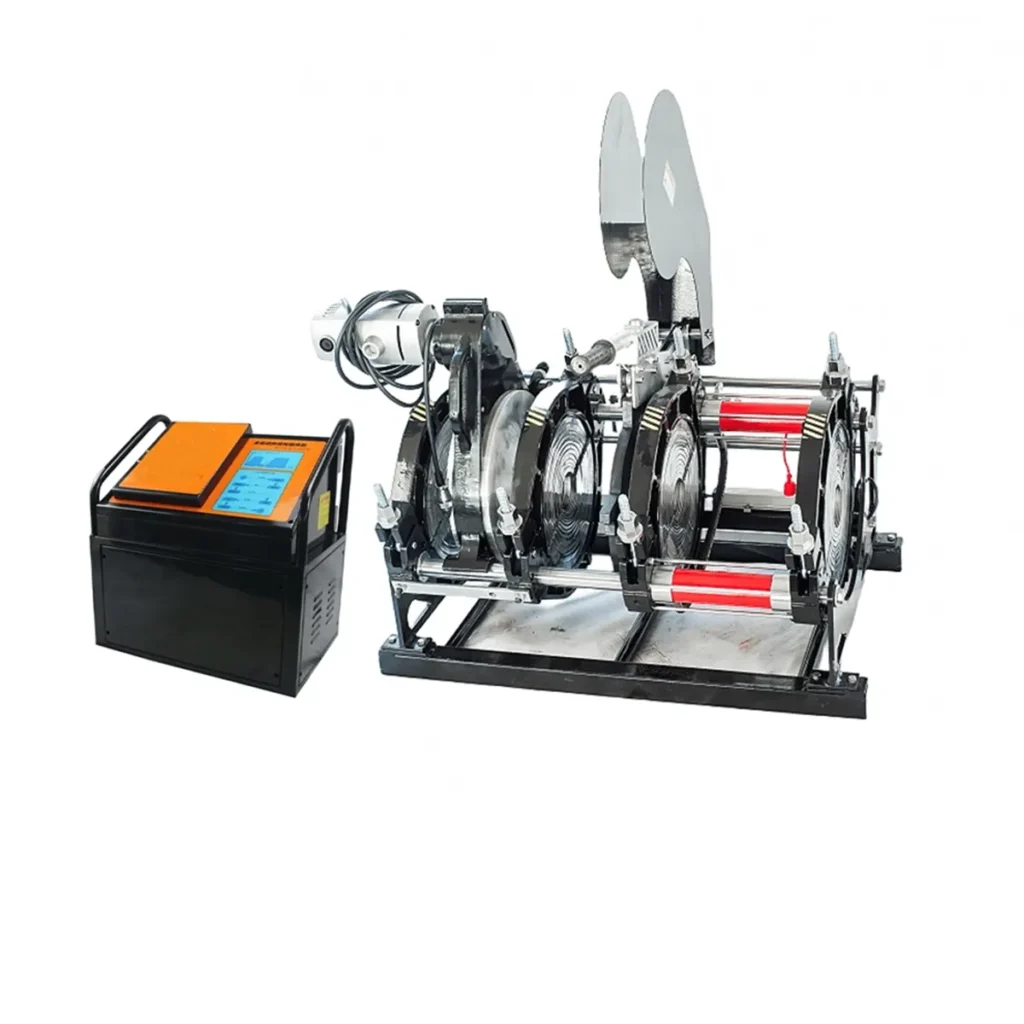
High-density polyethylene (HDPE) pipe heat fusion welding machines are specialized tools used to create strong, leak-free joints between thermoplastic pipes. Commonly called butt fusion or socket fusion equipment depending on the method, these machines are essential for water, gas, sewer and industrial pipeline installation projects — delivering durable, continuous pipelines with minimal failure points.
What Is an HDPE Pipe Heat Fusion Welding Machine?
An HDPE pipe heat fusion welding machine heats the ends of two polyethylene pipes and fuses them together under controlled pressure and temperature. The process produces a homogenous joint that is often stronger than the pipe material itself. There are several variants — manual, hydraulic, and CNC/automatic — each suited to different project scales and operator skill levels.
Why fusion is preferred
Heat fusion eliminates mechanical fittings at joints, reducing leak risk and maintenance. For municipal water mains, gas distribution and mining pipelines, fusion-welded HDPE systems offer long-term reliability and resistance to corrosion, chemical attack, and ground movement.
Main Types of HDPE Fusion Machines
Choosing the right machine depends on pipe diameter, jobsite mobility, production rate and operator experience. Common types:
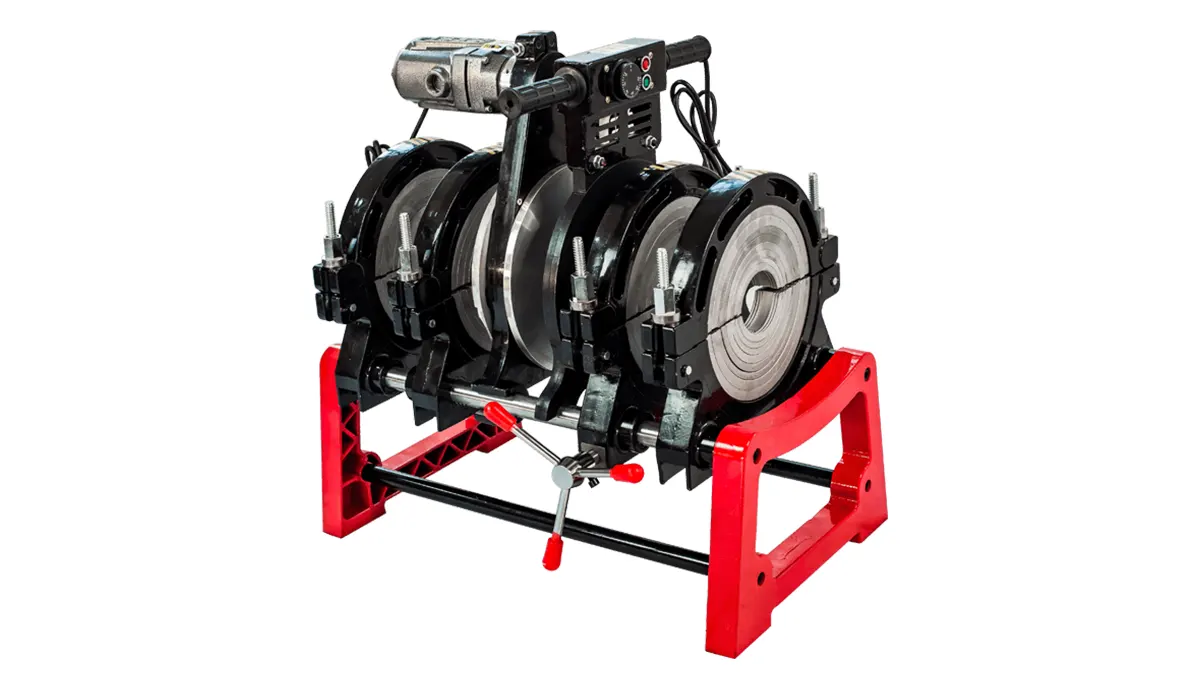
- Manual (clamp frame) – economical, portable, ideal for small-diameter pipes and intermittent work.
- Hydraulic – faster, more uniform pressure control for medium to large diameters.
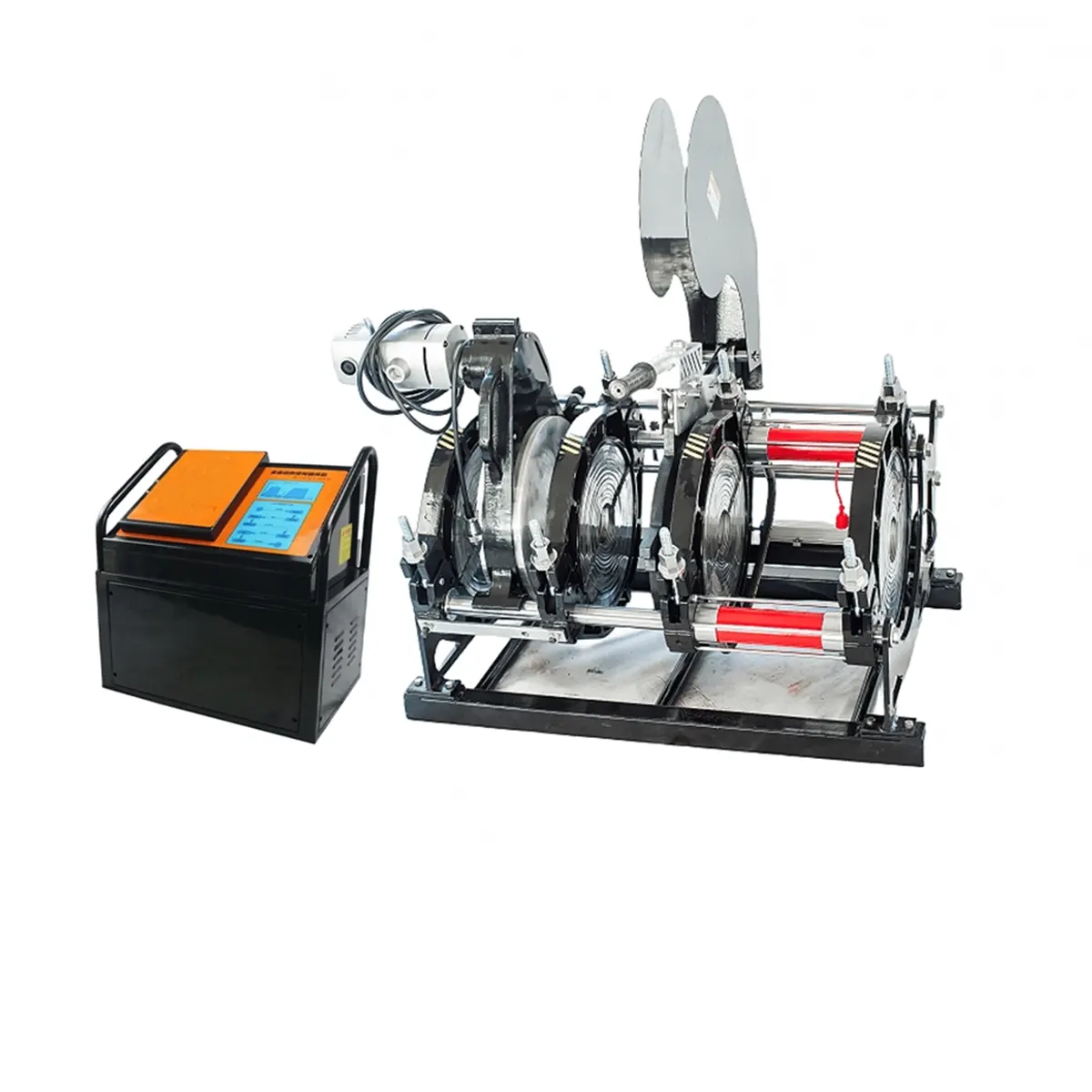
- Automatic/CNC – programmable cycles, data logging and high repeatability for large-scale projects and quality assurance.
Key components
The typical fusion unit includes: heating plate (exchanger), facing/trimming tools, clamps/alignment frame, hydraulic or electric drive, and a control panel. Advanced automatic units add sensors, PLC controllers and touchscreen interfaces for cycle control and traceability.
How Butt Fusion Works (Step-by-step)
Understanding the standard butt fusion workflow helps ensure quality joints:
- Prepare and align pipe ends in the clamp frame.
- Face/trime the pipe ends to remove irregularities.
- Insert the heated plate between ends for a precise melt.
- Remove the plate and apply specified fusion pressure until cool.
- Allow the joint to cool while maintaining alignment and pressure.
Performance Comparison
| Machine Type | Pipe Range (mm) | Automation | Best For |
|---|---|---|---|
| Manual Clamp | 20–400 | No | Small jobs, low budget |
| Hydraulic | 63–1200+ | Semi | Medium/large pipelines |
| Automatic/CNC | 90–2500+ | Yes | High-volume construction, QA tracking |
Benefits of Using a Quality Fusion Machine
Durability: Fusion joints have uniform material properties. Leak resistance: Continuous, welded pipelines reduce potential failure points. Flexibility: Works with a wide range of HDPE grades and wall thicknesses. Speed and consistency: Especially with automated systems, cycle-to-cycle variation drops dramatically.
Applications and Industry Uses
HDPE fusion machines are used across sectors: municipal water and wastewater, gas distribution, mining slurry lines, chemical plants, irrigation and stormwater management. Their resistance to corrosion and ability to accommodate ground movement make them ideal for both rural and urban infrastructure projects.
Selecting the Right Machine — Practical Tips
Consider these factors when choosing equipment:
- Maximum pipe diameter and wall thickness your projects require.
- Mobility needs — will the machine be truck-mounted or shop-based?
- Desired production rate and traceability requirements.
- Operator skill level and available training/support.
- Spare parts and local service network for downtime reduction.
Maintenance & Safety Highlights
Regularly inspect heating plates for flatness, keep hydraulic fluids clean and calibrated, and maintain clamp alignment. Follow manufacturer safety guidelines — wear appropriate PPE, guard hot surfaces, and follow controlled cooling times to avoid weak joints.
Common troubleshooting
If welds show voids or cold joints, check facing accuracy, plate temperature, and applied pressure. Inconsistent fusion beads often point to contaminated pipe ends, worn heaters, or misalignment.
Where to Buy & Manufacturer Selection
When sourcing equipment, compare specification sheets, warranty terms, calibration services and data-logging capabilities. For a balance of quality and range of models — manual, hydraulic and automatic butt fusion machines — consider manufacturers with global project experience and responsive after-sales support, such as JQ-Fusion.
Final thought
Investing in the right HDPE heat fusion welding machine pays off through faster installation, fewer leaks and long-term pipeline performance. Assess your project needs, operator training, and after-sales support to ensure consistent, high-quality welds every time.



