
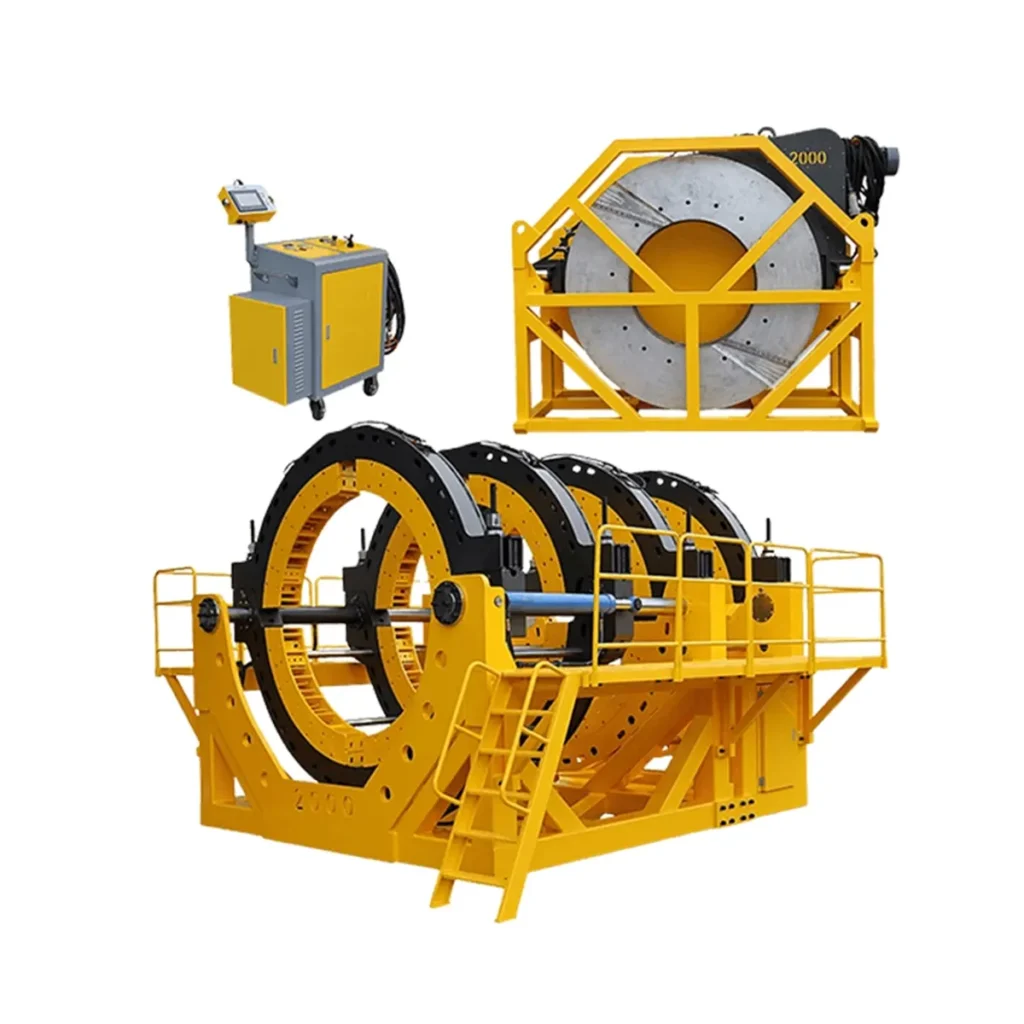
Choosing the right PE pipe butt fusion welder can make the difference between a reliable pipeline and repeated repairs. This guide breaks down the types, key specifications, and selection tips so contractors, utilities, and plant managers can pick a machine that matches their project demands.
What Is a PE Pipe Butt Fusion Welder?
Butt fusion welding machines join polyethylene (PE/HDPE) pipes by heating pipe ends and pressing them together until a homogeneous joint forms. These welders are essential for water, gas, mining, and industrial piping systems because they produce leak-free, high-strength connections when used correctly.
Main Types of Butt Fusion Welders
The three common categories to consider are:
Manual Welders
Compact and portable, manual welders are ideal for small-diameter pipe work and site repairs. They require skilled operators and are cost-effective for low-volume jobs.
Hydraulic Welders
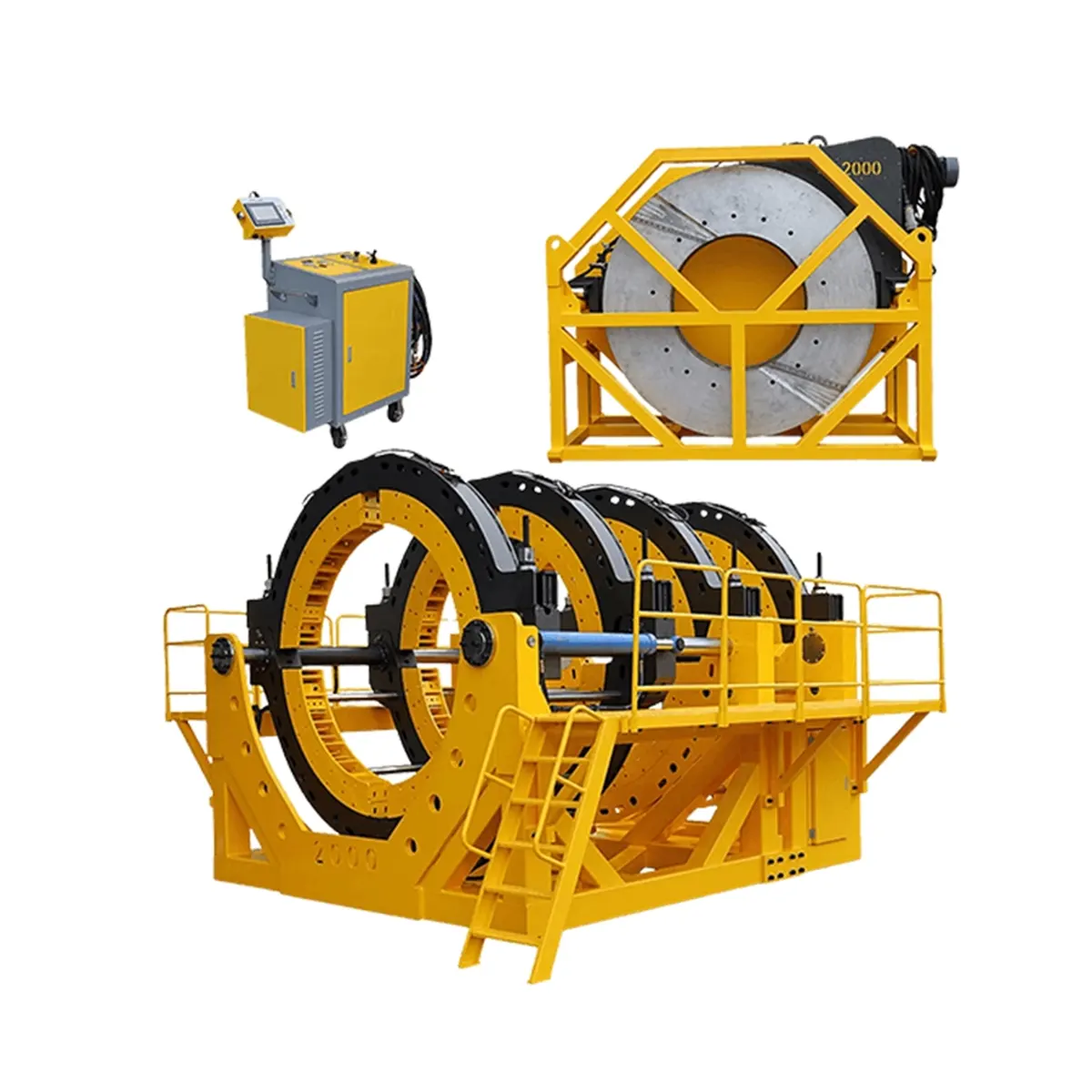
Hydraulic machines add power and precision for medium-to-large diameter pipes. They deliver consistent clamping and controlled force—suitable for construction sites and utility projects.
CNC / Automatic Welders
Automatic systems control heating time, pressure, and cooling with programmable accuracy. They are recommended for high-volume production, long pipelines, and critical infrastructure where repeatable weld quality is essential.
Quick Comparison Table
| Feature | Manual | Hydraulic | Automatic / CNC |
|---|---|---|---|
| Best use | Repairs, small pipes | Medium–large site work | Production & critical lines |
| Repeatability | Moderate | High | Very high |
| Operator skill | Skilled operator required | Trained operator | Lower skill, higher training on controls |
| Typical pipe range | Up to 400mm | 160mm–2250mm+ | 63mm–1600mm+ |
Key Specifications to Evaluate
When selecting a butt fusion welder, focus on these critical specs:
- Pipe diameter range — Ensure the machine covers your smallest and largest pipe sizes.
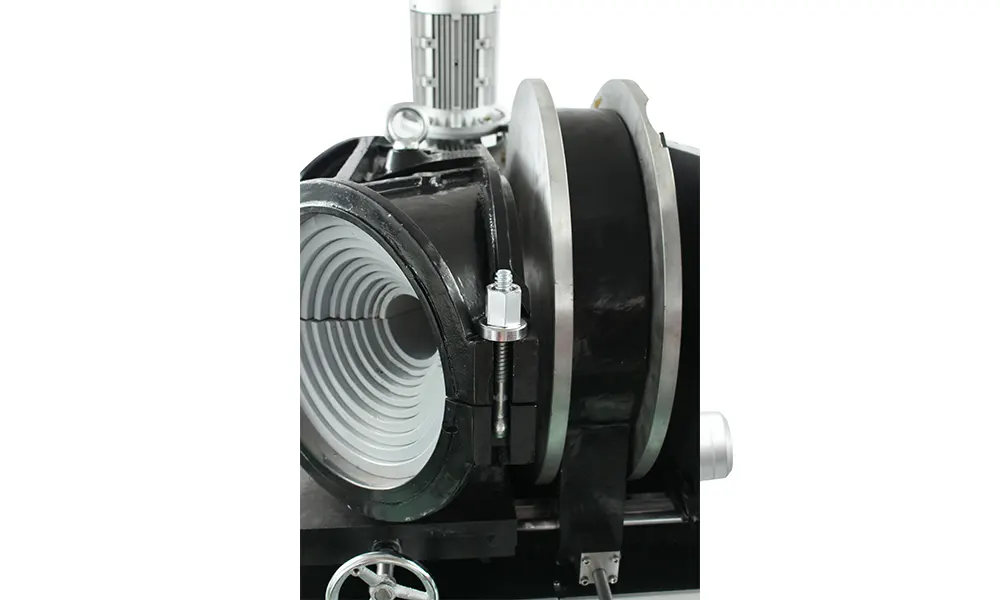
- Clamping force and stability — Vital for large-diameter joints to avoid misalignment.
- Heater plate quality — Uniform heating surfaces and quick temperature recovery improve weld consistency.
- Control system — Digital timers, pressure/force monitoring, and programmable cycles reduce human error.
- Transportability and power — Consider hydraulic power packs, electric drive options, and how easy the unit is to move on site.
Selecting the Right Machine for Your Project
Match machine capability to project scale and environment:
Small municipal or repair crews
Choose a reliable manual or compact hydraulic unit for fast mobilization and economical operation.
Large civil works and utility networks
Hydraulic or CNC automatic welders give the best balance of speed and quality for long pipelines and high daily joint counts. Prioritize machines with robust frames and precise alignment systems.
Industrial & specialized fittings
For factory or prefabrication work, automated systems with data logging and integration to quality control are preferred.
Maintenance, Training & Safety
Regular maintenance and operator training are essential to maintain weld quality:
- Calibrate controls and thermocouples periodically.
- Inspect clamps, screws, and hydraulic lines before each shift.
- Train staff on heating plate care, facing tools, and safety protocols for high-pressure equipment.
Cost vs. Value — What to Budget For
Initial cost varies widely: manual machines have the lowest purchase price, hydraulic models are mid-range, and fully automatic CNC units are the highest. Consider lifecycle costs: machine uptime, spare parts availability, after-sales support, and warranty terms affect total cost of ownership.
Common Questions
How important is machine data logging?
Data logging enables traceability and certifies weld records for critical projects—strongly recommended for municipal and utility contracts.
Can one machine cover all pipe sizes?
Some manufacturers offer modular frames and adapters to expand range, but very small and very large diameters may still require specialized units.
About the Manufacturer
JQ-Fusion is a professional manufacturer specializing in HDPE pipe welding machines, offering manual, hydraulic, and CNC automatic butt fusion solutions for pipelines used in water supply, gas distribution, mining, and industrial systems. Their product lineup covers small- to large-diameter pipes and is supported by manufacturing experience, quality control, and responsive service.
Final Selection Checklist
Before you buy, confirm:
- Pipe diameter coverage and adapter availability.
- Control accuracy and data logging features.
- Service network and spare parts lead times.
- Operator training and warranty/service agreements.
If you align machine capabilities with your project scale and quality needs, a well-chosen butt fusion welder will deliver durable, leak-free joints that reduce lifecycle costs and downtime.



