
The global pipeline industry depends on welding methods that are not only strong and efficient, but also standardized, traceable, and safe. Among these methods, butt fusion welding has become one of the most trusted techniques for joining polyethylene and other thermoplastic pipes. When engineers, contractors, and procurement teams ask about What Are the Butt Fusion Welding Standards ISO Requirements?, they are usually looking for a practical answer: which ISO standards apply, what each standard covers, and how those requirements affect real project quality.
In simple terms, butt fusion welding standards define how pipes and fittings should be prepared, heated, aligned, joined, tested, and documented. ISO requirements make the process more consistent across countries and industries, especially in water supply, gas distribution, mining, and industrial piping systems. For international projects, following the right standards helps reduce leakage risk, improve joint strength, and ensure the pipeline performs for many years.
Key point: Butt fusion is not only about melting two pipe ends together. It is a controlled engineering process governed by ISO-based rules for operator skill, machine accuracy, welding procedure, and inspection.
For contractors, compliance is also a commercial advantage. Buyers want evidence that welding equipment and procedures meet international expectations. That is why manufacturers and suppliers such as butt fusion machine providers increasingly design products around ISO requirements, testing standards, and project-specific customization.
What Butt Fusion Welding Means in Practice
Butt fusion welding is a thermal joining process used mainly for thermoplastic pipes, especially HDPE pipes. The pipe ends are clamped, faced to create smooth and parallel surfaces, heated with a hot plate, and then pressed together under controlled pressure. After cooling, the joint becomes a continuous section of pipe with strength close to, or in some cases equal to, the base material.
This method is widely used because it creates a permanent, leak-resistant connection without mechanical fasteners or solvents. However, the quality of the weld depends heavily on machine precision, operator discipline, and strict process control. Even a small deviation in temperature, pressure, or alignment can weaken the weld bead or create internal defects.
Important: A good butt fusion joint is invisible in daily operation, but poor welding can lead to expensive failures, emergency repairs, and downtime.
Which ISO Standards Are Most Relevant?
When discussing ISO requirements for butt fusion welding, several standards are commonly referenced. The exact standard used may vary by pipe material, application, and regional regulation, but the following are among the most important:
ISO 21307 is one of the most recognized standards for butt fusion jointing of polyethylene pipes and fittings. It provides guidance on fusion procedures, including different fusion methods and parameters.
ISO 21307 is especially important because it helps standardize how PE piping systems are joined. It addresses the fusion cycle, heating time, joining pressure, and cooling time. For engineers and installers, this standard is often the starting point for creating a reliable welding procedure.
Other related ISO documents may apply to specific pipe systems, such as standards for PE pressure pipe systems, fittings, and material classifications. In practice, project teams often use a combination of ISO guidance, manufacturer instructions, and site-specific welding procedures to meet performance and compliance targets.
Why Standards Matter More Than Just Equipment
Some buyers focus only on the machine model, but ISO compliance is broader than the machine itself. A high-quality welding machine is essential, yet it cannot guarantee success unless the whole process is controlled. That includes pipe surface preparation, environmental conditions, calibration, operator training, and post-weld inspection.
For example, a machine with unstable hydraulic pressure or poor clamp alignment may create uneven fusion. A machine with inaccurate temperature control may overheat the pipe or fail to achieve proper melt depth. This is why professional manufacturers invest in precision machining, temperature testing, pressure stability checks, and clamp inspection before delivery.
At JQ-Fusion, manufacturing quality is built around these expectations. Their equipment supports stable welding performance, which is essential for meeting ISO-driven project demands in real-world conditions.
Core ISO Requirements for Butt Fusion Welding
To understand the standards properly, it helps to break them into practical requirements. These requirements are not always listed in the same format in every standard, but the principles are consistent:
- Pipe and fitting compatibility: The joined components must be made from compatible thermoplastic materials and rated for the same pressure class.
- Correct end preparation: Pipe ends must be clean, flat, and aligned to support uniform fusion.
- Controlled heating temperature: The hot plate must maintain the correct surface temperature throughout the welding cycle.
- Precise pressure application: The fusion pressure must be consistent and suitable for the pipe size and wall thickness.
- Proper cooling time: The joint must remain undisturbed while it cools and stabilizes.
- Documented procedure: Welding parameters should be recorded for traceability and project quality control.
These requirements are important because butt fusion is highly sensitive to process variation. ISO-based control systems reduce dependence on guesswork and help installers repeat the same quality across many joints.
Tip: If the project involves long-distance water or gas pipelines, consistency matters more than speed. The cost of one bad weld can exceed the time saved during installation.
The Role of Welding Machines in ISO Compliance
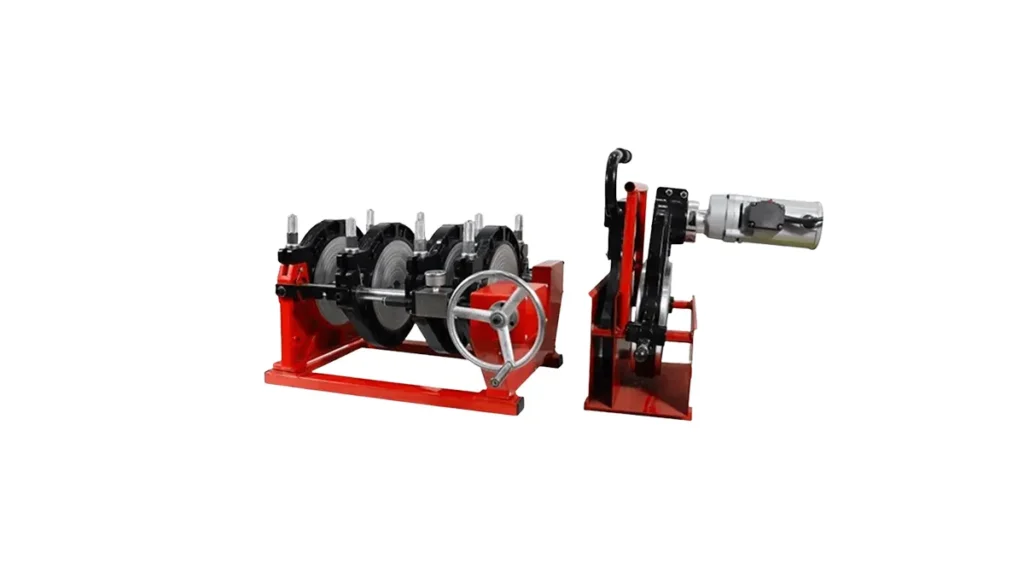
The welding machine is the heart of the butt fusion process. Whether the project uses manual, hydraulic, or CNC automatic equipment, the machine must support stable and repeatable welding parameters. ISO compliance becomes much easier when the machine provides accurate control of heating, clamping, pressure, and timing.
Modern equipment from experienced manufacturers usually includes the following advantages:
Features that support compliance: digital temperature control, stable hydraulic systems, precision clamps, data recording functions, and operator-friendly interfaces.
For large-scale projects, CNC automatic butt fusion welding machines are especially helpful because they reduce manual variation and improve repeatability. In environments where many joints must meet the same acceptance criteria, automation can significantly reduce risk.
JQ-Fusion’s product range includes hydraulic butt fusion welding machines, automatic butt fusion welding machines, electrofusion welding machines, and multi-angle pipe fitting welding machines. This range is useful for contractors who need different solutions for different pipeline conditions. The company also emphasizes OEM and ODM customization, which helps buyers adapt the machine to voltage, branding, design, and project-specific needs.
Operator Skill and Training Requirements
Even the best equipment cannot replace skilled operation. ISO-related welding quality depends on trained operators who understand the procedure and can recognize problems early. Training usually covers machine setup, pipe cleaning, alignment, heating cycle control, bead inspection, and safety procedures.
In many projects, certification or documented competence is required before operators are allowed to weld independently. This protects the project owner, reduces rework, and supports traceability if a future inspection is needed.
Operator focus: Correct preparation is as important as correct fusion. A clean, aligned, and properly faced pipe end is the foundation of a strong joint.
Inspection, Testing, and Quality Assurance
ISO compliance is not complete until the weld is inspected and, where necessary, tested. Quality assurance may include visual inspection of the weld bead, dimensional checks, records review, and pressure testing of the completed pipeline.
Visual inspection can reveal obvious defects such as misalignment, contamination, or irregular bead formation. More advanced quality systems may include destructive test samples, bend tests, or project-specific acceptance criteria. For critical infrastructure, documentation is often as important as the physical weld itself.
Manufacturers with strong quality control systems, like JQ-Fusion, often test temperature accuracy, hydraulic pressure stability, and clamp alignment before shipping. These checks help ensure the machine performs reliably under real construction conditions.
How ISO Requirements Help Global Projects
International projects often involve multiple contractors, different teams, and varying site conditions. ISO standards create a shared technical language that reduces confusion and supports consistent results across borders. This is especially valuable for:
- Urban water supply networks
- Gas distribution systems
- Mining slurry pipelines
- Industrial plant piping
- Infrastructure expansion projects
With a standardized welding procedure, project managers can better estimate labor, quality risk, and equipment needs. They can also compare machine suppliers more easily because the performance requirements are clearer.
Practical advantage: Standardization reduces dispute. When weld quality is measured against an ISO-based procedure, project acceptance becomes more transparent.
Why Manufacturers Should Build for Standards, Not Just Sales
For machine suppliers, following ISO requirements is not only a technical decision but also a market strategy. Buyers in global markets increasingly expect equipment that can support standard-compliant welding. This is one reason why manufacturers focus on stable stock supply, fast shipping, after-sales support, and technical training.
JQ-Fusion highlights more than 20 years of industry experience, strong OEM and ODM capability, and proven performance in global markets. These strengths matter because customers want more than a machine; they want a complete welding solution that can be used safely and effectively on real projects.
In practice, the best suppliers combine manufacturing precision with reliable service. That includes helping customers choose the right model, advising on configuration, and providing support during installation and use.
How to Choose a Butt Fusion Machine for ISO-Oriented Projects
If your project must align with ISO requirements, machine selection should be based on more than diameter range alone. Consider the following points carefully:
- Temperature control accuracy: Can the hot plate maintain stable heat?
- Hydraulic pressure stability: Is pressure delivery smooth and repeatable?
- Clamp alignment: Does the machine hold the pipe ends in correct position?
- Data logging: Can the welding parameters be recorded?
- Service support: Is technical guidance available when needed?
- Customization options: Can the machine be adapted to project needs?
Choosing the right machine can reduce welding errors and make ISO compliance much easier to manage. For large contractors, this also improves productivity and lowers the total cost of ownership.
Buyer reminder: A lower purchase price may look attractive, but unstable performance can create higher long-term costs through rework, delays, and maintenance.
The Business Value of ISO-Compliant Butt Fusion Welding
ISO compliance is not just a technical matter. It affects bidding, certification, project approval, client confidence, and long-term asset performance. Contractors who can show a clear welding procedure and proven machine capability often have a stronger position in competitive tenders.
Distributors also benefit because standardized products are easier to market globally. A machine that supports ISO-driven welding procedures can be sold across multiple regions with fewer adaptation issues. This is one reason why many suppliers invest in broad product lines and support systems.
In global infrastructure markets, the ability to deliver reliable fusion quality can become a decisive advantage. It reduces operational risk for the owner and improves reputation for the contractor and equipment supplier alike.
Common Mistakes to Avoid
Even experienced teams sometimes make avoidable mistakes. Some of the most common problems include using dirty pipe ends, applying the wrong heating time, removing the pipe too early during cooling, or ignoring calibration checks on the machine. These errors may seem small, but they can seriously affect joint quality.
Another frequent issue is assuming that all butt fusion machines perform the same way. In reality, build quality, hydraulic stability, and temperature control vary widely. A machine that looks similar on the outside may behave very differently in the field.
That is why choosing a trusted manufacturer with strict quality control is essential for projects that require consistent results.
Conclusion
Understanding What Are the Butt Fusion Welding Standards ISO Requirements? is essential for anyone involved in thermoplastic pipeline construction. ISO standards provide the framework for safe, repeatable, and high-quality fusion joints. They guide not only the welding procedure itself, but also machine selection, operator training, inspection, and documentation.
For global contractors and distributors, compliance brings more than technical confidence. It improves project acceptance, reduces risk, and strengthens market credibility. With professional equipment, strict quality control, and proper welding procedures, butt fusion can deliver long-lasting pipeline performance in demanding environments.
Final takeaway: ISO requirements turn butt fusion welding from a manual task into a controlled engineering process. When standards, training, and equipment work together, the result is a safer and more dependable pipeline system.
FAQs
What is the main ISO standard for butt fusion welding?
The most commonly referenced standard is ISO 21307, which provides guidance on butt fusion jointing procedures for polyethylene pipes and fittings. Depending on the project, other ISO documents may also apply.
Why is temperature control so important?
Temperature control affects how well the pipe ends melt and fuse. If the hot plate is too hot or too cold, the weld may become weak, uneven, or unreliable over time.
Can any butt fusion machine meet ISO requirements?
No. The machine must provide accurate temperature control, stable pressure, and proper alignment. In addition, the operator must follow a correct welding procedure and maintain records where required.
Do ISO requirements apply to all pipeline projects?
They are especially important for international, industrial, water, and gas projects, but the exact requirement depends on the material, project specification, and local regulations. Many owners request ISO-based procedures even when they are not legally mandatory.
How can a project team improve welding consistency?
Use calibrated equipment, train operators properly, prepare pipe ends carefully, follow the correct welding cycle, and inspect every joint according to the project quality plan.



