
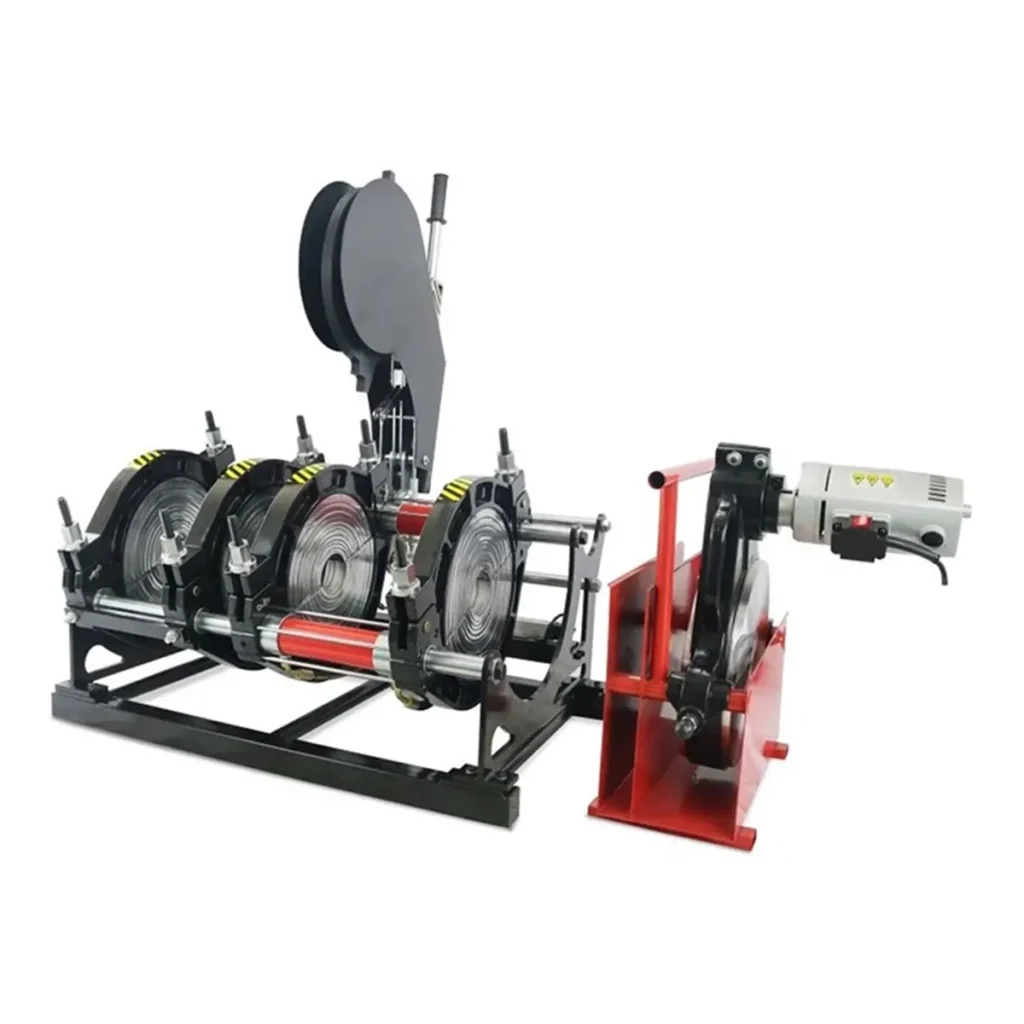
This complete guide explains the HDPE pipe butt fusion welding machine working process, step-by-step parameters, common mistakes, and best practices for achieving consistent, high-strength joints in water, gas, mining, and industrial pipelines.
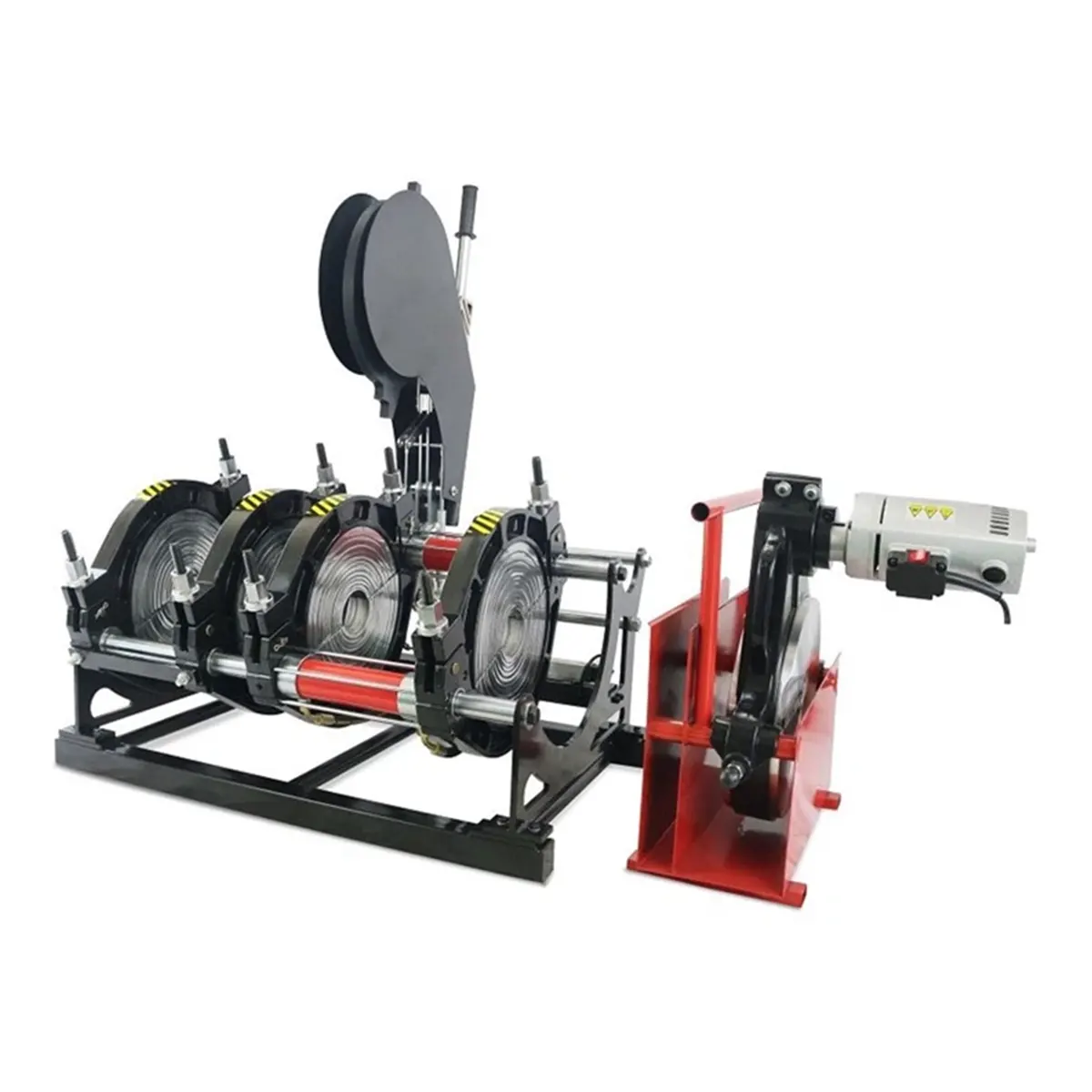
Overview: What Is Butt Fusion for HDPE Pipes?
Butt fusion is a thermoplastic welding method that joins two HDPE pipe ends by heating their faces and pressing them together under controlled pressure until the melted surfaces fuse and cool into a homogeneous joint. It is widely used for PE100/PE80 pipelines because it produces leak-free, durable connections with performance comparable to the base material.
Why this method is preferred
• Permanent joints without additional fittings; • Excellent chemical and corrosion resistance; • High long-term strength and reliability for buried and above-ground systems.
Step-by-Step Working Process
1. Preparation & Site Setup
Clean the work area and ensure both pipe ends and machine components are free of dirt, oil, and moisture. Check pipe alignment and verify pipe material and SDR (standard dimension ratio). Select heating plate and facing tool sized for the pipe diameter.
2. Alignment and Clamping
Secure both pipe ends in the butt fusion clamps. Accurate axial alignment is essential: misalignment > acceptable tolerance will create weak fusion beads. Set clamp pressure to hold pipes rigidly without deformation.
3. Facing (Trimming)
Use the facing tool to trim pipe ends so both faces are square and smooth. The facing operation ensures even contact with the heating plate and uniform melt across the joint.
4. Heating
Place the heating plate between the prepared faces. Heat the pipe ends to the recommended temperature (typically 200–260°C for HDPE) while maintaining gentle contact pressure. Heating time depends on pipe OD, wall thickness, and machine type.
5. Fusion & Pressure Application
Remove the heater and immediately bring the molten faces together under controlled fusion pressure. Hold this pressure for the prescribed fusion/soak time so polymer chains inter-diffuse. Avoid axial movement during this stage.
6. Cooling
Maintain restraint and hold pressure through the cooling period until the joint reaches a stable temperature. Cooling under proper pressure prevents shrinkage gaps and ensures a consistent bead.
7. Final Inspection
Visually inspect the bead: uniform, continuous outer bead with correct bead width indicates a good fusion. Where required, perform non-destructive tests or destructive sample tests following project QA/QC procedures.
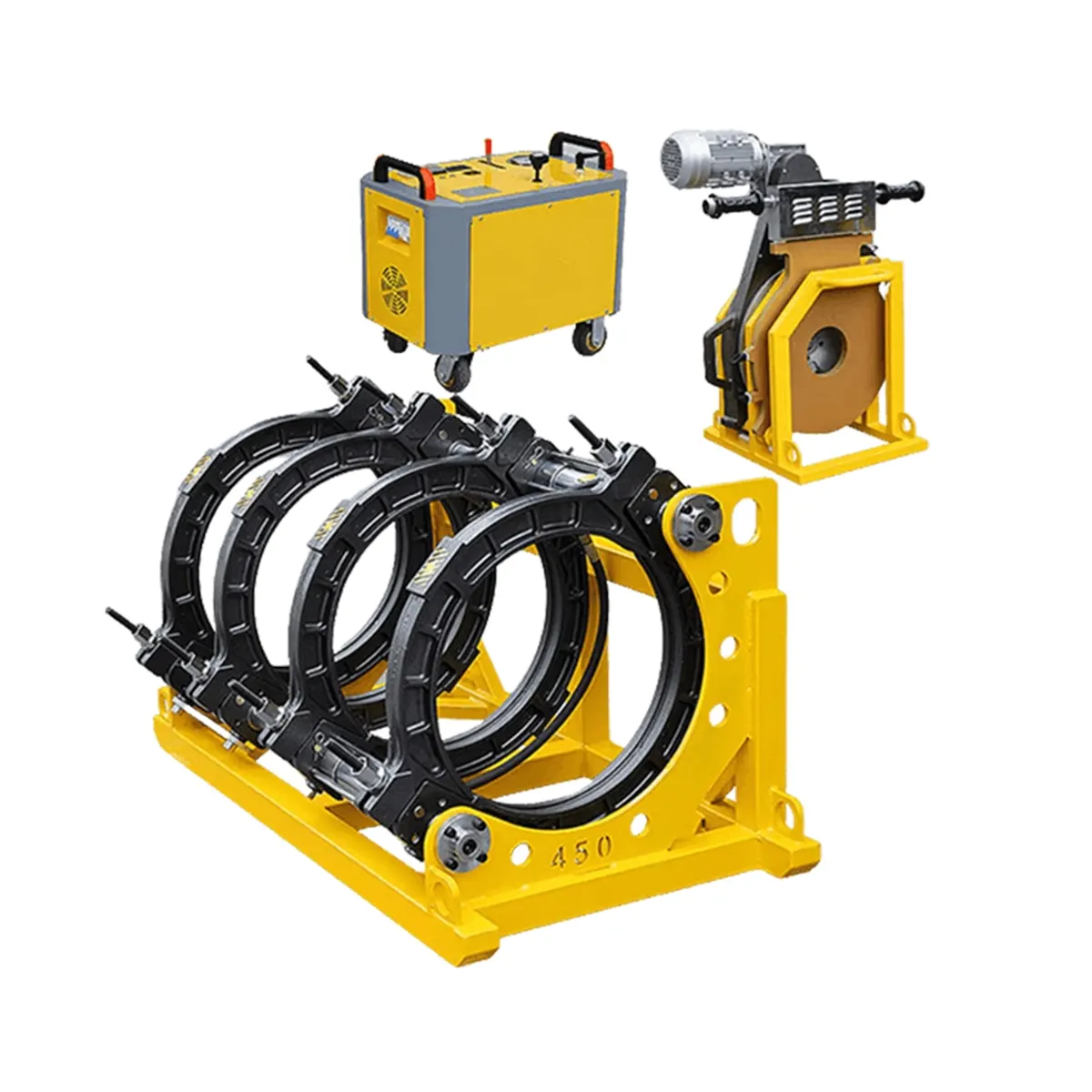
Typical Process Parameters (Quick Reference)
| Pipe OD (mm) | Wall Thick. (mm) | Heating Temp (°C) | Heating Time (s) | Fusion Pressure (bar) |
|---|---|---|---|---|
| 63 – 160 | 3 – 10 | 200 – 220 | 20 – 60 | 5 – 10 |
| 200 – 630 | 8 – 30 | 210 – 250 | 60 – 300 | 8 – 20 |
| >630 (large dia.) | >30 | 220 – 260 | 300 – 900 | 10 – 25 |
Key Quality Controls
Temperature control: Use a calibrated heater and thermocouple where possible. • Facing accuracy: Square, clean faces make the difference between a strong joint and a failure. • Pressure monitoring: Use gauges or digital control to maintain correct fusion and cooling pressures.
Common Mistakes & Troubleshooting
• Inadequate facing — leads to uneven melt and weak joints. • Contaminated heating plate — causes inclusion defects; always clean between cycles. • Too rapid cooling or early removal of clamps — causes shrinkage voids. • Incorrect pressure or temperature settings — results in under- or over-melted joints.
Safety & Best Practices
Always wear heat-resistant gloves and eye protection. Ensure adequate ventilation where many joints are made in confined spaces. Keep a clean, flat area for the heating plate and store tools to prevent contamination. Train operators to read gauges and follow a documented welding procedure specification (WPS) for each pipe material and SDR.
Maintenance & Calibration
Regularly check the heater surface for flatness, calibrate temperature controls annually, inspect hydraulic units and seals, and replace worn facing knives. A well-maintained machine reduces rework and improves joint consistency.
Applications & Advantages
Butt fusion is ideal for municipal water mains, gas distribution, mining slurry lines, sewage, and industrial chemical pipelines. Benefits include long service life, minimal maintenance, and field flexibility for both manual and automated machines.
About the Manufacturer
JQ-Fusion is a professional manufacturer specializing in HDPE pipe welding machines, providing reliable butt fusion solutions for global infrastructure projects. Learn more at https://jq-fusionwelding.com/
Final Tips for Successful Butt Fusion
• Always follow a welding procedure matching pipe spec and local standards. • Document each weld with time, temperature, pressure, operator, and visual check. • When in doubt, test sample joints rather than risking a full-length installation.



