
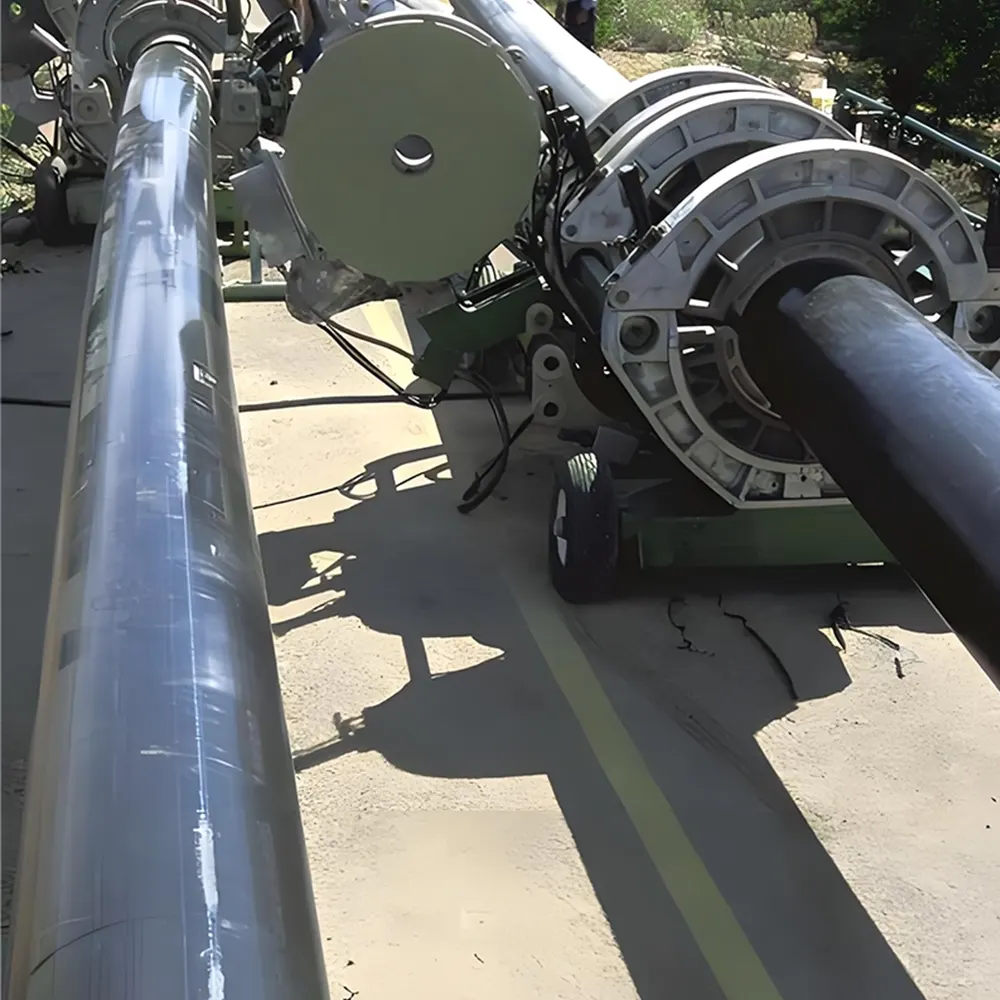
The mining industry depends on pipelines that can move water, slurry, chemicals, fuel, and process fluids across harsh and remote environments. In these conditions, the integrity of every joint matters. One weak connection can lead to leakage, downtime, environmental risk, and expensive repair work. That is why HDPE pipe welding has become a trusted solution for mining operations around the world. By creating a continuous, fused pipeline, mining companies can achieve stronger system reliability, lower maintenance needs, and better long-term performance.
HDPE, or high-density polyethylene, is widely valued in mining because it resists corrosion, handles abrasion well, and performs reliably under challenging conditions. When HDPE pipes are joined with proper welding methods, the result is a pipeline system that can adapt to rough terrain, underground installations, tailings transport, dewatering, and plant infrastructure. Among the available joining technologies, butt fusion is one of the most common and effective. It provides a permanent bond that is often as strong as the pipe itself, making it suitable for demanding mining applications.
Why Mining Projects Rely on HDPE Pipe Welding
Mining operations are rarely simple. Sites are often located in isolated regions, exposed to heavy equipment traffic, extreme weather, and shifting ground conditions. Traditional piping materials may corrode, crack, or require frequent maintenance. HDPE offers a practical alternative because it is lightweight, flexible, and resistant to many chemicals found in mining processes. When welded correctly, HDPE pipe systems can deliver a durable, sealed, and stable pipeline network that supports continuous production.
A major advantage of welding HDPE pipe is that it eliminates many of the failure points found in mechanical joints. Bolted fittings and rubber-seal connections may loosen over time, especially in vibration-heavy environments. Fusion welding creates a homogeneous joint, reducing the chance of leaks and making the pipeline easier to trust in long service cycles. This is especially valuable for water transfer lines, slurry systems, and tailings pipelines where safety and consistency are essential.
Key advantage: HDPE welded pipelines reduce leakage risks, improve joint strength, and support long-term mining operations with fewer interruptions.
Common HDPE Pipe Welding Methods Used in Mining
Several welding methods can be used for HDPE piping, but the best choice depends on pipe size, project requirements, site conditions, and operator skill. In mining, the most widely used technique is butt fusion welding because it is suitable for long pipelines and large diameters. Other methods, such as electrofusion, may be applied in specific connection points or smaller-scale installations.
Butt Fusion Welding
Butt fusion welding joins two pipe ends by heating them with a controlled hot plate and then pressing them together under precise pressure. Once cooled, the connection becomes a strong, permanent bond. This method is particularly useful in mining because it supports large-diameter pipelines, delivers consistent quality, and is suitable for long-distance fluid transport. Many contractors choose a butt fusion machine because it helps ensure reliable alignment, temperature control, and welding stability on site.
For mining projects where pipeline durability is critical, butt fusion provides one of the most dependable solutions. It is often used for dewatering systems, wash water lines, process water networks, and slurry transport pipelines. The welded joint is strong enough to withstand pressure changes and mechanical stress, which is valuable in areas where terrain may shift or equipment movement may affect the line.
Electrofusion Welding
Electrofusion welding uses fittings with embedded heating coils to join pipe sections. It is frequently used where space is limited or where a specific connection must be made in a controlled way. In mining, electrofusion may be chosen for repair work, tie-ins, or smaller connections where butt fusion is not practical. While it is not always the primary choice for long pipelines, it remains an important method in a mining contractor’s toolkit.
Tip: For long and high-load mining pipelines, butt fusion is usually preferred. For localized connections or restricted spaces, electrofusion can be a smart complementary option.
Where HDPE Welding Is Used in Mining
HDPE pipe welding supports many different parts of a mine site. It is used both above ground and below ground, depending on the application. Because HDPE is resistant to corrosion and easy to install, it is suitable for environments where metals may degrade quickly or where flexible routing is required.
One of the most common uses is in water supply systems. Mining sites need large volumes of water for dust suppression, ore processing, equipment washing, and other operational tasks. Welded HDPE pipelines help deliver water efficiently across long distances without frequent maintenance issues.
Another major use is in slurry and tailings transport. These pipelines carry abrasive mixtures that can quickly damage weaker materials. HDPE’s resistance to wear makes it a practical choice, and welded joints help reduce the risk of seepage or joint failure during continuous operation.
HDPE welding is also used in dewatering systems, where groundwater or process water must be removed from pits and work zones. Since dewatering lines often need to be moved, extended, or reconfigured, welded HDPE systems offer the flexibility and durability needed for changing mine conditions.
In addition, mining operations often rely on welded HDPE pipes for chemical transfer lines, drainage systems, and plant utility piping. These applications benefit from the material’s corrosion resistance and the secure sealing created through fusion welding.
Benefits of HDPE Welding for Mining Contractors
Mining contractors are under constant pressure to improve productivity while controlling costs. HDPE pipe welding supports these goals in several ways. First, it reduces the number of joints that can fail. Second, it helps lower repair and replacement costs over time. Third, it enables faster installation when compared with many rigid piping systems. These benefits can be significant on large-scale mining projects where time and reliability directly affect profitability.
Another important benefit is safety. A welded HDPE pipeline is less likely to leak hazardous liquids or release unwanted water into the surrounding environment. This helps mining companies meet environmental obligations and minimize operational risk. For remote sites, where replacement parts and labor may be harder to source, having a durable system in place is especially important.
HDPE welding also improves system continuity. By creating a smooth internal flow path, it reduces the pressure loss and turbulence that can occur at weak or poorly designed connections. This is useful in high-demand mining operations where consistent flow is necessary for production efficiency.
Benefits summary: fewer leaks, lower maintenance, better chemical resistance, improved flexibility, and stronger long-term performance in harsh mining environments.
How Butt Fusion Welding Improves Project Quality
Butt fusion welding is widely used in mining because it is highly controllable. A successful fusion weld depends on accurate heating, proper pipe alignment, clean pipe ends, and sufficient cooling time. When these steps are followed, the resulting joint can provide excellent strength and reliability. This makes the process ideal for projects where pipeline failure would be costly or dangerous.
High-quality welding equipment plays a major role in achieving consistent results. Features such as stable hydraulic pressure, accurate temperature control, and reliable clamp alignment help technicians produce sound welds. That is why many project teams prefer equipment from experienced manufacturers with strong quality control and technical support. JQ-Fusion, for example, is known for delivering reliable HDPE pipe welding machines for global pipeline applications, including mining projects.
Modern fusion equipment can also improve productivity. Automated or semi-automated systems reduce operator error, shorten setup time, and make welding performance more repeatable. On a mining site, where dozens or even hundreds of pipe joints may need to be completed, this efficiency can save significant time and labor.
Important welding factors in mining projects
- Pipe preparation: ends must be clean, dry, and properly aligned before welding.
- Temperature control: heating surfaces must reach the correct range for a stable fusion result.
- Pressure management: consistent fusion pressure helps create a strong joint.
- Cooling time: the welded joint must cool fully before handling or pressurizing.
- Operator training: skilled technicians greatly improve weld quality and project safety.
Choosing the Right Welding Equipment for Mining
Mining environments require equipment that can perform reliably under difficult conditions. A welding machine should be durable, easy to transport, and capable of handling the pipe sizes used in the project. Hydraulic and CNC automatic butt fusion machines are often selected for larger mining sites because they provide greater control and efficiency. Manual machines may be used for smaller jobs or simpler field installations.
Contractors should also consider whether the machine supports the pipe diameters and voltage requirements of the site. Customization can be helpful when working on international projects or when specific branding, design, or technical specifications are needed. Reliable after-sales service and technical guidance are equally important, especially when project teams are working in remote locations with limited downtime tolerance.
Selection insight: The right machine should match pipe diameter, site mobility needs, welding volume, and the required level of automation.
Why Global Mining Projects Prefer Reliable Suppliers
In mining, equipment quality is only part of the equation. Buyers also need dependable supply, consistent product standards, and responsive support. Delays in machine delivery can affect installation schedules, while poor technical support can create costly setbacks during commissioning. This is why many contractors look for manufacturers with proven export experience, strong inventory capabilities, and strict quality assurance.
Suppliers with over two decades of industry experience can often provide better insight into project needs and more practical recommendations for field use. For mining companies managing large or urgent pipeline installations, the ability to get fast delivery, technical training, and dependable service can be just as important as the machine itself.
To explore more about product applications, engineering capabilities, and global support, many companies review resources from established manufacturers such as JQ-Fusion, which focuses on HDPE pipe welding solutions for industrial and mining projects.
Conclusion
HDPE pipe welding plays a vital role in the mining industry because it helps create strong, leak-resistant, and durable pipeline systems. Whether the application involves water delivery, slurry transport, dewatering, or chemical transfer, welded HDPE pipelines can improve reliability and reduce maintenance burdens. Butt fusion welding, in particular, is widely used because it offers excellent joint strength and is suitable for large-scale mining infrastructure.
As mining operations continue to expand into more demanding environments, the need for dependable pipeline solutions will only grow. By choosing the right welding method, using proper equipment, and working with experienced suppliers, mining contractors can build pipeline systems that support safe, efficient, and cost-effective operations for years to come.
Frequently Asked Questions
Q1: Why is HDPE preferred for mining pipelines?
HDPE is resistant to corrosion, abrasion, and many chemicals, making it ideal for harsh mining conditions. It is also lightweight and easier to install than many traditional pipe materials.
Q2: What is the most common welding method for mining pipelines?
Butt fusion welding is the most common method because it creates a strong, permanent joint suitable for large-diameter pipelines and long-distance transport.
Q3: Can HDPE welded pipelines handle slurry transport?
Yes. HDPE pipelines are commonly used for slurry and tailings transport because they resist wear and help reduce leakage at the joints.
Q4: Is special training needed for HDPE pipe welding?
Yes. Proper operator training is important to ensure correct temperature, pressure, alignment, and cooling time, all of which affect weld quality.
Q5: What should mining contractors look for in a welding machine supplier?
They should look for proven industry experience, stable product quality, customization options, fast delivery, and strong technical support.



