
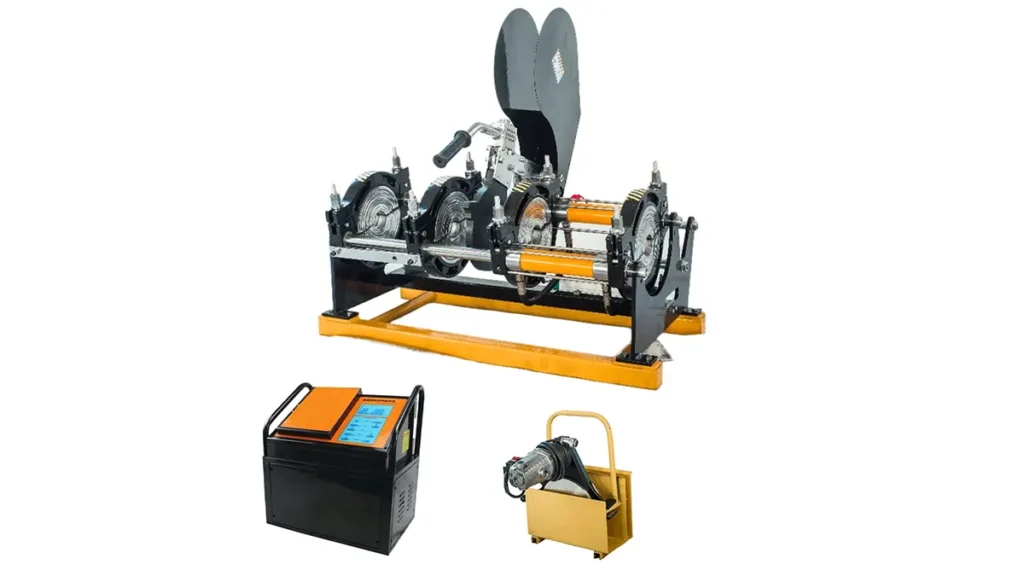
Choosing the right PE pipe welding machine is crucial for long-term pipeline integrity, project efficiency, and cost control. This guide walks contractors, pipeline engineers, and procurement managers through practical recommendations for selecting reliable and efficient HDPE butt fusion and electrofusion solutions, with clear factors to compare machine types, features, and expected performance.
Understand the Main PE Pipe Welding Machine Types
Manual (bench) machines: compact and cost-effective for small-diameter work and site repairs. Ideal for 20–315 mm pipes and crews that need portability.
Hydraulic butt fusion machines: deliver consistent pressure and alignment for medium to large diameters. They scale from 63 mm up to multi-meter pipe diameters for municipal and industrial projects.
Automatic / CNC butt fusion machines: offer programmable cycles, precise control of heating and pressure, and traceable fusion records — essential for high-volume or regulated pipeline installations.
Electrofusion units: designed for fittings and repair joints using electrofusion couplers; these are indispensable for gas distribution and complex networks.
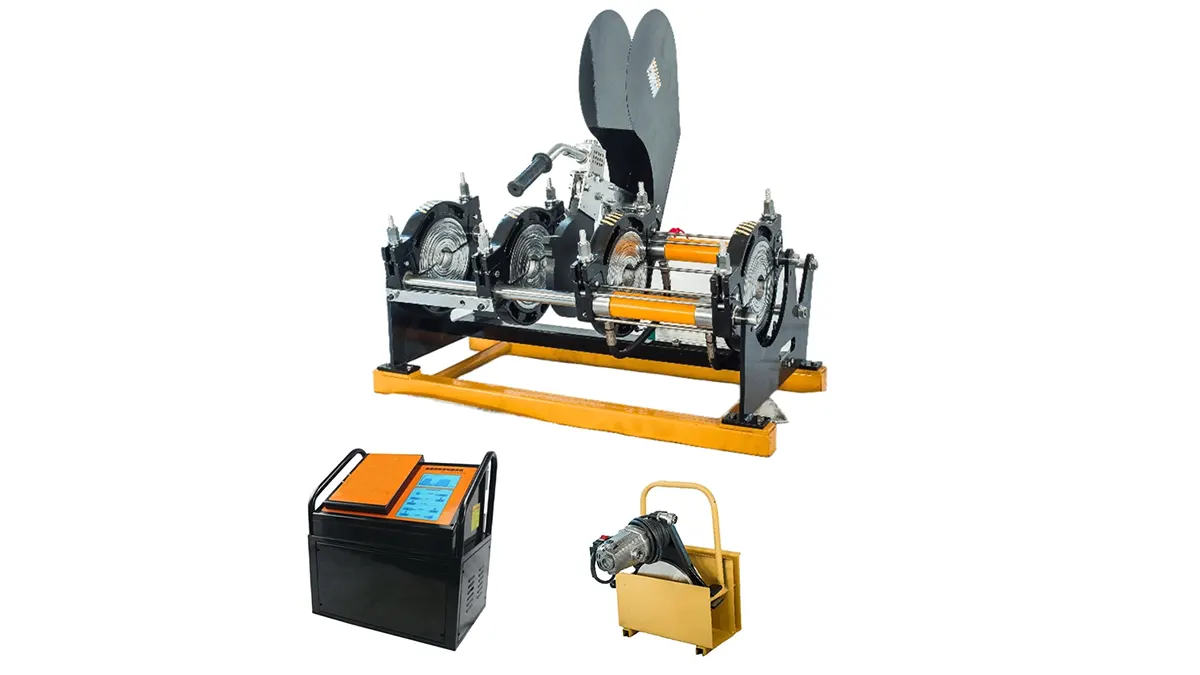
Key Selection Criteria for Reliable Pipe Fusion
Duty cycle and site conditions: choose machines rated for the environment (cold climates, dusty mines, high humidity) and expected daily weld volume.
Alignment & clamp options: look for robust clamps or aluminum fixtures for large-diameter pipes to ensure concentricity and avoid stress points.
Control & traceability: automatic welders with data logging and adjustable fusion parameters reduce rework and help meet compliance (pressure test documentation, ISO/AS standards).
Portability vs. capacity: portable manual units serve service teams; hydraulic and CNC models suit pipeline contractors and fabrication yards.
Quick Comparison Table — At a Glance
| Machine Type | Typical Range (mm) | Key Advantage | Best For |
|---|---|---|---|
| Manual Bench | 20–315 | Low cost, portable | Repairs, small projects |
| Hydraulic Butt Fusion | 63–2000+ | High force, uniform welds | Municipal, industrial pipelines |
| Automatic / CNC | 63–1250+ | Repeatability, logging | Large projects, compliance-driven works |
| Electrofusion | 20–630 (fittings) | Fast fittings, minimal prep | Gas distribution, service connections |
Performance Enhancers and Optional Features
Look for integrated trimming tools, hydraulic power packs with overload protection, heated skids, and multi-angle fitting machines when working with complex manifolds. Remote monitoring and fault alerts shorten downtime and preserve weld quality across large sites.
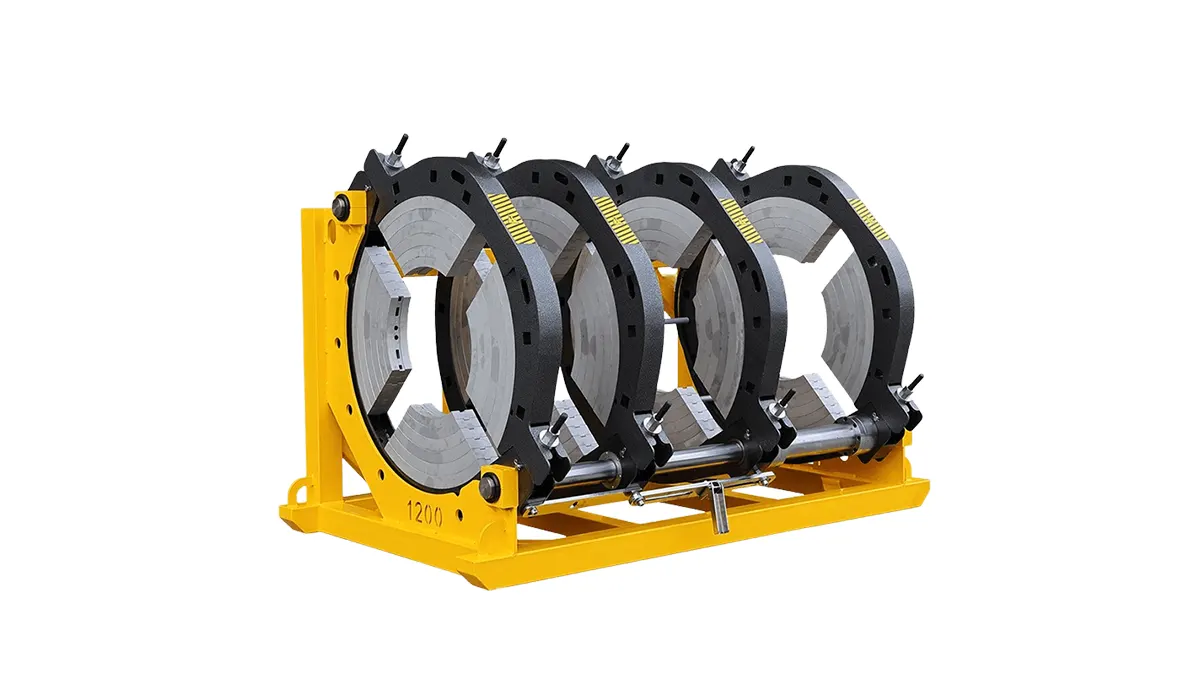
Maintenance, Training & Certification
Ensure operators are trained in PE fusion standards (ISO 21307, ISO 12176, or relevant national codes). Routine checks — heater plate flatness, alignment tolerances, and hydraulic oil condition — preserve weld integrity. Keep calibration records and maintain spare heater plates and trims.
Budgeting & Return on Investment
Factor in lifecycle costs: initial purchase, consumables (heating plates, trims), training, and service. Higher upfront cost for automatic systems often returns value by lowering rework rates and improving throughput. For contractors bidding on regulated projects, traceable fusion data can be a decisive advantage.
Where These Machines Deliver the Most Value
Applications that benefit fastest include water distribution, gas networks, mining slurry pipelines, irrigation systems, and industrial process piping. Machines tailored for large-diameter HDPE can significantly reduce installation time on trunk lines, while electrofusion simplifies branch and service tie-ins.
Manufacturer Recommendation
When evaluating suppliers, prioritize demonstrable quality control, global aftermarket support, and a broad product line that covers manual, hydraulic, and CNC automatic butt fusion machines as well as electrofusion units. For proven industrial HDPE fusion equipment backed by manufacturing expertise, consider reviewing JQ-Fusion’s product range and service capabilities at their website: https://jq-fusionwelding.com/
Final Buying Checklist
Before purchasing, confirm: machine capacity matches your pipe schedule, controls meet traceability needs, spare part availability is local or fast-shipped, operator training is offered, and warranties plus service agreements align with project duration.
If you need a tailored spec comparison for your next pipeline project, use the table above to shortlist machine families and then request detailed datasheets and weld samples from potential suppliers.



