
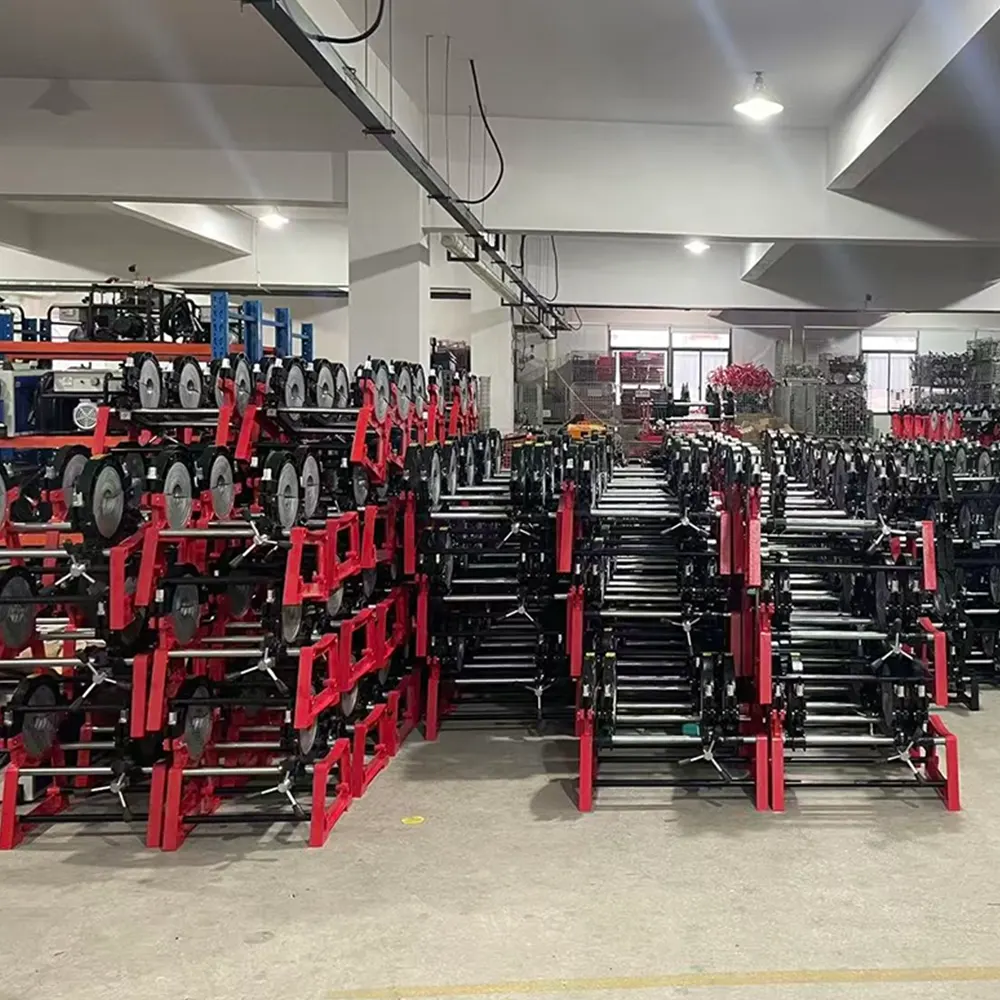
When people first search for a butt fusion machine, they are often focused on one question: which machine is the right one for the job? In pipeline construction, that question matters because the quality of a joint can decide whether an entire system performs safely for years or fails under pressure. A hydraulic butt fusion machine has become one of the most trusted solutions in HDPE pipe welding because it combines stable pressure control, efficient operation, and reliable welding results. For contractors, distributors, and project managers, these advantages can translate into lower risk, stronger joints, and better long-term value.
In modern pipeline projects, the demand for dependable joining equipment is higher than ever. Water supply networks, gas distribution lines, mining pipelines, and industrial installations all require consistent welding quality. A hydraulic butt fusion machine is designed to meet those needs by using controlled hydraulic force to align and fuse pipe ends with precision. Compared with manual methods, it reduces operator fatigue and improves repeatability. Compared with overly complex automation, it can remain practical, robust, and cost-effective for many construction environments.
⚙️ The core advantage of a hydraulic butt fusion machine is not just power. It is control. When pressure, temperature, and alignment are kept within the correct range, the welded joint becomes stronger and more dependable. That is why experienced teams often prefer hydraulic systems for medium to large diameter pipe applications.
1. Stable Welding Pressure Improves Joint Quality
One of the biggest advantages of a hydraulic butt fusion machine is its ability to provide stable and accurate welding pressure. In butt fusion, pressure is not a minor detail; it is one of the most important factors affecting final weld strength. If the pressure is too low, the fusion may be incomplete. If it is too high, the melted material may be pushed out excessively, leading to weak or distorted joints.
The hydraulic system solves this problem by applying force more consistently than manual operation. This creates a better environment for heating, joining, and cooling the pipe ends. In practical terms, the result is a more uniform weld bead, improved sealing performance, and greater confidence in the final installation.
Key benefit: stable pressure means more predictable welding outcomes, especially when working with larger pipes or repeated production tasks.
2. Better Efficiency on Medium and Large Diameter Pipes
Hydraulic butt fusion machines are especially valuable when welding medium and large diameter HDPE pipes. These pipes require stronger clamping force, more precise alignment, and greater operational stability. A manual machine can handle smaller jobs well, but as pipe size increases, the work becomes more physically demanding and more sensitive to variation.
A hydraulic machine reduces the effort needed from the operator and helps the team complete each cycle more efficiently. The pipe ends can be aligned, heated, fused, and cooled with less interruption. This improves site productivity and shortens installation time, which is important in projects with tight schedules.
For large-scale contractors, this efficiency can also reduce labor costs and improve project planning. Instead of spending extra time correcting poor alignment or inconsistent pressure, the crew can focus on safe, steady progress. In high-volume applications, that difference becomes significant.
3. Reduced Operator Fatigue and Easier Control
Another major advantage of a hydraulic butt fusion machine is that it makes the work easier for the operator. Welding pipe, especially on construction sites, can be physically demanding. Lifting, clamping, pressing, and holding heavy components over repeated cycles can lead to fatigue, and fatigue often leads to mistakes.
Hydraulic control reduces that burden. The operator does not need to rely entirely on physical force to maintain pressure or manage the fusion process. Instead, the machine helps deliver the needed force in a smoother and more controlled way. This improves comfort, reduces strain, and supports better focus during welding.
✅ Why this matters: less fatigue often means fewer errors, more consistent welds, and safer working conditions on the job site.
4. High Repeatability for Professional Projects
In pipeline installation, one successful weld is not enough. Contractors need dozens, hundreds, or even thousands of joints that perform consistently. Repeatability is therefore a critical advantage. A hydraulic butt fusion machine can deliver that repeatability because its system is designed around controlled mechanical movement and stable pressure application.
This is especially useful in projects where quality standards are strict. When every weld must meet inspection requirements, the ability to reproduce the same result again and again becomes a clear advantage. It also helps companies maintain reputation, reduce rework, and avoid delays caused by rejected joints.
For businesses that want to build trust in the market, consistency often matters as much as speed. That is why many professional teams choose hydraulic systems as part of their standard equipment lineup.
5. Suitable for a Wide Range of Applications
A hydraulic butt fusion machine is not limited to one industry. It is widely used in water supply systems, gas distribution networks, mining projects, and industrial pipeline installations. This broad applicability is one of its strongest advantages, because it gives buyers more flexibility when planning equipment investment.
For example, a contractor working on both municipal water lines and industrial transport systems can rely on the same machine platform for different project types. This helps reduce equipment redundancy and simplifies training. It also makes the machine a practical choice for distributors looking to serve multiple customer segments.
Companies like JQ-Fusion, a professional manufacturer with over 20 years of industry experience, understand these needs well. Their focus on manual, hydraulic, and CNC automatic butt fusion welding machines reflects the diverse requirements of the global pipeline market. To explore more product options, you can visit the official site at https://jq-fusionwelding.com/.
6. Stronger Adaptability to Real Site Conditions
Construction sites are rarely perfect. There may be dust, uneven ground, changing temperatures, limited workspace, and varying pipe conditions. In such environments, the robustness of a hydraulic butt fusion machine becomes an important advantage. These machines are generally built for reliable field performance, making them suitable for demanding project conditions.
Because hydraulic systems are designed for stable force delivery, they can help maintain quality even when the environment is less than ideal. That does not remove the need for proper operation and maintenance, but it does provide a stronger technical foundation. When a project depends on dependable execution, this kind of adaptability becomes highly valuable.
🛠️ Practical advantage: a machine that performs reliably in real-world conditions saves time, prevents rework, and supports overall project success.
7. Easier Quality Control and Inspection
Quality control is a major requirement in modern pipeline work. Buyers and project engineers often want proof that each weld meets technical standards. A hydraulic butt fusion machine supports this process by making weld conditions easier to manage and inspect. When pressure and alignment remain stable, it is easier to produce welds that match expected standards.
Manufacturers with strong quality systems often test their equipment for temperature accuracy, hydraulic pressure stability, and clamp alignment inspection. These checks are essential because they ensure that the machine itself contributes to reliable results. JQ-Fusion, for example, emphasizes strict quality control and testing before delivery, helping clients reduce risk in real projects.
For users, this means less uncertainty and better traceability. When equipment is dependable, quality assurance teams can work with greater confidence, and project owners can feel more secure about the pipeline’s long-term performance.
8. Good Value for Long-Term Investment
Although a hydraulic butt fusion machine may represent a higher initial investment than a basic manual model, its long-term value is often stronger. Better pressure control, higher consistency, reduced labor strain, and improved productivity can all contribute to lower total operating cost over time. In other words, the machine may pay back its cost through better project outcomes and fewer avoidable problems.
This matters for both contractors and distributors. Contractors want equipment that can remain useful across multiple projects. Distributors want products that satisfy buyers looking for reliable performance and professional support. A well-built hydraulic machine fits both needs because it combines durability with practical operation.
When supported by professional after-sales service, spare parts availability, and technical guidance, the investment becomes even more attractive. That is why many global buyers consider hydraulic models a strategic choice rather than just a purchase.
9. Supports Customization for Different Project Needs
Not every project requires the same configuration. Pipe diameters, voltage requirements, branding needs, and jobsite conditions can all vary. A hydraulic butt fusion machine is often suitable for customization, allowing manufacturers to adapt the equipment to specific market demands. This is especially important for OEM and ODM buyers.
JQ-Fusion provides flexible customization services, including machine size, voltage, color, design, branding, and project-specific configurations. This kind of adaptability can help companies build stronger market identity and better match local customer expectations. For many distributors, that flexibility is a direct competitive advantage.
Customization also helps ensure that the machine is not just technically capable, but operationally suitable for the intended environment. That is a major reason why many professional buyers prefer working with manufacturers that can deliver tailored solutions.
10. A Reliable Choice for Global Pipeline Projects
Hydraulic butt fusion machines have earned their place in global pipeline construction because they combine practicality, durability, and welding precision. In water supply, gas networks, mining, and industrial infrastructure, these machines help teams achieve strong and stable pipe connections. Their value is not based on one single feature, but on the way multiple benefits work together in real use.
Professional manufacturers such as JQ-Fusion strengthen this value by offering modern production lines, precision machining equipment, fast logistics support, and technical training. With strong inventory, proven performance in global markets, and SGS-certified products, they help ensure that buyers receive equipment they can trust. For more product information, the butt fusion machine range offers options for different pipe welding requirements.
📌 In short: the strongest advantage of a hydraulic butt fusion machine is its ability to deliver reliable welding quality while improving efficiency, safety, and long-term project value.
Frequently Asked Questions
Q1: What is the main advantage of a hydraulic butt fusion machine?
The main advantage is stable and accurate pressure control, which helps produce stronger and more consistent pipe joints.
Q2: Is a hydraulic butt fusion machine better than a manual machine?
For medium to large pipes and professional projects, yes. It usually offers better control, less fatigue, and higher repeatability.
Q3: What industries use hydraulic butt fusion machines?
They are widely used in water supply, gas distribution, mining, and industrial pipeline installations.
Q4: Can hydraulic butt fusion machines be customized?
Yes. Many manufacturers provide OEM and ODM options such as voltage, color, size, branding, and project-specific configurations.
Q5: Why is long-term value important when choosing this machine?
Because a reliable machine can reduce rework, improve productivity, and lower total operating cost over time.



