
Proper installation of HDPE gas pipe heat fusion welding machines ensures safe, leak-free pipelines and consistent compliance with industry standards. This guide covers the core installation standards and practical best practices for butt fusion and heat fusion systems used in gas distribution projects.
Installation Standards Overview
Installation must follow applicable codes (local gas regulations, ISO 21307 / ISO 21308 best-practice references where relevant) and manufacturer instructions. Key goals are correct machine alignment, controlled heating profiles, reliable clamping force, and traceable documentation of every weld.
Site selection and environmental controls
Choose a level, stable working area with enough clearance for pipe handling and cooling. Protect the heating plate from wind, rain, and direct contamination. Ambient temperature and humidity can affect heating times—adjust procedures accordingly and always shield the work area if conditions are extreme.
Health, safety and gas-specific considerations
Work on gas pipelines requires strict safety controls: continuous gas monitoring, anti-sparking tools, certified PPE, and trained operators. Ensure local utility permits and lock-out/tag-out procedures are in place prior to starting any fusion work.
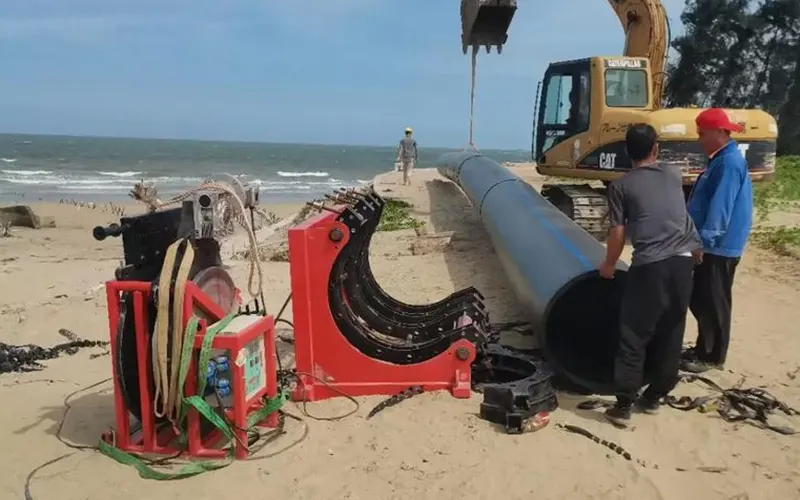
Machine Setup and Pre-Installation Checklist
Before first use, verify mechanical and electrical components, check clamping frames for wear, and confirm the heating plate temperature sensor calibration. A pre-installation checklist reduces downtime and prevents weld failures.
Essential pre-checks
- Verify machine level and secure mounting.
- Inspect clamp jaws and alignment pins for damage.
- Confirm heater plate clean and temperature controller accuracy.
- Check hydraulic fluid levels and hose integrity for hydraulic machines.
- Test emergency stop and electrical protections.
Alignment and facing
Accurate pipe alignment is critical. Use appropriate clamps and alignment fixtures to eliminate angular or axial misalignment. Facing tools must produce square, burr-free pipe ends to ensure a continuous melt line across the joint.
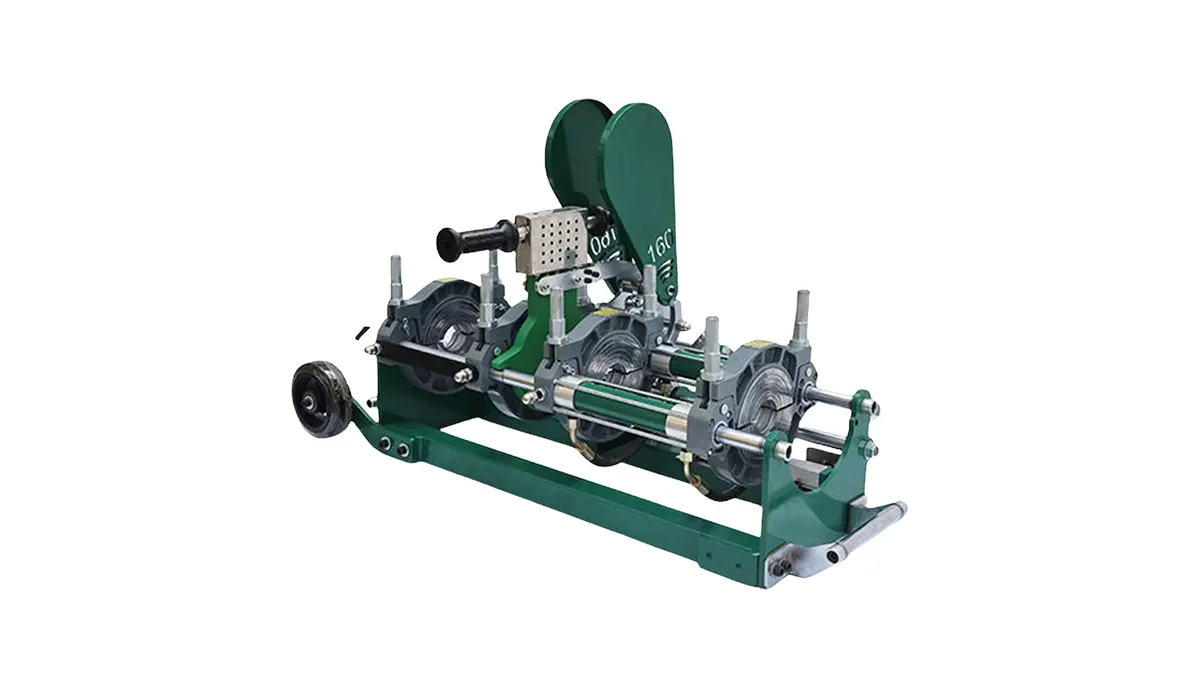
Heat Fusion Process Controls & Critical Parameters
Strict control of heating temperature, pressure, timing, and cooling is required to obtain a homogenous fusion. Operators should follow published heating charts for the pipe material and diameter, and record actual values for traceability.
| Parameter | Recommended Range / Notes |
|---|---|
| Heating plate temperature | Follow material datasheet (typ. 200–240°C for PE100) — verify with thermocouple. |
| Face preparation (melt bead tolerance) | As per machine spec — maintain uniform bead height across circumference. |
| Axial force during fusion | Controlled to manufacturer settings — avoid over-compression to prevent thinning. |
| Cooling time | Follow time per diameter and ambient temp — do not disturb joint while cooling. |
Documentation and digital controls
Use the machine’s control unit or a digital log to store: temperature profile, pressure/times, operator ID, pipe material and batch number, and geolocation or job ID. This data supports quality audits and gas-safety compliance.
Quality Control, Inspection & Testing
Non-destructive inspection (visual inspection of bead, dimensional checks) and destructive testing (if required by contract) should be part of QC. For gas lines, pressure testing and leak detection are mandatory—conduct according to local regulations and document results.
Visual acceptance criteria
Accept only uniform, continuous melt beads with no voids, discoloration, or contamination. Edges should be consistent and free from sharp irregularities. If defects are found, remove the defective section and re-fuse following approved repair procedures.
Maintenance, Calibration & Troubleshooting
Routine maintenance keeps performance stable: clean heating plates, replace worn clamps, service hydraulic units, and calibrate temperature sensors periodically. Establish a maintenance log with dates and performed actions.
Common issues and quick fixes
- Uneven bead — check facing tool alignment and clamp wear.
- Temperature fluctuations — verify heater sensor and controller calibration.
- Hydraulic leaks or slow movement — inspect hoses and pump, check fluid level.
- Early joint failure — review heating time/pressure records and operator technique.
Operator training and certification
Qualified operators reduce rework and safety incidents. Implement a training program with practical assessments and retraining intervals. Maintain certificates with weld log entries for regulatory inspections.
About JQ-Fusion: JQ-Fusion is a professional manufacturer specializing in HDPE pipe welding machines, offering manual, hydraulic, and CNC automatic butt fusion solutions for water, gas, and industrial pipeline projects worldwide. Visit https://jq-fusionwelding.com/ for product details and support.



