
Plastic pipe welding has become a cornerstone of modern infrastructure, connecting water supply systems, gas distribution networks, industrial plants, mining operations, and municipal projects with durable, leak-resistant joints. As pipe materials such as HDPE continue to replace traditional metal options in many applications, understanding the best welding methods is essential for engineers, contractors, and procurement teams who need reliable performance over the long term.
Among the most widely used techniques, butt fusion welding, electrofusion welding, socket fusion, and hot gas welding each offer distinct advantages depending on pipe diameter, material type, installation environment, and project budget. Choosing the right method is not simply a technical decision; it affects installation speed, joint strength, maintenance costs, and overall service life.
⚡ Key idea: The best welding method is the one that matches the pipe material, diameter, operating pressure, and site conditions while delivering consistent fusion quality.
Why Plastic Pipe Welding Matters
Plastic piping systems are valued for corrosion resistance, lightweight handling, low friction loss, and long service life. However, these advantages only translate into real-world value when the joints are properly welded. A poorly executed weld can lead to leakage, pressure loss, structural failure, or costly shutdowns. For this reason, welding quality is often more important than the pipe itself.
In large-scale pipeline projects, welding is also a productivity issue. A method that is structurally strong but slow to install may increase labor costs and delay commissioning. On the other hand, a faster method that is limited to small diameters may not be suitable for a municipal or industrial main line. This is why decision-makers often compare several methods before selecting the final approach.
Important: In professional pipeline work, welding quality depends on preparation, machine precision, operator skill, and inspection standards—not just the welding method itself.
1. Butt Fusion Welding: The Industry Standard for HDPE Pipelines
Butt fusion welding is widely regarded as the most reliable and cost-effective method for joining HDPE and other thermoplastic pipes of medium to large diameter. It works by heating the pipe ends with a controlled heating plate, then pressing them together under precise pressure until the materials fuse into one continuous structure.
This method creates a joint that can be as strong as, or even stronger than, the pipe wall itself when performed correctly. That makes it particularly suitable for water supply systems, gas distribution networks, mining projects, and industrial transport lines where joint integrity is critical.
One of the biggest advantages of butt fusion is its ability to produce a homogeneous connection without fittings or adhesives. The result is a smooth internal bore that minimizes flow resistance and reduces the risk of sediment buildup.
Best for: large-diameter HDPE pipe, pressure pipelines, long-distance transmission, and projects that require maximum joint strength.
For contractors and distributors looking for dependable equipment, a professional-grade butt fusion machine can significantly improve consistency, reduce operator error, and increase productivity on-site. Modern machines with hydraulic control and CNC automation are especially valuable for high-volume projects.
2. Electrofusion Welding: Precision in Restricted Spaces
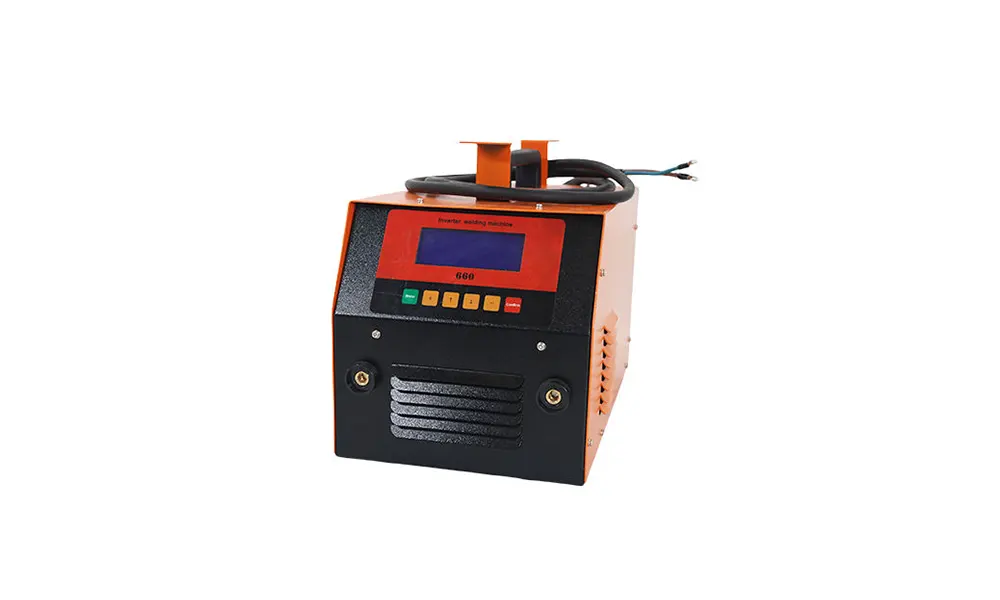
Electrofusion welding uses special fittings with embedded heating coils. When an electrical current passes through the coil, the fitting and pipe surface melt together to form a strong bond. This method is often used where butt fusion is difficult, such as confined spaces, repairs, branch connections, or complex pipeline layouts.
Electrofusion is highly valued for its precision and ease of installation in tight areas. Since the heating process is controlled by the fitting itself, the method can reduce dependence on the operator’s manual pressure control. This is especially beneficial for utility networks and maintenance work where access is limited.
However, electrofusion fittings are typically more expensive than butt fusion joints, and the method requires careful surface preparation and clean alignment. If contamination is present on the pipe surface, the quality of the weld can be compromised.
🔍 Use electrofusion when: space is limited, branch connections are needed, or repairs must be completed without large fusion equipment.
3. Socket Fusion: Suitable for Smaller Diameter Pipes
Socket fusion is another thermal joining method commonly used for smaller plastic pipes and fittings. The pipe end and fitting are heated using a socket-style tool, then joined together to create a secure bond. It is often applied to smaller plumbing lines, residential systems, and light-duty installations.
This method is appreciated for its simplicity and relatively low equipment cost. It is also useful in situations where the pipe diameter is too small for butt fusion equipment to be practical. For small-scale work, socket fusion can deliver dependable joints when the procedure is executed correctly.
That said, socket fusion is generally not the best choice for large-scale infrastructure or high-pressure transmission systems. Its range is limited, and the joint geometry makes it less suitable for large diameters compared with butt fusion.
Good fit: small-diameter pipes, indoor plumbing, light commercial systems, and low-to-medium pressure applications.
4. Hot Gas Welding: Useful for Sheet and Fabrication Work
Hot gas welding is commonly used for plastic fabrication, tank construction, liners, and sheet joining rather than long pipeline systems. It involves heating the base material and filler rod with a stream of hot gas until the materials soften and bond.
Although it is a valid plastic welding method, hot gas welding is not usually the first choice for pressure pipe networks because it does not deliver the same joint uniformity as fusion-based pipe welding methods. It is more often selected for specialized fabrication tasks, repairs, and custom plastic components.
In pipeline contexts, hot gas welding may be used for auxiliary structures or supporting plastic elements, but it is generally not competitive with butt fusion or electrofusion for major line construction.
How the Main Methods Compare
When comparing plastic pipe welding methods, the most important factors are joint strength, installation efficiency, cost, skill requirement, and suitability for different diameters. Each method has a place in the market, but they are not interchangeable.
| Method | Strength | Best Use | Main Advantage |
|---|---|---|---|
| Butt Fusion | Very high | Medium to large HDPE pipelines | Strong, seamless, economical |
| Electrofusion | High | Repairs, branches, tight spaces | Excellent in limited-access areas |
| Socket Fusion | Moderate to high | Small-diameter pipes | Simple and affordable |
| Hot Gas Welding | Moderate | Fabrication and repairs | Flexible for custom work |
What Makes Butt Fusion the Preferred Choice?
In most professional pipeline projects, butt fusion stands out because it combines structural reliability with economic efficiency. Once the equipment is properly set up, it allows repeatable welding with excellent consistency. This is especially important for long pipeline runs where dozens or hundreds of joints must meet the same quality standard.
Another reason for its popularity is the low maintenance requirement of the finished joint. Since the fusion area becomes one continuous piece of material, the risk of leaks is minimized and the system can handle demanding operational conditions for years.
✅ Operational benefit: Butt fusion is ideal for projects that prioritize throughput, repeatability, and long-term performance across large networks.
Manufacturers with strong engineering capability, such as JQ-Fusion, support this demand by offering manual, hydraulic, and CNC automatic welding systems for a wide range of pipe diameters. Their equipment is used in water supply, gas distribution, mining, and industrial installations, where reliability and durability are essential. Learn more about their product range and global support services through the official website.
How to Choose the Right Welding Method
To choose the right method, start with the pipe material and diameter. HDPE large-diameter lines typically favor butt fusion. Smaller pipes may be better suited to socket fusion. If the installation space is limited or the job involves a branch or repair, electrofusion may be the best option.
Next, evaluate the site conditions. Outdoor utility projects, buried pipelines, and industrial routes usually require methods that produce strong, permanent joints with minimal maintenance. In contrast, a fabrication workshop may prioritize versatility over long-run pressure performance.
Finally, consider operator skill and equipment availability. Even the best welding method can fail if the preparation, heating, pressure, or cooling stages are not controlled properly. That is why training, testing, and machine calibration are part of the welding process itself.
The Role of Welding Machines in Joint Quality
Welding machines are not simply tools; they are quality-control systems. A reliable machine helps stabilize temperature, align pipe ends, and maintain correct pressure during fusion. These factors directly affect the integrity of the final joint.
For example, modern hydraulic butt fusion machines are designed to reduce manual variability and improve repeatability across multiple welds. CNC automatic machines go even further by minimizing operator dependence and supporting standardized production workflows. This is particularly valuable for contractors handling large projects with strict timelines.
JQ-Fusion’s manufacturing approach emphasizes stable performance, strict quality control, and customizable configurations. That combination is important for companies that need equipment adapted to different market standards, voltages, branding requirements, or project specifications.
Tip: When evaluating equipment, look for temperature accuracy, hydraulic stability, clamp alignment, and after-sales support—not only the price tag.
Why Quality Control Cannot Be Ignored
Quality control is the difference between a weld that lasts for decades and one that fails under pressure. In professional pipeline manufacturing and installation, each machine and process step should be tested for performance stability. This includes heating plate accuracy, hydraulic pressure consistency, and proper clamp alignment.
Certified products also help reduce project risk. Equipment manufactured to recognized standards and tested before shipment offers greater confidence to contractors and distributors operating in competitive international markets.
Reliable global support matters as well. Fast response times, technical guidance, and shipping efficiency can prevent downtime and keep a project on schedule. For many buyers, these service factors are just as important as mechanical specifications.
Conclusion
Plastic pipe welding is not a one-method-fits-all decision. Butt fusion is the leading choice for large-diameter HDPE pipelines because of its strength, efficiency, and seamless joint quality. Electrofusion performs well in confined spaces and repair work. Socket fusion remains practical for smaller pipes, while hot gas welding serves specialized fabrication needs.
The best method depends on the project’s technical requirements, installation environment, budget, and long-term performance goals. For large infrastructure applications, butt fusion often provides the best balance of reliability and value. With the right machine, skilled operators, and proper inspection standards, welded plastic pipelines can deliver durable service for many years.
Final takeaway: Invest in the right welding method and the right equipment, and your pipeline system will repay that decision with safer operation, lower maintenance, and longer service life.
FAQ
Q1: What is the strongest plastic pipe welding method?
For most HDPE pipeline applications, butt fusion is considered the strongest and most reliable method because it creates a seamless joint with excellent pressure resistance.
Q2: When should electrofusion be used instead of butt fusion?
Electrofusion is ideal when space is limited, when branch connections are needed, or when repairs must be completed without large fusion equipment.
Q3: Is socket fusion suitable for large pipes?
No. Socket fusion is mainly used for smaller-diameter pipes and is not the preferred method for large-pressure pipeline systems.
Q4: Why does machine quality matter in pipe welding?
Machine quality affects temperature control, pressure stability, alignment, and repeatability, all of which determine whether the weld is reliable and durable.
Q5: How can contractors improve welding consistency?
Use certified equipment, follow proper preparation and cooling procedures, train operators thoroughly, and perform regular inspection and testing before commissioning.



