
Learning how to use a pipe welding machine correctly is essential for safe, reliable HDPE pipeline installation. This guide walks beginners through the core equipment, step-by-step butt fusion workflow, safety essentials, common troubleshooting, and routine maintenance so you can get consistent, high-quality joints on site.
Understanding Pipe Welding Machines: Types & Key Components
There are three common types: manual, hydraulic, and automatic/CNC. Each controls the same core steps—aligning, facing, heating, fusing, and cooling—but differ in automation level, accuracy, and ideal project size.
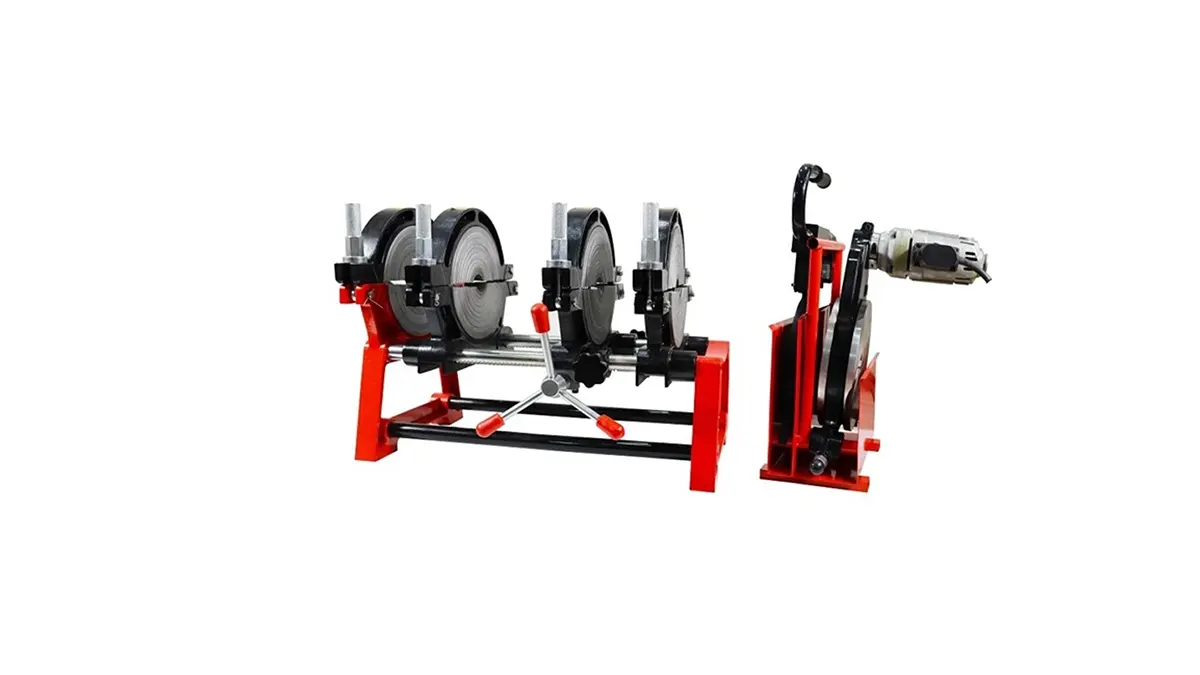
Main components to know
Clamps / fixture, hydraulic pump or manual jacks, facing tool (trimmer), heating plate (hot plate), control unit (for automatic machines), pressure gauges, and temperature controller.

Safety First: PPE and Site Preparation
Always wear certified PPE: safety glasses, heat-resistant gloves, long sleeves, and steel-toe boots. Secure the work area, avoid open flames near the heating plate, and ensure proper ventilation when trimming or heating pipe ends.
Pre-check list
Check: machine calibration, heating plate clean and at set temperature, facing knife sharp, clamps free of debris, pipe ends cut square, and correct pipe size adapters fitted.
Step-by-Step Butt Fusion Process (Beginner-Friendly)
1. Positioning & Clamping
Align pipe ends in the clamps; ensure centerline alignment. Use alignment marks and confirm both pipes are fully supported to avoid sagging.
2. Facing (Trimming)
Use the facing tool to remove oxidized material and create flat, square surfaces. Proper facing ensures maximum contact area for fusion. Inspect the faces—no gouges or uneven surfaces.
3. Heating
Bring the hot plate to the specified temperature for your material (commonly ~200°C for HDPE). Do not overheat—follow recommended times and avoid smoking of material.
4. Heating Contact Time
Press both pipe ends onto the hot plate with light, even pressure until the melt bead forms. Remove carefully and move the hot plate away smoothly; avoid twisting.
5. Fusion (Joining)
Bring pipe ends together under the correct fusion pressure. Hold steady for the specified fusion time until the joint is formed. Over-compression or under-pressure leads to weak joints.
6. Cooling
Keep clamps engaged and keep the joint undisturbed until the cooling time completes. Rapid movement before full cooling will compromise joint strength.
Quick Reference Table: Typical Settings
| Pipe OD | Hot Plate Temp | Heating Time | Fusion Pressure |
|---|---|---|---|
| 63 mm | 200°C | 30–60 s | 0.2–0.4 MPa |
| 160 mm | 200°C | 90–150 s | 0.4–0.8 MPa |
| 315 mm | 200°C | 200–300 s | 0.6–1.2 MPa |
Common Problems & Troubleshooting
Weak joint or pull-out
Causes: insufficient facing, low fusion temperature, not enough fusion pressure, or disturbed cooling. Remedy: reface and re-weld, verify temperature calibration, and follow correct pressure/time profile.
Excessive flash (too much melt bead)
Causes: too much heating time or too high pressure during fusion. Remedy: reduce heating time, adjust pressure, and confirm hot plate temperature sensor accuracy.
Routine Maintenance & Calibration
Keep the heating plate clean and scratch-free, replace worn facing blades, inspect hydraulic hoses and seals, and perform regular calibration of temperature sensors and pressure gauges. Schedule a full machine service annually or after heavy field use.
Storage & Transport Tips
Protect the hot plate and facing tools with covers during transport, secure clamps and moving parts, and store the machine in a dry environment to avoid corrosion of hydraulic components.
Pro Tips for Beginners
- Practice facing and clamp alignment on scrap pipe before working on the project pipeline.
- Use a temperature log or control unit to record heating cycles—consistency builds repeatable quality.
- Label pipes and joints during long runs to track fusion history and avoid confusion.
When to call technical support
If electronic controls behave erratically, hydraulic pressure cannot be maintained, or temperature readings are inconsistent, stop and seek factory or authorized service rather than improvising repairs.
For reliable HDPE welding machines and expert support, consider contacting JQ-Fusion via their website: https://jq-fusionwelding.com/



