
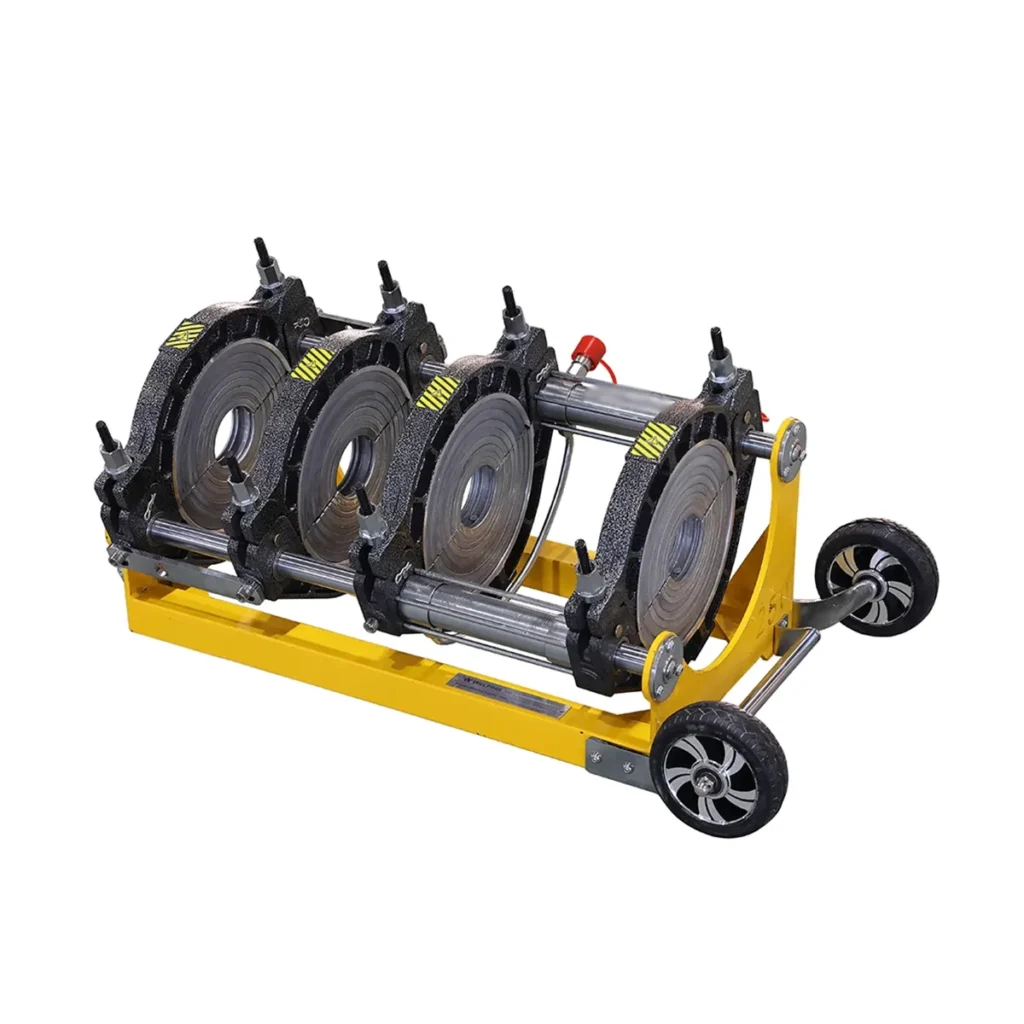
PE pipe butt fusion equipment joins polyethylene (PE/HDPE) pipes by heating and fusing their ends, creating continuous, leak-free pipelines for water, gas, mining, and industrial systems. This guide explains how butt fusion machines work, the main equipment types, selection criteria, maintenance and safety tips, and common troubleshooting to help contractors, specifiers, and site crews make informed choices.
What Is PE Pipe Butt Fusion Equipment?
Butt fusion equipment heats the facing surfaces of two polyethylene pipe ends until the polymer reaches a molten state, then presses them together under controlled pressure and cooling time so a homogeneous, high-strength joint is formed. The process is ideal for thermoplastic pipes like HDPE because it retains material properties across the joint, producing durable, corrosion-free connections.
Types of Butt Fusion Machines
Manual Butt Fusion Machines
Small, portable units for on-site repairs and installations on smaller diameters. They rely on hand-operated clamps and screw jacks and are suitable for remote locations and small crews.
Hydraulic Butt Fusion Machines
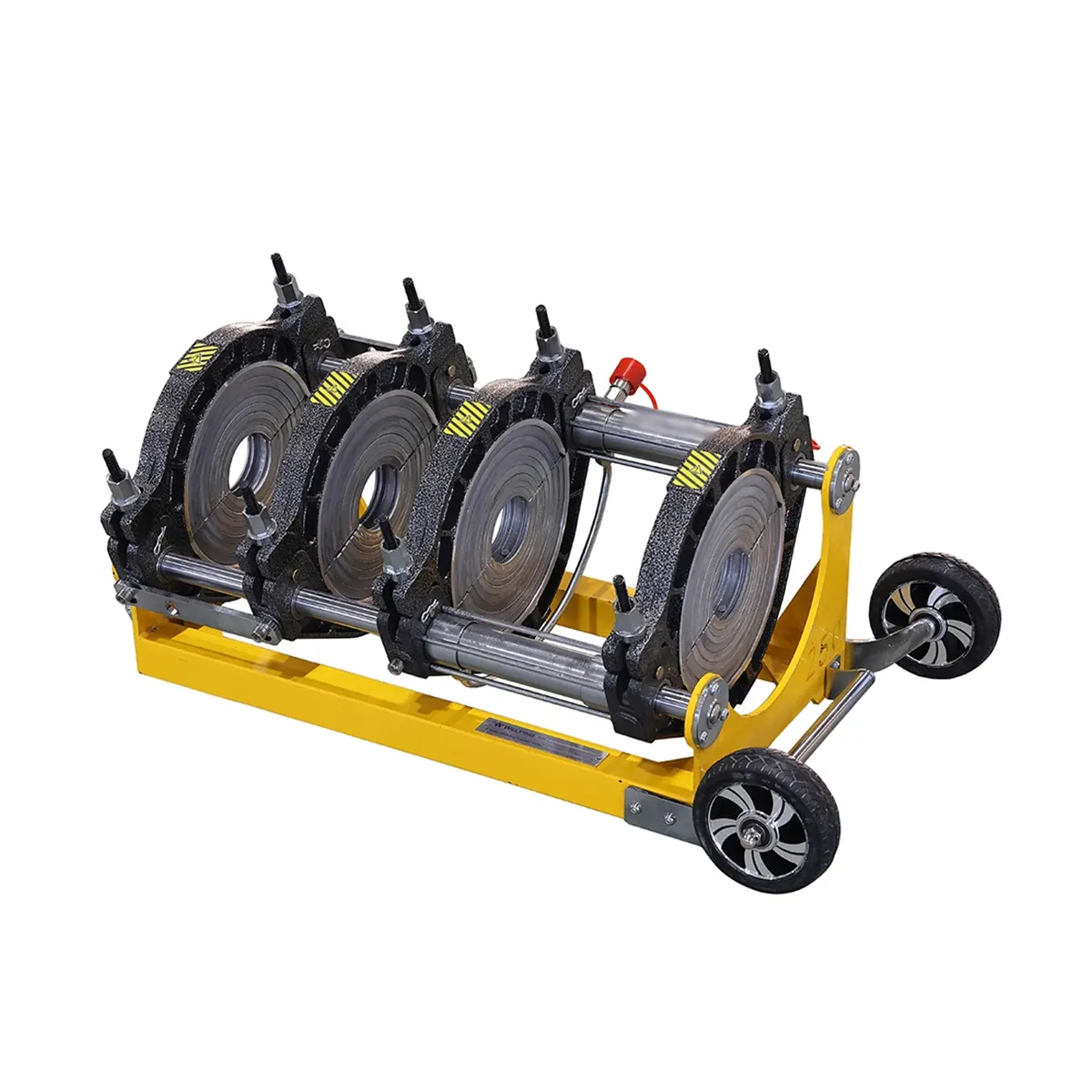
Hydraulic units provide higher and more consistent clamping force, faster cycle times, and are commonly used for medium to large diameters on construction sites where reliability and repeatability matter.
CNC / Automatic Butt Fusion Machines
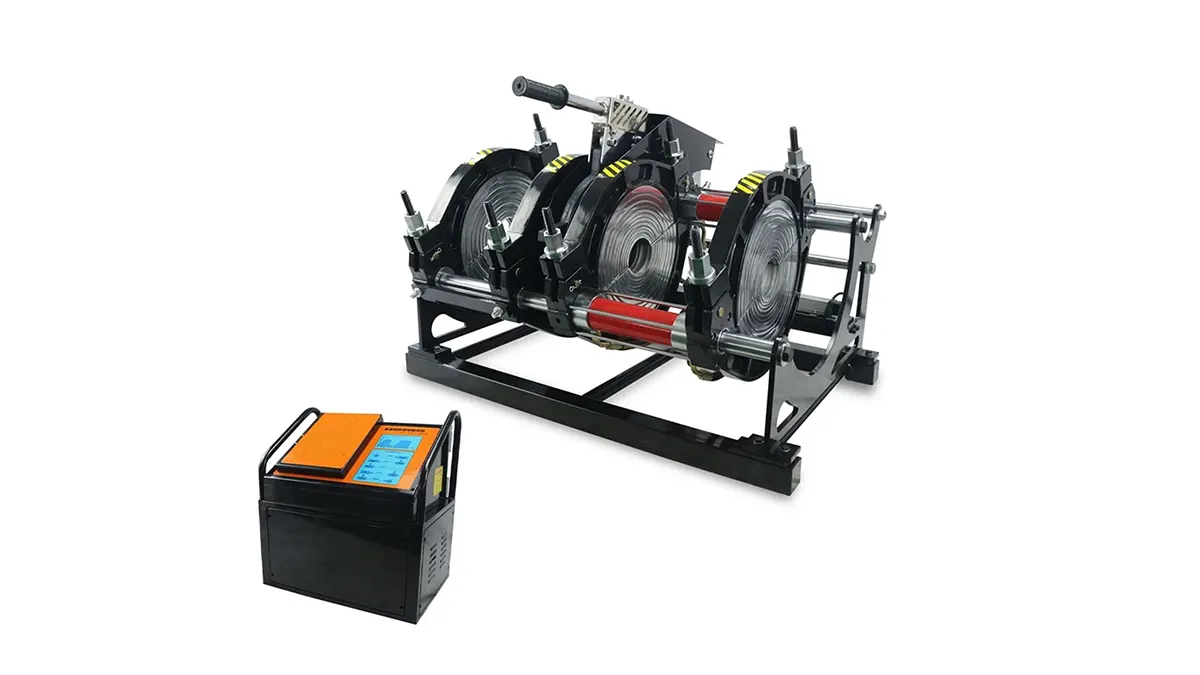
Automatic systems control heating time, pressure, and cooldown cycles through programmable logic, delivering excellent repeatability and documentation for large projects and utility installations where traceable weld records are required.
Electrofusion Equipment (Complementary)
Electrofusion fittings use embedded heating coils and a controlled electrical current to fuse fittings to pipe surfaces. While different from butt fusion, electrofusion is often used where fittings, tees, or branch connections are required.
Quick Comparison: Machine Types
| Type | Typical Pipe Range | Best For | Key Feature |
|---|---|---|---|
| Manual | 20–315 mm | Small crews, remote sites | Simple, portable, low cost |
| Hydraulic | 63–2000+ mm | Medium-large pipelines | Consistent pressure, robust |
| Automatic / CNC | 50–2250 mm | Large projects, utilities | Programmable cycles, logging |
| Electrofusion | 20–500 mm (fittings) | Fittings, repairs, tight spaces | Controlled electrical heating |
Main Components of Butt Fusion Equipment
Every butt fusion setup typically includes a clamping frame, facing/cut-off tool (trimmer), heater plate, hydraulic or mechanical pressure system, alignment devices, and instrumentation for temperature and pressure. Quality heater plates and accurate alignment are crucial to avoid weak joints and ensure uniform bead formation.
How Butt Fusion Works — Simple Steps
1. Preparation: Clean pipe ends, align pipes in clamps, ensure correct facing length.
2. Facing: Use the trimmer to remove burrs and create square, clean ends.
3. Heating: Bring the heater plate to the specified temperature and press between pipe faces until a uniform melt bead appears.
4. Welding: Remove the heater and press the molten ends together at prescribed pressure for the required fusion time.
5. Cooling: Maintain pressure while the joint cools to solidify the molecular bond. Remove from clamps only after full cooldown.
Selecting the Right Machine
Consider these factors: pipe diameter and SDR, production rate, job site conditions, required weld traceability, power source availability, crew skill level, and budget. For municipal and gas utility projects that demand traceable weld logs, an automatic/CNC unit is often the best choice. For rural repairs, a manual or portable hydraulic unit may be more practical.
Maintenance & Safety Tips
Keep heater plates clean and scratch-free, calibrate temperature sensors regularly, check hydraulic fluids and seals, and store trimmers and clamps dry. On-site safety includes wearing PPE, keeping the heater protected when hot, following pressure/time charts precisely, and ensuring trained operators handle critical welds.
Standards and Compliance
Ensure equipment and procedures comply with local regulations and internationally recognized standards (such as ISO, ASTM, and regional pipeline codes). Project specifications or network operators often require documented weld logs, certified operators, and calibrated equipment.
Common Troubleshooting
Incomplete fusion: check heater temperature, facing quality, and fusion pressure. Cold joints: increase heating time or temperature and verify alignment. Excess flash or weak bead: verify facing depth and pressure settings. Instrumentation errors: recalibrate sensors and inspect electrical/hydraulic connections.
Applications
Butt fusion equipment is used for potable water networks, gas distribution, sewer and drainage systems, industrial and chemical piping, irrigation and agricultural lines, mining pipelines, and trenchless installations. Its corrosion resistance and joint integrity make it a preferred choice for long-life infrastructure.
About the Manufacturer
JQ-Fusion is a professional manufacturer specializing in HDPE pipe welding machines, providing reliable butt fusion solutions for global infrastructure projects. With a range from manual to CNC automatic butt fusion welding machines, JQ-Fusion supports contractors with quality, durable, and customizable equipment. Visit https://jq-fusionwelding.com/ for product details and support.
Quick FAQs
Q: What pipe materials are suitable for butt fusion? A: PE and HDPE (and some PP) pipes designed for fusion welding.
Q: Is butt fusion stronger than mechanical couplings? A: Properly performed butt fusion produces joints that are typically as strong as or stronger than the pipe itself.
Q: How important is operator training? A: Essential — operator skill affects joint quality, so certified training and adherence to procedures are critical.
Need help choosing a machine or setting up weld procedures? Contact JQ-Fusion through the website link above for model recommendations, spare parts, and technical support tailored to your project.



