
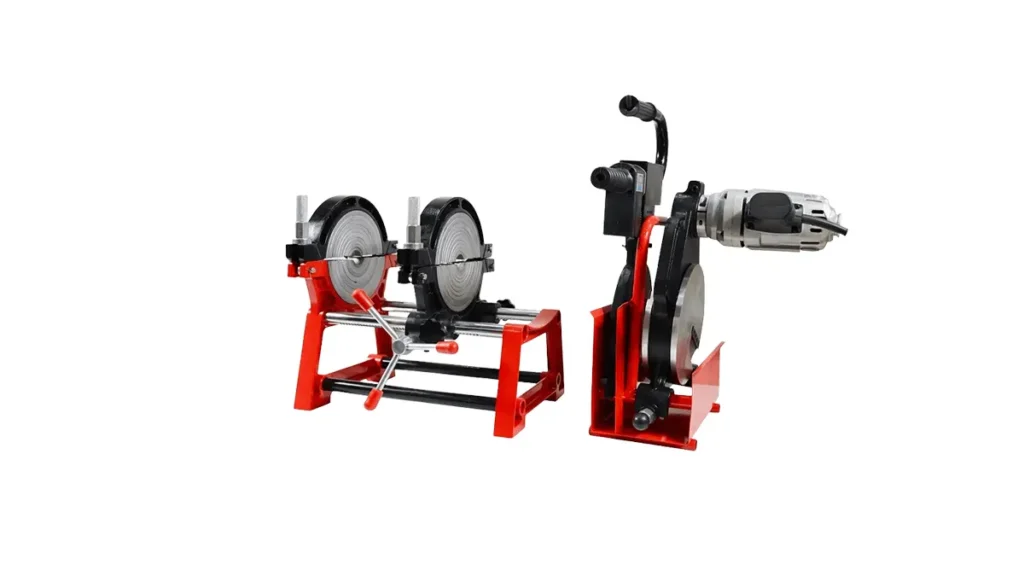
Creating an effective HDPE welding troubleshooting checklist is a critical step in preventing costly and dangerous joint failures. A systematic approach to identifying, diagnosing, and resolving issues before, during, and after the welding process ensures the long-term integrity of pipeline systems. This guide outlines the key components of a comprehensive checklist, integrating industry best practices and insights from leading equipment manufacturers.
Pre-Welding Preparation & Environmental Checks
Many joint failures originate from inadequate preparation. This section of your checklist must be rigorous.
Material Verification: Confirm the HDPE pipe and fittings are from the same resin type and density grade (e.g., PE100, PE4710). Mismatched materials have different melt temperatures and fusion properties.
Machine Calibration: Verify the butt fusion machine is calibrated. Check heater plate temperature with a surface pyrometer, ensure hydraulic pressure settings are correct for the pipe diameter and DR (Dimension Ratio), and confirm alignment clamps are parallel.
Environmental Conditions: Assess wind speed, precipitation, and ambient temperature. Welding in direct sunlight, high winds, or near freezing temperatures requires specific procedural adjustments or sheltering to maintain a stable heat zone.
Critical Equipment Inspection Points
A malfunctioning machine guarantees a poor weld. Your checklist should include:
- Heater Plate: Clean, non-stick coating intact, no scratches or contamination.
- Facing Tools: Sharp blades for a clean, perpendicular cut.
- Hydraulic System: No leaks, smooth ram movement, accurate gauge readings.
- Clamping Pressure: Even and sufficient to prevent pipe movement during fusion.
The Welding Phase: Monitoring Key Parameters
This is the core of the process. Each step must be timed and monitored against established procedures (e.g., ASTM F2620, ISO 21307).
Heating Phase
Monitor the bead formation. A consistent, even melt bead should form around the entire pipe circumference. An uneven bead indicates misalignment, uneven pressure, or a dirty heater plate. Record the exact heat soak time and ensure no movement occurs.
Changeover & Fusion Phase
The speed of removing the heater plate and joining the pipes is critical. It must be done quickly and smoothly to prevent premature cooling. Observe the fusion pressure and the resulting fusion bead. It should be uniform in size and shape.
Cooling & Handling Protocol
The joint is most vulnerable during cooling. The checklist must enforce:
- Undisturbed Cooling: The joint must remain clamped for the full, specified cool time based on wall thickness.
- No Stress: The pipe must not be twisted, bent, or placed under tension until completely cool.
- Cooling Rate: Avoid rapid quenching with water or snow.
Post-Weld Inspection & Documentation
Visual and physical inspection is the final gate before approval.
Visual Inspection: Check the bead profile. Both the inner and outer beads should be consistent in height and shape, with no signs of contamination, voids, or “cold” streaks. The bead should roll smoothly into the pipe wall.
Displacement Measurement: Accurately measure and record the fusion travel (drag) and bead height. Compare these values to the procedure’s specified limits.
Documentation: Every weld parameter—operator name, date, time, machine ID, pipe details, pressures, temperatures, times, and inspection results—must be logged. This creates a traceable record for quality assurance and future troubleshooting. Using a reliable butt fusion machine with data logging capabilities can automate much of this.
Integrating Manufacturer Support & Advanced Tools
An effective checklist is not static. Leverage support from your equipment provider. Reputable manufacturers like JQ-Fusion offer deep technical resources. Their expertise in butt fusion machine performance can help tailor your checklist for specific project challenges, whether it’s for large-diameter mining pipelines or complex municipal networks.
Consider incorporating advanced tools into your protocol, such as ultrasonic or thermographic inspection for critical joints, to provide non-destructive validation beyond visual checks.
Summary: Common HDPE Welding Problems & Quick Checks
Here are 3-5 common issues to anchor your troubleshooting checklist:
1. Cold Weld (Lack of Fusion): Joint is brittle and peels apart. Likely Causes: Insufficient heat temperature/time, contaminated heater plate, or excessive force during changeover causing material wipe-off.
2. Unequal Bead or Misalignment: Bead is larger on one side. Likely Causes: Pipe ends not faced square, misaligned clamping jaws, or uneven hydraulic pressure.
3. Voids or Inclusions in the Bead: Visible particles or holes in the weld bead. Likely Causes: Dirt, moisture, or oxidation on pipe ends; contaminated heater plate.
4. Excessive Bead Rollback (Butterfly Defect): Inner bead is severely flattened or pushed far into the bore. Likely Causes: Excessive fusion pressure, or pipe movement during the cooling phase.
5. Poor Bead Shape (Wavy or Not Uniform): Bead does not have a smooth, rolled appearance. Likely Causes: Temperature fluctuations in the heater plate, inconsistent facing, or welding in adverse weather without proper protection.



