
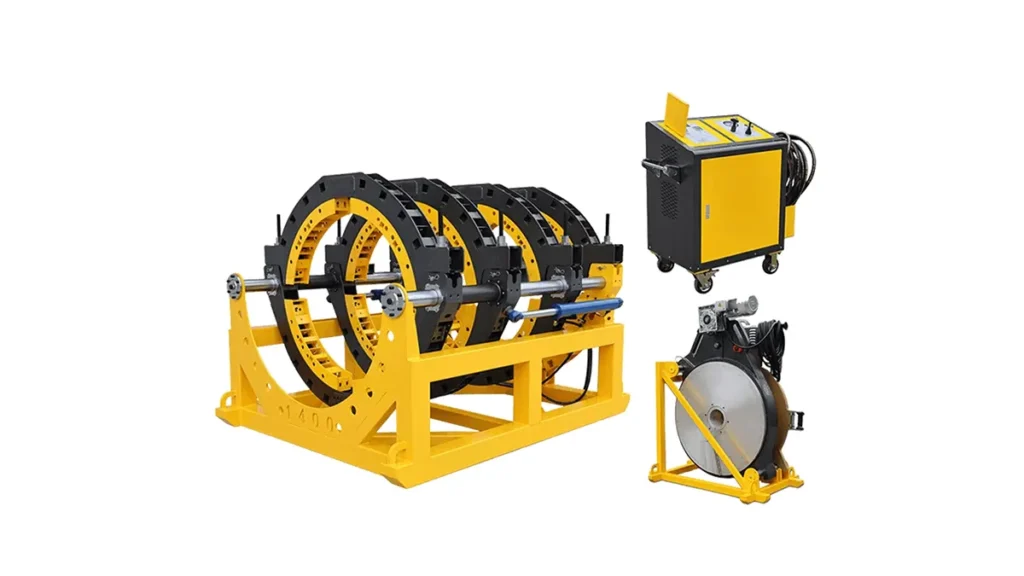
Pipe welding is a critical process in pipeline construction, and pressure errors during welding can lead to joint failures, leaks, and costly repairs. Understanding the most common pressure-related mistakes and how to prevent them is essential for ensuring strong, reliable welds. This article explores frequent pressure errors in pipe welding and provides practical prevention strategies.
Inconsistent Heating Pressure
One of the most frequent errors is applying inconsistent or incorrect heating pressure. If the pressure is too low, the pipe ends may not fuse properly, creating weak joints. If it’s too high, material can be excessively displaced, causing bead irregularities or reducing wall thickness.
Prevention Tip: Always calibrate your butt fusion machine before starting a project. Follow the manufacturer’s pressure charts precisely, which are based on pipe material, diameter, and wall thickness. Modern hydraulic machines often have automatic pressure control to maintain consistency.
Improper Drag Pressure Application
Drag pressure (or fusion pressure) is applied after the heating plate is removed to fuse the pipe ends together. A common mistake is applying this pressure too slowly, too quickly, or at an incorrect level. This can result in cold welds or excessive material squeeze-out.
Key Prevention Steps:
- Ensure the hydraulic system of your welding machine is functioning smoothly without leaks or pressure drops.
- Transition from heating to fusion pressure as quickly as the procedure specifies to prevent heat loss.
- Maintain the correct fusion pressure for the full specified cooling time. Do not release pressure early.
Failure to Account for Environmental Factors
Ambient temperature and wind can significantly affect the heating and cooling rates of the pipe, indirectly impacting pressure requirements. Welding in cold conditions without adjusting procedures is a major error.
Solution: Use environmental shelters when working in windy or cold conditions. For critical projects, consider machines with temperature-compensated controls. Always allow pipes and fittings to acclimate to the job site temperature before welding.
Incorrect Pipe Alignment and Clamping Pressure
Before heating begins, pipes must be perfectly aligned and securely clamped. Insufficient clamping pressure can allow movement during the fusion cycle, creating misalignment and stress points. Uneven clamping pressure can distort the pipe ends.
How to Prevent This: Use a well-maintained butt fusion machine with strong, parallel clamps. Check clamp jaws for wear and ensure they grip the pipe uniformly around its circumference. Verify alignment with a straight edge before applying final clamping force.
Pressure Gauge Inaccuracy and System Leaks
Relying on uncalibrated or faulty pressure gauges is a direct path to error. Small hydraulic leaks in the welding machine can cause a gradual pressure drop during the critical fusion hold phase, compromising joint integrity.
Prevention Action: Implement a regular maintenance schedule. Calibrate pressure gauges and transducers at least annually. Before each weld, perform a brief pressure test—apply and hold system pressure to check for drift or drop, indicating a potential leak.
Using the Wrong Pressure for the Material
Different polyethylene (PE) grades (e.g., PE80, PE100, PE100-RC) have slightly different melt flow and fusion characteristics. Applying a generic pressure setting to all materials is an error.
Best Practice: Always refer to the pipe and fitting manufacturer’s welding parameters. These parameters are material-specific. Reputable equipment manufacturers like JQ-Fusion provide detailed guidelines and machine settings tailored to material standards.
Operator Error in Manual Pressure Control
On non-automated machines, the welder manually controls pressure switches and valves. Inconsistent timing or “feeling” can lead to variations between welds, even on the same project.
Mitigation Strategy: Invest in training and certification for all welding operators. Where possible, use machines with automated pressure cycles (hydraulic or CNC) to remove human variability. Automated machines ensure precise pressure application and timing for every single weld.
Summary: Key Prevention Strategies
Preventing pressure errors hinges on equipment, procedure, and operator competence. Use a reliable, well-calibrated butt fusion machine. Strictly adhere to the qualified welding procedure specification (WPS) for the specific pipe material and diameter. Protect the welding environment from adverse weather. Most importantly, ensure all operators are thoroughly trained and understand the critical role of pressure in creating a lasting fusion joint.
Frequently Asked Questions (FAQs)
Q1: How often should I calibrate the pressure gauges on my butt fusion welder?
A: Pressure gauges and sensors should be calibrated at least once a year, or more frequently if the machine is used heavily or subjected to harsh conditions. Always calibrate if you suspect a reading is inaccurate.
Q2: Can I use the same pressure settings for different brands of PE pipe?
A: Not necessarily. While materials may have the same grade (e.g., PE100), fusion parameters can vary by manufacturer. Always use the welding parameters provided by the pipe and fitting supplier for your specific product.
Q3: What is the single biggest sign of a pressure-related welding failure?
A: A “cold weld” is a common result. This is characterized by a poor fusion bead (too small, misshapen, or brittle) and a joint that can be easily broken or shows lack of fusion during destructive testing.
Q4: Does automatic welding equipment completely eliminate pressure errors?
A: Automatic and CNC machines greatly reduce the potential for human error by controlling pressure and timing precisely. However, they must still be correctly programmed with the right parameters and be properly maintained to function accurately.
Q5: Where can I find a reliable butt fusion machine with stable pressure control?
A: Professional manufacturers like JQ-Fusion specialize in producing hydraulic and automatic butt fusion welding machines with precise pressure control systems, designed for consistent performance in demanding pipeline projects globally.



