
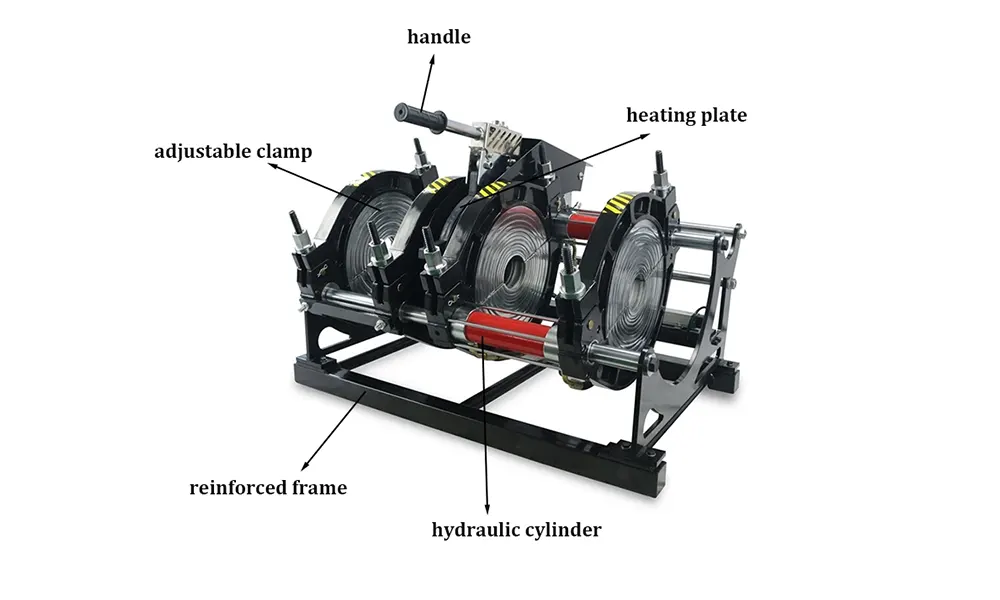
Pipe welding is a critical process in numerous industries, from municipal water supply to industrial gas lines. Even with skilled operators and proper procedures, leaks can occur, compromising system integrity, safety, and efficiency. Addressing these leaks effectively requires a systematic approach to both immediate repair and long-term prevention.
Identifying Common Pipe Welding Leak Problems
Before applying a fix, accurately diagnosing the leak’s cause is essential. Common issues often stem from procedural errors or equipment limitations.
➤ Inadequate Surface Preparation: Contaminants like dirt, moisture, grease, or oxidation on the pipe ends or fittings prevent a proper molecular bond during the fusion process, creating a weak point that will likely leak.
➤ Incorrect Heating & Fusion Parameters: This includes insufficient heating time or temperature, which leads to incomplete melting, or excessive heat and pressure, which can cause material degradation or bead deformation.
➤ Misalignment During Joining: If the pipe ends are not aligned correctly within the butt fusion machine clamps before and during the joining phase, it creates an uneven weld bead and stress points.
➤ Faulty Equipment Calibration: Machines with inaccurate temperature gauges, unstable hydraulic pressure, or worn heater plates will produce inconsistent and unreliable welds.
Immediate Steps for Fixing Welding Leaks
When a leak is detected, a swift and safe response is necessary. The fix often depends on the pipe material and the leak’s severity.
For HDPE and Thermoplastic Pipes:
1. Assessment and Isolation: First, depressurize and isolate the leaking section. Clean the area thoroughly to inspect the weld bead. A visual check can reveal gaps, cracks, or obvious imperfections.
2. Localized Repair (Small Leaks): For minor pinhole leaks in non-critical, low-pressure lines, an electrofusion saddle or coupling can sometimes be used as a repair clamp. This method requires proper surface scraping and a compatible electrofusion control unit.
3. Section Replacement (Major Leaks): For significant leaks or failed welds, the only reliable fix is to cut out the defective joint and install a new spool piece using two new, properly executed butt welds. This underscores the importance of getting it right the first time.
For Metal Pipes (Steel, etc.):
Repairs often involve grinding out the defective weld area and re-welding, which requires certified welders, specific procedures, and often post-weld heat treatment—a complex and costly field repair.
Best Long-Term Solutions for Leak Prevention
True cost savings and project success come from preventing leaks altogether. This requires an investment in proper procedures, training, and, crucially, high-quality equipment.
1. Invest in Precision Equipment
The foundation of a leak-free weld is a reliable, well-calibrated welding machine. Advanced butt fusion machine models offer features that drastically reduce human error:
- Automated CNC Controls: These systems precisely manage the entire heating, switching, and joining cycle based on pre-programmed parameters for the specific pipe material and size, ensuring repeatable accuracy.
- Stable Hydraulic Systems: Consistent, smooth pressure application during the fusion and cooling phases is critical for a uniform bead and strong joint.
- Accurate Temperature Control: Digital temperature controllers with feedback loops maintain the heater plate at the exact required temperature, preventing under or over-heating.
2. Implement Strict Welding Procedure Specifications (WPS)
Every project should follow a documented WPS tailored to the pipe material (PE100, PE4710, etc.), diameter, wall thickness (SDR), and ambient conditions. This includes:
✔ Mandatory Surface Preparation: A strict protocol for scraping, cleaning, and aligning pipe ends must be non-negotiable.
✔ Parameter Adherence: Strictly following the correct heating time, heater plate temperature, fusion pressure, and cooling time as per the pipe manufacturer’s guidelines and the machine’s capabilities.
3. Comprehensive Operator Training and Certification
Even the best machine is only as good as its operator. Continuous, hands-on training is essential. Operators must understand not just how to run the machine, but the science behind the fusion process, how to interpret weld bead appearance, and how to perform routine machine maintenance and checks.
4. Rigorous Quality Control and Documentation
Implement a checkpoint system for every weld:
- Pre-Weld Check: Machine calibration, heater plate condition, pipe alignment.
- During Weld: Monitoring parameters and cycle phases.
- Post-Weld Check: Visual inspection of the bead (height, shape, consistency). For critical lines, consider non-destructive testing methods.
Maintaining a log for every weld joint creates traceability and accountability, which is vital for long-term asset management and warranty purposes. Partnering with a manufacturer that offers full technical support and training, like the services highlighted by industry leaders such as JQ-Fusion, can fortify this entire quality chain.
5. Choose the Right Partner for Equipment and Support
Your welding machine supplier should be a partner in your project’s success. Key considerations include:
★ Proven Experience & Technical Expertise: Look for a manufacturer with a long track record and deep understanding of pipeline engineering challenges across different sectors.
★ Strict Quality Assurance: Ensure every machine undergoes comprehensive factory testing for hydraulic stability, temperature accuracy, and alignment before shipment.
★ Customization Capability (OEM/ODM): Projects have unique needs. A supplier that can tailor machine configuration, voltage, or features to your specific site requirements adds significant value.
★ Reliable Global Logistics & After-Sales Support: Fast delivery minimizes project delays, and accessible technical support ensures you’re never stranded with an equipment issue.
By integrating these long-term strategies—centered on precision equipment, rigorous procedures, skilled personnel, and a reliable supply partner—contractors can move from reactive leak fixing to proactive leak prevention, ensuring pipeline integrity for decades.
Frequently Asked Questions (FAQs)
1. Can a leaking HDPE butt fusion weld be repaired without cutting it out?
Generally, no. For a permanent, pressure-rated repair, the standard and most reliable method is to cut out the failed joint and replace the section. While electrofusion repair saddles exist for specific, minor scenarios, they are considered a temporary or non-standard fix for primary butt welds and require expert assessment.
2. What is the most common mistake leading to welding leaks?
Inadequate surface preparation is frequently the root cause. Failing to properly scrape, clean, and dry the pipe ends before heating allows contaminants to break the molecular bond, creating a direct path for leakage.
3. How important is cooling time in the fusion process?
Extremely important. The cooling phase under maintained pressure allows the molten polymer to crystallize and develop its full strength. Premature release of pressure or handling of the joint can cause “cold pull-apart,” inducing stress and creating a leak point.
4. Does ambient temperature affect the welding process?
Yes, significantly. Cold environments can cause rapid heat loss from the pipe ends, requiring longer heating times or pre-heating measures. Hot environments might necessitate shorter heating times. A proper WPS should account for ambient conditions, and advanced machines may have environmental compensation features.
5. Why choose an automated CNC fusion machine over a manual one?
Automated CNC machines remove critical variables from human control, executing each phase of the weld cycle with digital precision. This ensures consistent repeatability, reduces the potential for operator error, and provides a digital record of the weld parameters—key factors for achieving leak-free welds consistently, especially on large-diameter or critical pipelines.



