
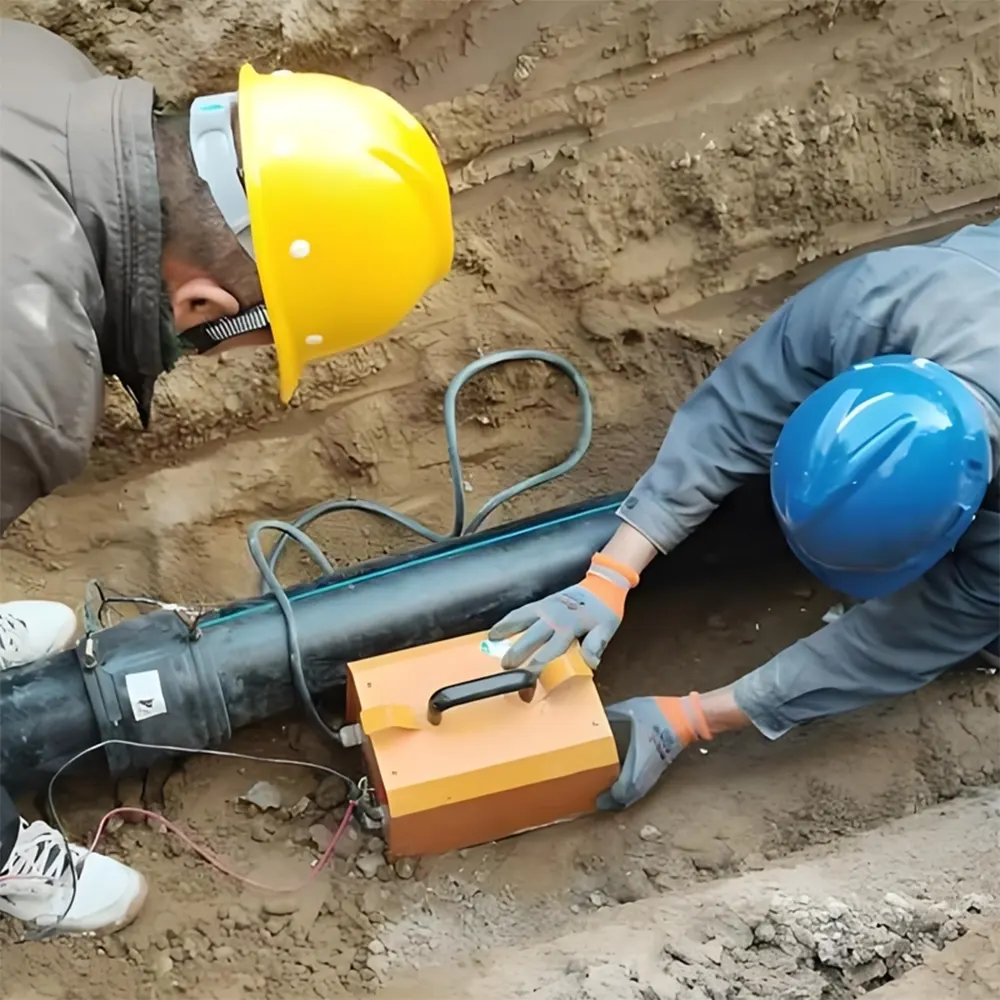
High-Density Polyethylene (HDPE) piping systems are renowned for their durability, corrosion resistance, and leak-free joints. The integrity of these systems hinges entirely on the quality of the welds that join pipe sections and fittings. Achieving a perfect, long-lasting fusion weld is not a matter of chance; it is the direct result of using a precisely engineered butt fusion machine composed of critical components working in perfect harmony. Understanding these components and their function is key to ensuring joint quality and project success.
The Core Components of an HDPE Welding Machine
Every professional-grade HDPE butt fusion welding machine is built around several essential subsystems. Each plays a distinct, non-negotiable role in the multi-stage welding process.
1. The Hydraulic Power Unit
This is the heart of the machine, providing the controlled force necessary for every phase of welding. A high-quality hydraulic system ensures smooth, consistent, and repeatable pressure application during alignment, heating, fusion, and cooling.
How it Improves Joint Quality: Inconsistent pressure is a primary cause of weak joints. A stable hydraulic unit prevents under-pressurization (which leads to cold welds and poor fusion) and over-pressurization (which can cause bead rollover and material thinning). It guarantees that the interfacial pressure between the pipe ends is perfectly maintained during the critical heating and fusion stages, creating a homogeneous molecular bond.
2. The Heating Plate (Mirror)
The heating plate is the direct instrument of fusion. Typically coated with a non-stick material like PTFE, it is precisely heated to the required temperature (usually between 200°C and 230°C for HDPE).
How it Improves Joint Quality: Temperature accuracy and even distribution across the entire plate surface are paramount. A ±1°C deviation can affect melt viscosity. An advanced heating plate with accurate digital control ensures both pipe ends reach an identical, optimal melt state, allowing polymers to interdiffuse completely without thermal degradation. This eliminates cold spots and ensures a uniform bead formation.
3. The Clamping System
This system consists of sturdy, often segmented, clamps that securely hold the pipe or fitting in place. It includes both fixed and movable clamps mounted on a rigid frame.
How it Improves Joint Quality: The clamping system is responsible for axial alignment. Any misalignment—angular or offset—creates stress concentrations and reduces the pressure-bearing capacity of the joint. Precision-machined clamps hold the pipe firmly, preventing movement during the entire cycle and ensuring the two molten faces meet perfectly square and concentric under pressure.
4. The Facer/Planer (Facing Tool)
Before heating, the pipe ends must be perfectly flat, clean, and perpendicular to the pipe axis. The facer, a tool with sharp carbide blades, is used to simultaneously shave off a thin layer from both pipe ends.
How it Improves Joint Quality: This is the most critical preparation step. It removes oxidized material, surface contaminants, and any out-of-square conditions. A clean, parallel, and virgin material surface is exposed, which is essential for achieving a pure, contaminant-free molecular bond during fusion. Skipping or improperly executing facing is a guaranteed path to joint failure.
5. The Control System (PLC or Digital Controller)
This is the brain of modern welding machines. It can range from simple timers and pressure gauges to fully automated Programmable Logic Controller (PLC) systems that guide the operator through each step.
How it Improves Joint Quality: Automation and data logging remove human error from critical parameter setting. A PLC controls heating time, switchover time, fusion pressure, and cooling time based on pipe dimensions and material. It ensures process repeatability, provides error alerts, and often creates a weld report for quality assurance records, which is vital for certified projects.
Integration for Optimal Performance
The true magic happens when these components are integrated into a robust, well-designed machine. A manufacturer like JQ-Fusion, with decades of experience, understands this synergy. Their strict quality control ensures that every hydraulic unit, clamp alignment, and temperature sensor is calibrated to work together. This integrated approach translates directly to stable welding performance in the field.
For specialized applications, customized solutions become important. A project involving varied pipe sizes or unique spatial constraints might require tailored machine configurations. The ability to customize, a core strength of experienced manufacturers, ensures that the essential components are optimally arranged and specified for the job at hand, further safeguarding joint quality.
The Direct Link to Superior Joint Quality
When all components function as designed, the improvement in joint quality is measurable and significant:
- Strength: The joint achieves 100% of the parent material’s tensile strength, as the weld is a true homogeneous fusion, not an adhesive bond.
- Leak Integrity: A properly formed internal and external bead, resulting from correct pressure and temperature, creates a perfect seal that is often stronger than the pipe itself.
- Longevity: A joint free from stress points, contaminants, or weak fusion zones will resist fatigue and environmental stress cracking for the decades-long lifespan of the HDPE pipeline.
- Consistency: From the first weld of the day to the last, a quality machine produces identical, reliable results, which is the foundation of professional pipeline construction.
Investing in a welding machine built with premium components and backed by professional technical support is not an equipment purchase; it is an investment in the reliability and safety of the entire pipeline asset. It minimizes the risk of costly failures, repairs, and downtime. For contractors and distributors looking for a reliable partner, exploring the range of manual, hydraulic, and automatic butt fusion machines from a certified manufacturer is a critical step toward ensuring project success.
Frequently Asked Questions (FAQs)
1. What is the single most important factor for a good HDPE butt fusion weld?
While all parameters are crucial, proper facing/planing of the pipe ends is arguably the most critical preparatory step. Without clean, parallel, and contaminant-free surfaces, even perfect temperature and pressure cannot create a strong molecular bond.
2. How does machine calibration affect joint quality?
Regular calibration of the heating plate temperature, pressure gauges/sensors, and clamp alignment is essential. Uncalibrated equipment can cause under-heating, over-heating, or incorrect pressure application—all of which create weak points in the joint and lead to premature failure.
3. Why is the cooling time under pressure so important?
Cooling under maintained fusion pressure allows the molten polymer to crystallize and solidify without shrinking away from the joint interface. Removing the pressure too early can cause voids or shrinkage cavities within the weld, severely compromising its integrity.
4. Can I weld HDPE in cold or wet environments?
Environmental conditions must be controlled. Cold temperatures can cause rapid heat loss from the pipe ends, requiring adjusted parameters. Moisture or ice on the pipe must be completely removed before facing, as it will contaminate the weld. Always follow the machine and material manufacturer’s guidelines for environmental limits.
5. What are the advantages of a PLC-controlled welding machine over a manual one?
PLC control ensures repeatability and traceability. It automates the weld cycle based on stored parameters, minimizing operator error. It also typically records weld data (time, temperature, pressure), providing a digital log for quality assurance, which is increasingly required for major water, gas, and industrial projects.



