
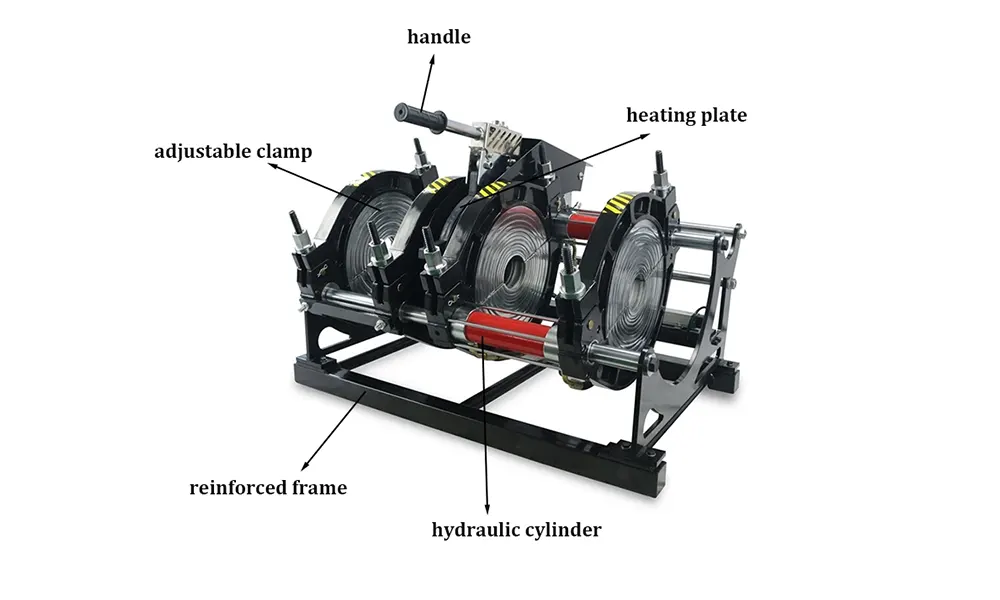
Ensuring the strength and integrity of welds in High-Density Polyethylene (HDPE) pipelines is a critical aspect of any successful installation. A failed weld can lead to costly leaks, service interruptions, and potential safety hazards. Therefore, implementing a rigorous and standardized approach to testing HDPE pipe weld strength is non-negotiable for engineers, inspectors, and contractors. This article outlines the essential methods, international standards, and industry best practices for verifying weld quality.
Why Weld Strength Testing is Paramount
HDPE pipes are joined primarily through thermal fusion processes, with butt fusion being the most common for straight sections. The goal is to create a joint as strong as, or stronger than, the pipe itself. However, the quality of this joint depends on numerous factors: machine calibration, operator skill, environmental conditions, and preparation procedures. Testing provides the objective data needed to confirm that the fusion process was executed correctly and that the pipeline will perform reliably over its intended lifespan.
Key Principle: A properly executed HDPE fusion weld creates a homogeneous molecular bond. The purpose of testing is to validate that this molecular continuity has been achieved without defects like cold welds, contamination, or misalignment.
Primary Methods for Testing HDPE Pipe Welds
Several destructive and non-destructive testing (NDT) methods are employed to assess weld strength and quality. The choice often depends on the project phase, standards required, and the need to preserve the pipeline.
Destructive Testing Methods
These tests physically destroy the weld sample to measure its mechanical properties. They are typically performed on test coupons made during the production weld.
Tensile Test: This is a fundamental test where a dumbell-shaped specimen is cut from the weld region and pulled apart in a tensile testing machine. A successful test results in failure in the pipe material (parent material failure), not at the weld interface. Failure at the weld indicates a weak joint.
Bend Test: A strip of material containing the weld is bent 180 degrees around a specified mandrel. This test checks for ductility and the presence of surface defects like cracks or lack of fusion at the weld bead. The specimen should not exhibit cracking when bent.
Crush Test (Squeeze-Off Test): A section of the welded pipe is placed in a press, and force is applied to flatten it. The weld area is inspected for signs of peeling or separation during and after the crushing force is applied. This test is particularly useful for assessing the weld’s resistance to external loads.
Non-Destructive Testing (NDT) Methods
NDT methods allow for the inspection of production welds without damaging the pipeline, making them essential for quality assurance in the field.
Visual Inspection: The first and most immediate check. Inspectors examine the bead shape, size, and consistency on both the inside and outside of the pipe. A uniform, symmetrical bead is a good initial indicator of proper heating and alignment. Tools like mirrors and borescopes are used for internal inspection.
Ultrasonic Testing (UT): Advanced ultrasonic phased array technology can scan the entire weld volume. It can detect internal flaws such as voids, inclusions, or lack of fusion by analyzing sound wave reflections. This method requires specialized equipment and trained technicians.
Best Practice: The Test Coupon
Before starting production welding on a project, operators must perform a test coupon weld using the same pipe material, machine, and parameters planned for the job. This coupon is then subjected to destructive tests (like tensile or bend tests). Only after the coupon passes these tests should production welding commence. This practice validates the entire welding procedure.
Governance by International Standards
Adherence to recognized standards ensures consistency, safety, and global acceptance of welding procedures and test results. Key standards include:
ISO 21307:2017 – This is the principal international standard for the butt fusion jointing of polyethylene pipe systems. It provides detailed procedures for making the joint, equipment requirements, and the quality assessment of the finished weld, including testing protocols.
ASTM F2620 – The standard practice for heat fusion joining of polyethylene pipes and fittings. It covers procedures for butt, socket, and saddle fusion, including guidance on equipment, training, and safety.
PIPA (Plastics Industry Pipe Association) Guidelines – Organizations like PIPA provide extensive best practice manuals and training resources that are widely referenced in the industry, often supplementing formal standards.
Compliance with these standards is not just about following rules; it’s about leveraging decades of industry experience to ensure project success. For contractors seeking equipment that aligns with these rigorous standards, partnering with an experienced manufacturer is crucial. A reliable butt fusion machine supplier like JQ-Fusion designs its equipment to meet the precise calibration and control requirements mandated by ISO and ASTM standards.
Best Practices for Ensuring Strong Welds
Beyond formal testing, success is built on disciplined execution of proven practices in the field.
1. Machine Calibration & Maintenance: Regularly calibrate the heating plate temperature, hydraulic pressure, and drag force of the butt fusion machine. A well-maintained machine from a professional manufacturer ensures repeatable accuracy.
2. Proper Pipe Preparation: Ends must be squared off cleanly using a dedicated facing tool. Any contamination (dirt, moisture, grease) must be removed immediately before heating.
3. Controlled Environment: Avoid welding in direct sunlight, rain, or high winds. Extreme temperatures can affect the heating and cooling cycle. Use protective screens if necessary.
4. Qualified Operators: Only trained and certified personnel should perform fusion welding. Skill in monitoring pressure, temperature, and bead formation is critical.
5. Document Everything: Maintain detailed logs for each weld, including machine parameters, ambient conditions, operator name, and test coupon results. This provides a traceable quality record.
Technology Insight: Modern automatic butt fusion machines with CNC controls significantly enhance consistency by digitally managing the entire fusion cycle—heat, pressure, and time—removing potential human error from the equation and creating a digital record of each weld.
Frequently Asked Questions (FAQs)
1. What is the most reliable indicator of a good HDPE butt fusion weld?
The most reliable destructive indicator is a tensile test where the specimen breaks in the parent pipe material, not at the weld. The most reliable non-destructive initial indicator is a visually uniform, symmetrical bead on both the interior and exterior of the joint, formed under properly documented and controlled parameters.
2. How often should test coupons be made during a pipeline project?
A test coupon should be made at the start of each work shift, whenever a new crew starts, when pipe material or diameter changes, or if environmental conditions change drastically (e.g., a significant temperature drop). This frequency is often specified by the project’s quality assurance plan or applicable standard.
3. Can a weld that looks good visually still fail?
Yes. While a poor bead is a clear visual reject, a weld can appear acceptable but have internal flaws like contamination or insufficient fusion. This is why visual inspection is necessary but not sufficient. Destructive testing of coupons and, for critical lines, advanced NDT like ultrasonic testing are required to validate internal integrity.
4. What is the role of the heating plate temperature in weld strength?
Temperature is critical. If too low, the polymer won’t melt sufficiently to create a proper molecular mix. If too high, the material can degrade, becoming brittle and weak. The temperature must be maintained within the range specified for the specific PE material grade, typically between 200°C and 235°C (392°F and 455°F).
5. Why is partnering with a reputable equipment manufacturer important for weld quality?
A high-quality, precisely engineered butt fusion machine provides the stable, repeatable platform needed for consistent welds. Manufacturers like JQ-Fusion, with strict quality control and technical support, ensure their machines deliver accurate temperature, alignment, and pressure control—the fundamental variables that define a strong weld. Their expertise also supports proper operator training and procedure development.



