
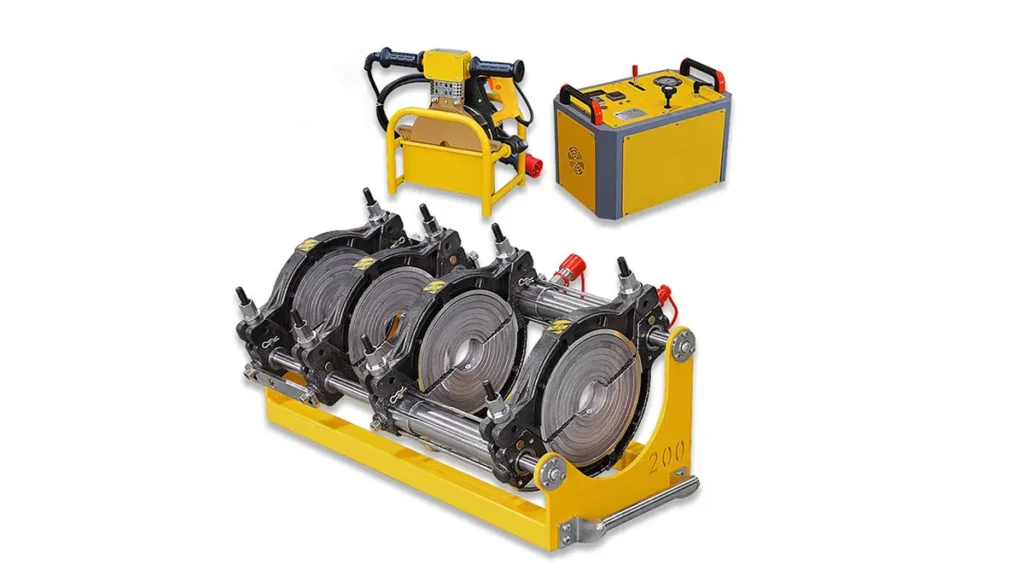
Creating strong, leak‑free joints in HDPE (High‑Density Polyethylene) piping is critical for the long‑term integrity of water, gas, and industrial systems. While the material is durable and corrosion‑resistant, its performance hinges entirely on the quality of the welds. This guide details the correct procedures for butt fusion welding, the most common method for joining HDPE pipes, to ensure reliable, long‑lasting connections.
Understanding the Butt Fusion Process
Butt fusion is a heat‑fusion process that permanently joins two HDPE pipe ends. It involves heating the pipe faces to a specific melt temperature, then pressing them together under controlled pressure to form a homogeneous joint. When done correctly, the resulting joint is as strong as—or even stronger than—the pipe itself.
Key Principle: Successful fusion requires clean surfaces, precise temperature control, sufficient heat soak time, and proper alignment during the joining and cooling phases. Rushing any step is the primary cause of joint failure.
Step‑by‑Step Guide to Correct Butt Fusion Welding
Step 1: Preparation & Safety
Before starting, ensure you have the correct butt fusion machine for the pipe diameter and pressure rating. Inspect all equipment, including heater plates, facing tools, and hydraulic systems. Wear appropriate personal protective equipment (PPE): heat‑resistant gloves, safety glasses, and protective clothing. The work area must be clean, dry, and sheltered from wind, dust, and moisture.
Step 2: Pipe Preparation & Alignment
Cut the pipe ends square using a dedicated pipe cutter. Securely clamp both pipe ends in the fusion machine, ensuring they are perfectly aligned axially. Use the facing tool to simultaneously scrape (face) both pipe ends, removing the oxidized surface and creating clean, parallel, and perpendicular mating surfaces.
➤ Critical Check: After facing, visually inspect the surfaces. They must be continuous, smooth, and free of grooves, scratches, or debris. Do not touch the prepared faces with your hands.
Step 3: Heating & Bead Formation
Insert the clean heater plate between the pipe ends. Apply the specified interfacial pressure to bring the pipe faces into full contact with the heater plate. Once contact is made, reduce to the lower heating pressure. Maintain this until a uniform melt bead (a ring of molten plastic) forms around the entire circumference of both pipe ends.
Heating time depends on pipe diameter, wall thickness, and ambient conditions—always follow the machine or material manufacturer’s charts.
Step 4: Removal & Joining
When the melt bead reaches the required size, quickly retract the heater plate. Avoid any sideways movement. Immediately bring the two molten pipe ends together, applying the specified joining pressure. This pressure must be applied swiftly and consistently to push the melt beads together and expel air, forming the fusion joint.
Step 5: Cooling Under Pressure
Maintain the joining pressure throughout the entire cooling period. Do not disturb, stress, or move the joint in any way during this time. The cooling time is crucial for the polymer chains to re‑entangle and crystallize, developing full strength. Only after the joint has cooled to near ambient temperature should you release the pressure and unclamp the pipe.
Pro Tip: The joint is not complete just because it looks solid. The full cooling time is non‑negotiable for achieving the designed pressure rating.
Visual Inspection of the Completed Weld
A properly made butt fusion joint has distinct, uniform beads on both the inside and outside of the pipe. The outer bead should be even in height and consistent around the entire joint. The inner bead (visible in larger diameters) should also be uniform and not excessive, as a large internal bead can cause turbulence in fluid flow.
Common Mistakes to Avoid
➤ Insufficient Heating/Soak Time: Leads to a “cold weld” with poor molecular entanglement and weak strength.
➤ Contaminated Surfaces: Dirt, moisture, or grease prevents proper fusion, creating leak paths.
➤ Misalignment: Causes uneven stress distribution and is a common failure point.
➤ Incorrect Pressure: Too high can squeeze out all molten material; too low fails to create a proper bond.
➤ Disturbing the Joint During Cooling: The single most common on‑site error that critically weakens the joint.
The Role of Quality Equipment
Consistent, high‑quality welds are impossible without reliable equipment. A precision butt fusion machine ensures accurate temperature control, stable hydraulic pressure, and perfect clamp alignment. For professional results, partnering with an experienced manufacturer like JQ‑Fusion, which offers a range of manual, hydraulic, and automatic machines, provides the reliability needed for critical pipeline projects in water supply, gas distribution, and industrial applications. Their focus on strict quality control and customized solutions ensures the equipment matches specific project demands.
Mastering HDPE pipe welding is a skill that combines the right technique with the right tools. By meticulously following the steps of preparation, heating, joining, and cooling, and by using well‑maintained, quality fusion equipment, you can consistently produce strong, leak‑free joints that will last for decades. For those looking to source reliable welding equipment, exploring the product range and capabilities of a specialized manufacturer is a recommended step. Learn more about their hydraulic and automatic butt fusion machines to find the right solution for your needs.
Frequently Asked Questions (FAQs)
Q1: Can HDPE pipe be welded in cold or wet weather?
A: It is not recommended. Ambient temperature below 0°C (32°F) or the presence of moisture, rain, or high humidity can significantly affect heating uniformity, introduce contaminants, and compromise joint integrity. Always weld in a controlled, dry environment.
Q2: How can I tell if a butt fusion weld is good just by looking at it?
A: Perform a visual inspection. A good weld has a uniform, consistent bead around the entire outer circumference. Signs of a bad weld include an uneven or notched bead, visible contamination (discoloration), or obvious misalignment of the pipe ends.
Q3: What is the most critical parameter during the fusion process?
A: While all parameters are important, temperature control is fundamental. The heater plate must reach and maintain the exact temperature specified for the specific PE material grade (e.g., PE80, PE100). An incorrect temperature will not create the proper melt condition.
Q4: Do I need special training to operate a butt fusion machine?
A: Yes. Operators should be fully trained and certified on the specific equipment and procedures. Proper training covers machine setup, parameter selection, the welding cycle, safety protocols, and visual inspection techniques to ensure joint quality.
Q5: How long does a properly made HDPE butt fusion joint last?
A: A correctly executed fusion joint creates a monolithic structure. Its service life is equal to that of the HDPE pipe itself, typically exceeding 50 years for underground applications when designed and installed properly.



