
PE Pipe Butt Fusion Machine for Reliable Joining
Achieve 100% leak-proof, monolithic polyethylene joints with precision-engineered PE pipe butt fusion machine technology. Built for harsh field conditions, extreme high-pressure demands, and uncompromising international pipeline standards.
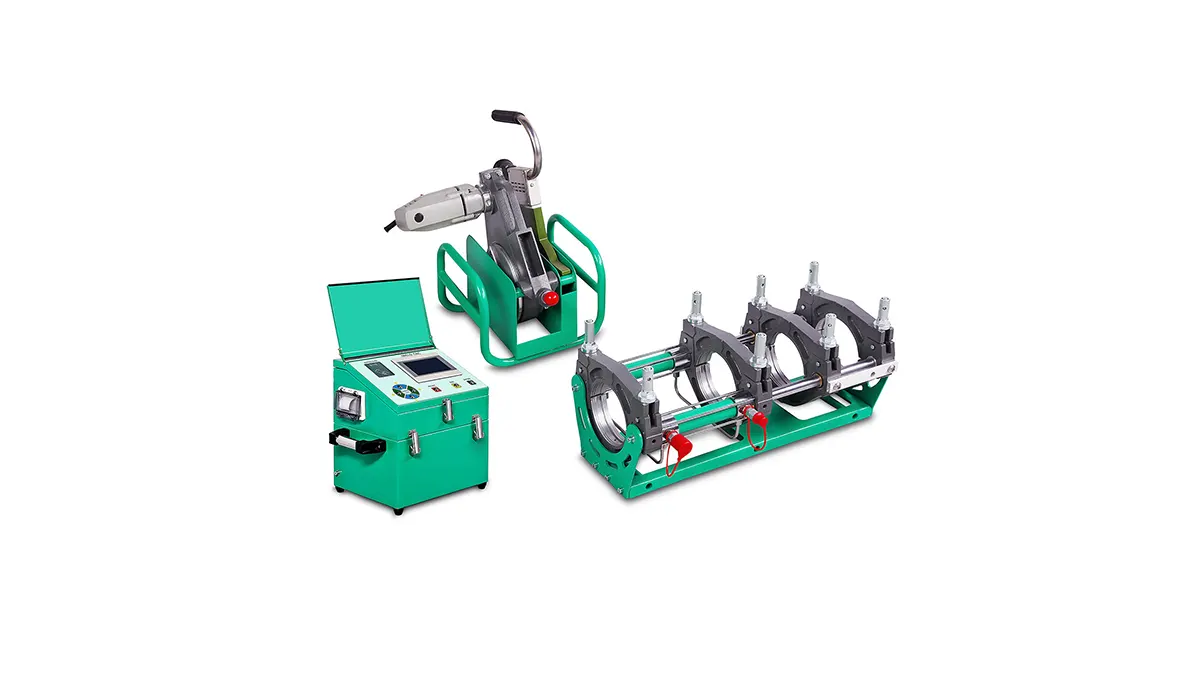
The Science of Thermoplastic Fusion: Why PE Pipe Butt Fusion Machine Sets the Standard
Molecular cross-chain bonding delivering joint integrity superior to the pipe body itself
The application of a modern PE pipe butt fusion machine has fundamentally transformed plastic pipeline construction. Unlike mechanical compression, flange coupling, or chemical adhesion, thermo-butt fusion exploits the viscoelastic properties of semi-crystalline polymers such as High-Density Polyethylene (HDPE PE80, PE100, and PE100-RC).
When utilizing equipment aligned with ISO 21307 butt fusion procedures and ASTM F2620 heat fusion protocols, the machine simultaneously faces pipe ends square, applies precisely regulated thermal saturation, and fuses the molten material under calibrated hydraulic force. This allows polymer chains to interdiffuse across the interface, creating a continuous, monolithic structure upon cooling.
Engineering Advantage Over Mechanical Joints
Properly fused joints eliminate mechanical point-load stresses and gaskets vulnerable to degradation. In high-pressure infrastructure, the weld seam exhibits identical yield strength, chemical resistance, and fatigue endurance as the parent pipe, ensuring a continuous design service life exceeding 100 years.
Authoritative guidelines from the PE butt fusion process literature reinforce that joint quality depends strictly on three interdependent physical parameters: precise interfacial temperature, uniform clamping pressure, and controlled cooling under sustained load.
Electric facing tool mills parallel, square pipe ends, shaving away oxidation and surface impurities to ensure zero gap alignment.
PTFE-coated heating plate applies continuous heat (typically 200°C–230°C) until uniform melt bead height forms around the circumference.
Rapid extraction of the heater plate within strict split-second thresholds prevents thermal oxidation of the molten polymer layer.
Pipe ends merge under defined interfacial fusion pressure, maintained continuously throughout the cooling cycle without external disturbance.
PE Pipe Butt Fusion Machine Categories: Engineering Architecture Comparison
Selecting the optimal drive mechanism, automation profile, and clamp configuration for your pipeline project
Depending on project diameter specifications, trench geometry, and regulatory data-logging mandates under PE butt fusion equipment standard (ISO 12176-1), contractors deploy three primary machine topologies:
| Machine Category | Diameter Range | Drive Mechanism | Pressure Control | Data Traceability | Recommended Applications |
|---|---|---|---|---|---|
|
Manual Butt Fusion Portable / Mechanical |
40mm – 250mm | Hand-wheel screw or lever gear | Manual torque gauge | Manual job sheet record | Low-pressure drainage, indoor conduit, municipal repair in tight trenches. |
|
Hydraulic Butt Fusion Semi-Automatic Workhorse |
160mm – 2250mm | Electro-hydraulic power pack | High-precision hydraulic valve & analog/digital manometer | External data logger optional | Water transmission, gas distribution, mining slurries, heavy overland pipelines. |
|
CNC Automatic Butt Fusion Full Automation & Log |
160mm – 630mm+ | Microprocessor-driven hydraulic servo | Automated closed-loop sensor feedback | Full USB / QR Code export to ISO 12176-4 | High-risk gas networks, nuclear coolant lines, municipal bidding with strict compliance. |
|
Multi-Angle Workshop Welder Fabrication Specialized |
315mm – 1600mm | Multi-axis hydraulic clamping | Dual-cylinder synchronized hydraulic pack | Integrated digital controller | Factory fabrication of segmented PE elbows, tees, wyes, and cross fittings. |
Industry-Leading PE Pipe Butt Fusion Machine Models
Heavy-duty engineering designed for flawless pipe alignment, heat consistency, and long-term durability
Hydraulic Machine with Aluminum Clamps
- Frame Type: Reinforced 4-Clamp Bed
- Clamp Material: Die-Cast Cast Aluminum
- Temp Control: Digital PID (±2°C)
- Applicable Pipes: HDPE, PP, PVDF, PB
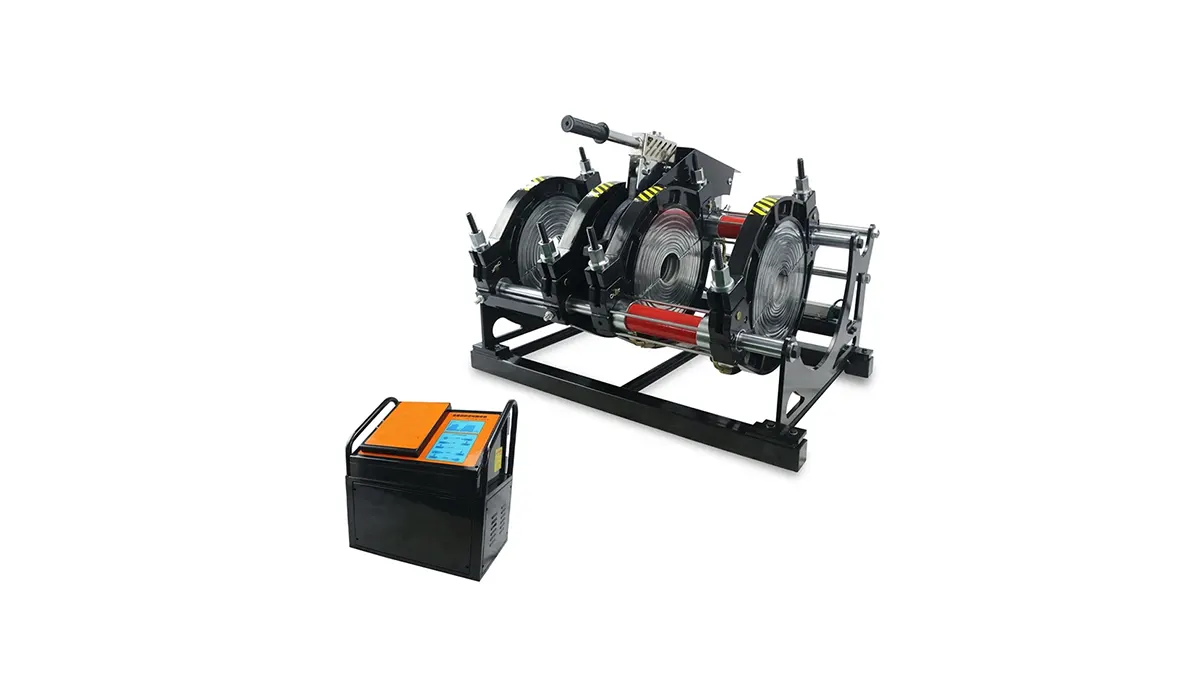
JQA630mm Automatic CNC Butt Welder
- Welding Range: 315mm – 630mm
- Automation: Full CNC Closed-Loop
- Data Storage: 20,000+ Weld Records
- Standard Spec: ISO 12176-1 / ASTM
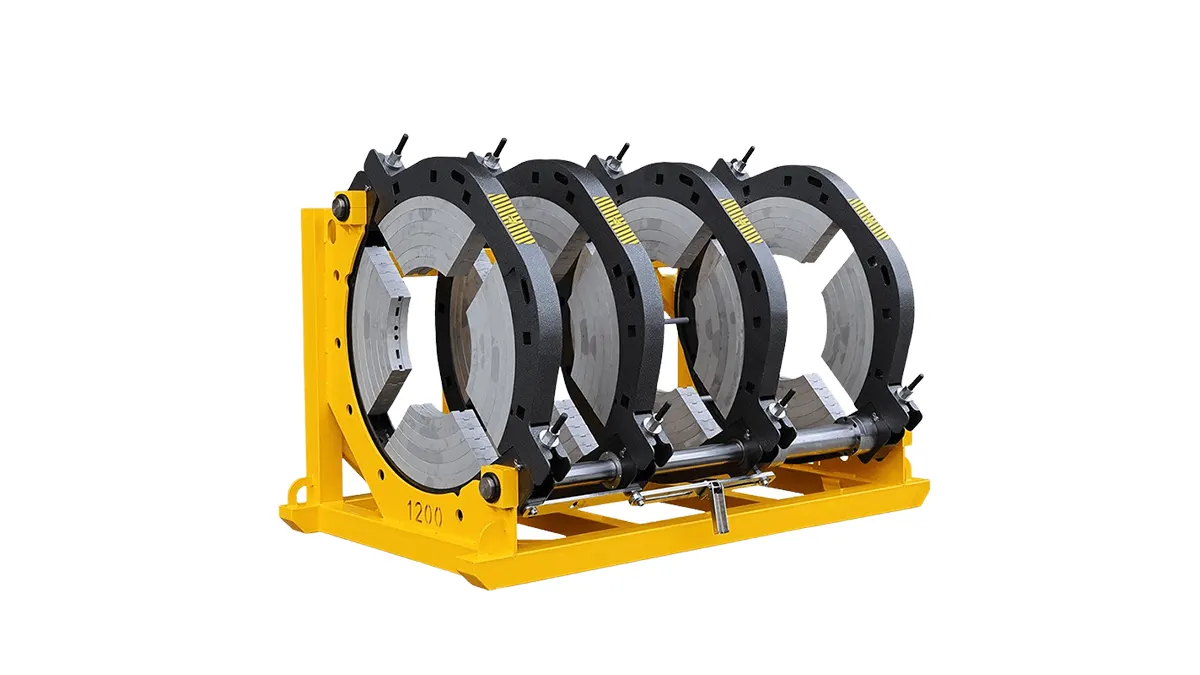
JQH1200mm Hydraulic Butt Welder
- Welding Range: 630mm – 1200mm
- Hydraulic Unit: High-Flow Dual Stage
- Planer Power: Heavy-Duty Geared Motor
- Crane Hoist: Integrated Electric Hoist
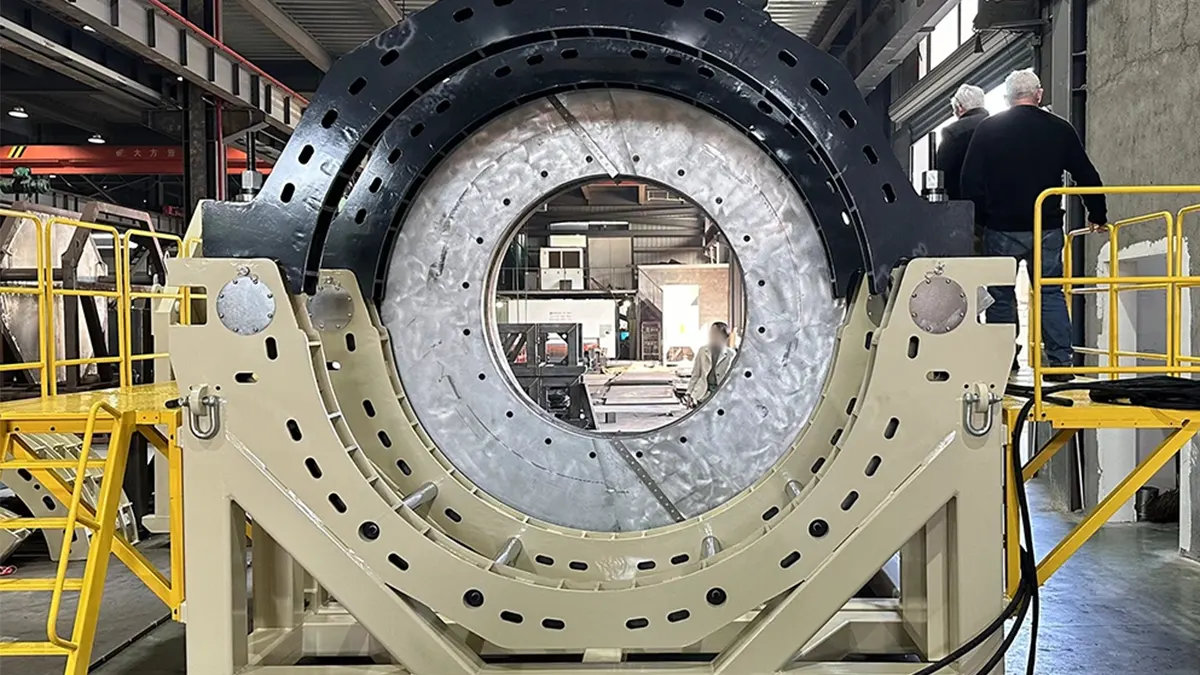
JQH2250mm Extra-Large Diameter Welder
- Welding Range: 1600mm – 2250mm
- Application: Major Intake & Outfall
- Structure: Ultra-Rigid Steel Box
- Cylinder Setup: Quad Hydraulic Drive
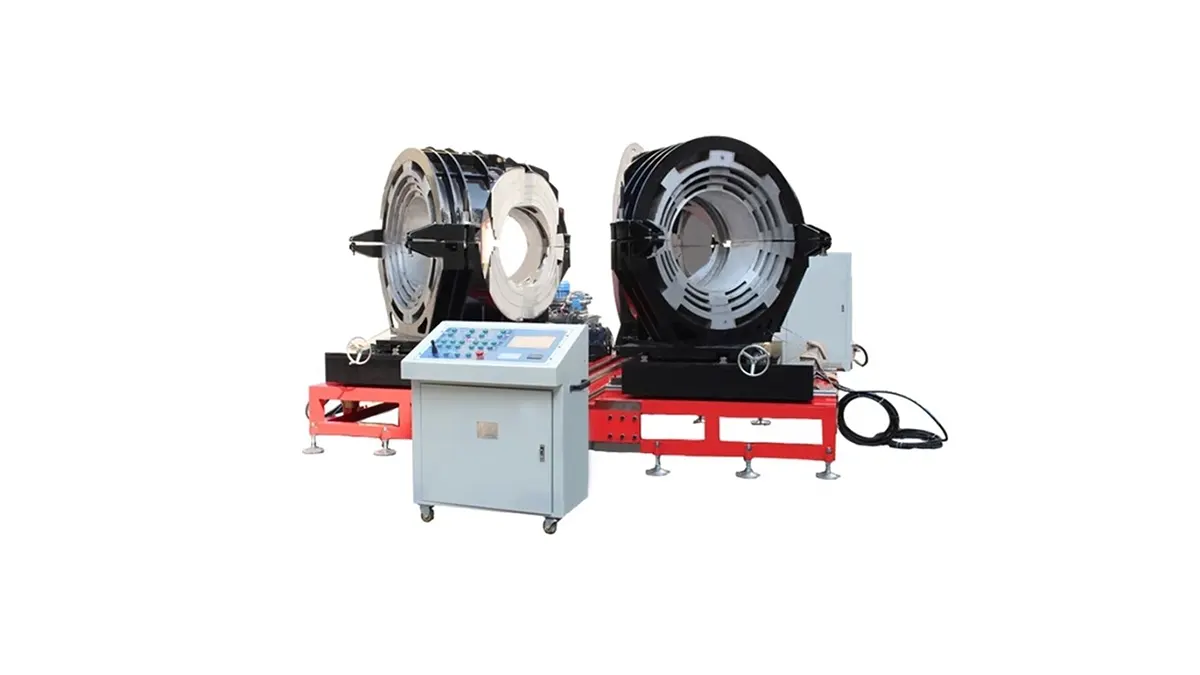
JQMA800 Multi-Angle Workshop Welder
- Fitting Range: 315mm – 800mm
- Fittings: Elbows, Tees, Crosses, Wyes
- Angle Settings: 0° to 90° Continuous
- Operation: Workshop Hydraulic Bench
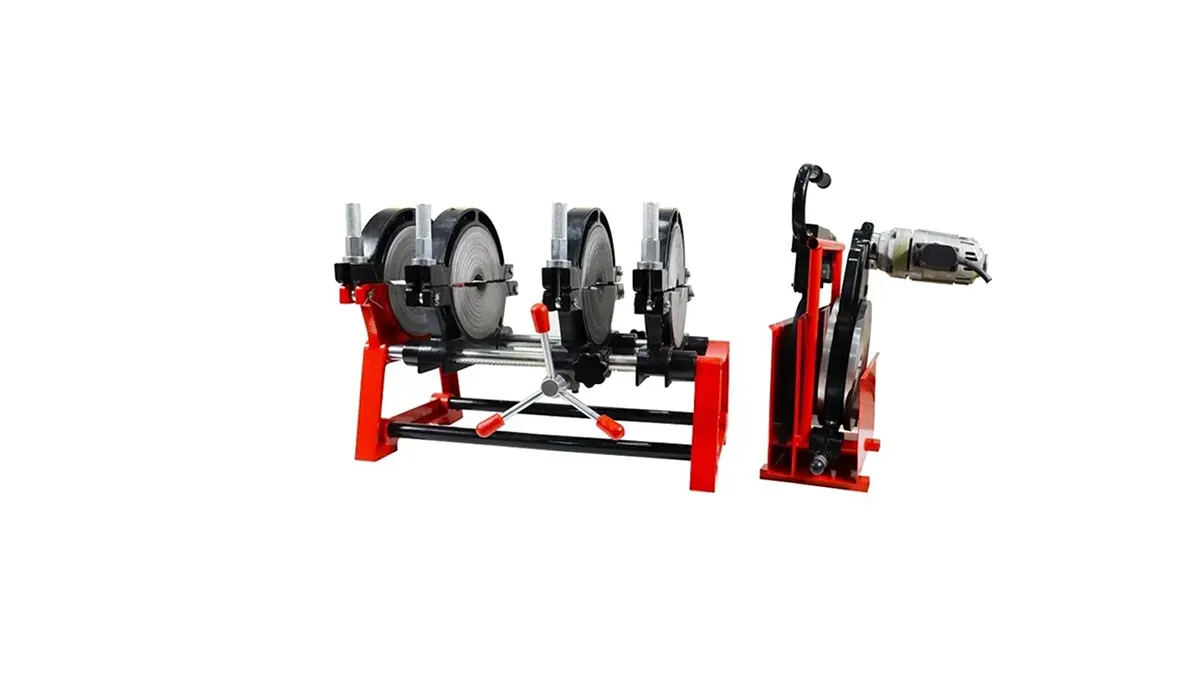
JQSY-4M Compact Manual Welder
- Welding Range: 63mm – 200mm
- Clamp Rows: 4-Ring Die Cast
- Weight: Ultra-Lightweight Field Unit
- Heater: Dual Surface Anti-Stick PTFE
Critical Applications & International Quality Standards
Proven across demanding infrastructure, municipal utilities, energy, and process sectors
Industrial polyethylene networks must endure relentless hydraulic surges, seismic micro-movements, and abrasive chemical media. Deploying a certified PE pipe butt fusion machine ensures full compliance with international mandates including ISO 4427 PE water pipes, ISO 4437 PE gas piping systems, and ASTM F714 PE pipe.
Potable Water & Desalination
Zero-leakage trunk lines and intake/outfall marine piping built strictly to PE potable water fusion standards.
Natural Gas Distribution
Safe, fused yellow PE lines compliant with ASTM D2513 PE gas pipe and stringent explosion-proof safety thresholds.
Mining & Slurry Transport
Extreme wear-resistant PE100-RC thick-wall pipes welded to endure slurry abrasion, tailings disposal, and heap leaching.
Industrial & Chemical Plants
Acid-proof, alkaline-proof process pipelines fulfilling industrial PE piping systems (ISO 15494) operating requirements.
About JQ-Fusion: Precision HDPE Welding Equipment Manufacturer
Empowering global infrastructure contractors with uncompromising joint reliability
JQ-Fusion is a specialized manufacturer dedicated to research, precision machining, and assembly of industrial pipe butt fusion machinery. From compact manual units to ultra-large hydraulic equipment exceeding 2000mm, our systems power critical municipal and industrial ventures worldwide.
-
✓
Repeatable Welding Precision
Digital PID plate temperature control and precision-honed clamp beds eliminate offset mismatch.
-
✓
Full Customization & OEM Solutions
Tailored clamp inserts, brand styling, voltage configurations (220V/380V/415V/440V), and specialized software.
-
✓
Multi-Tier Quality Verification
100% full-cycle pressure holding tests, planar alignment checks, and thermal scan calibration before shipment.
-
✓
Extensive Stock & Rapid Global Dispatch
Strategic warehouse inventory guarantees quick fulfillment for contractors needing minimal downtime.
Certified International Quality & Massive Ready Stock
Stringent compliance with ISO 9001 and CE directives backed by an active assembly inventory
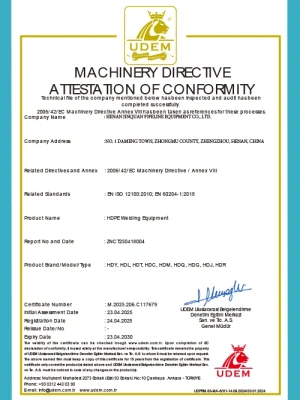
CE European Machinery Directive
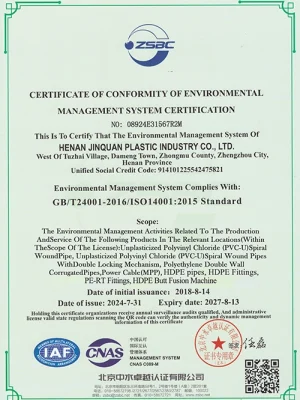
ISO 9001 Quality Management
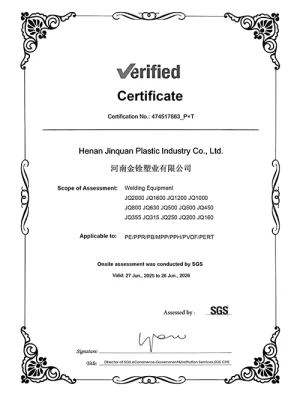
SGS Audited Supplier Status
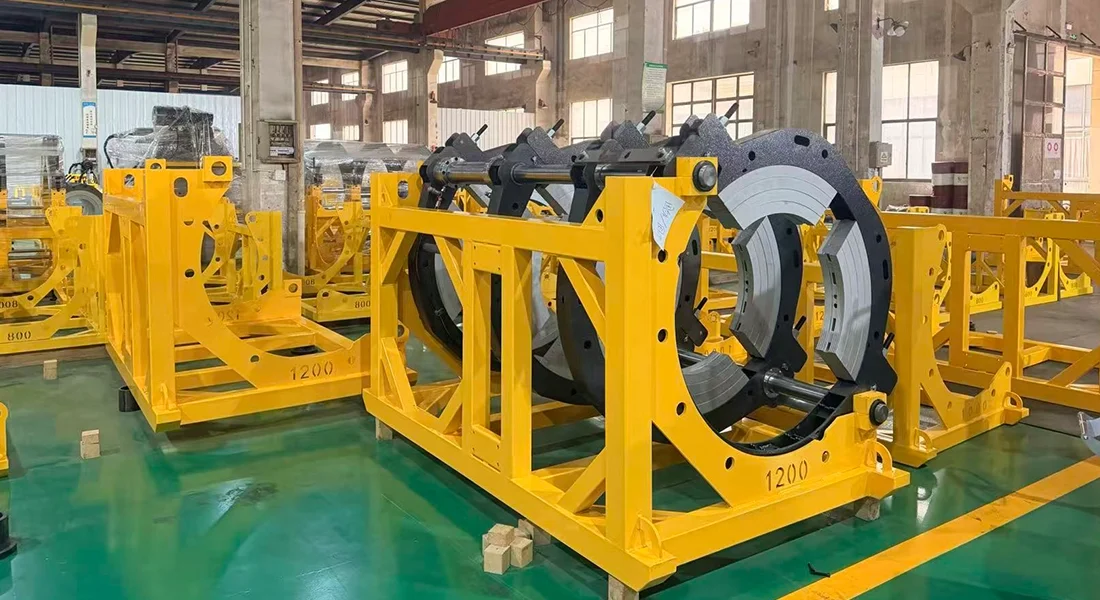
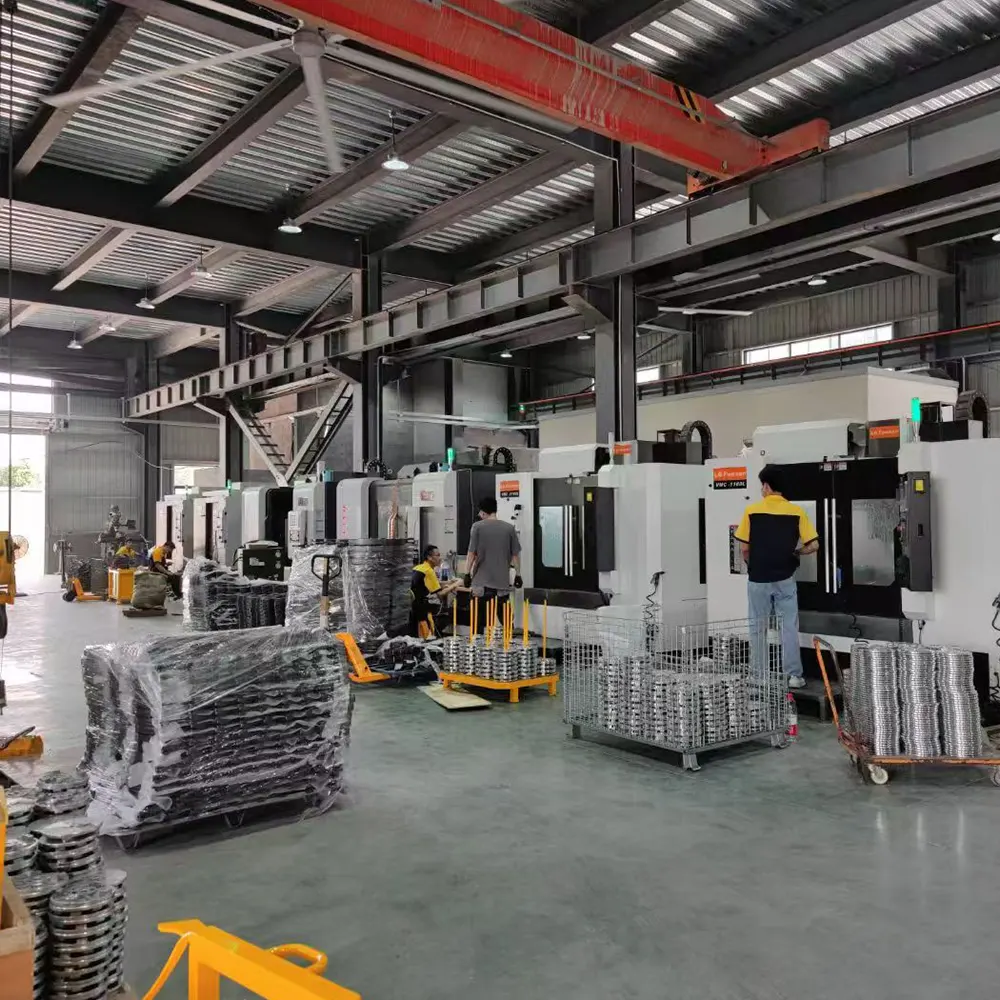
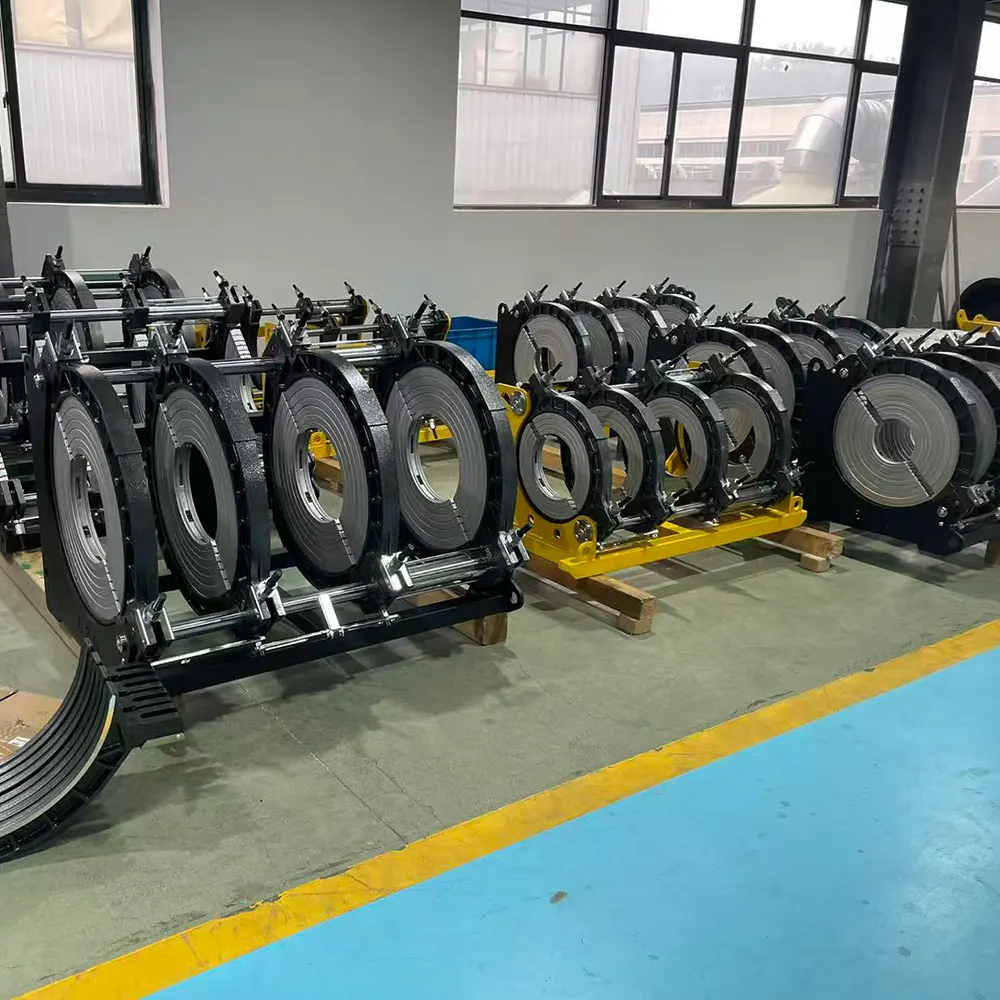
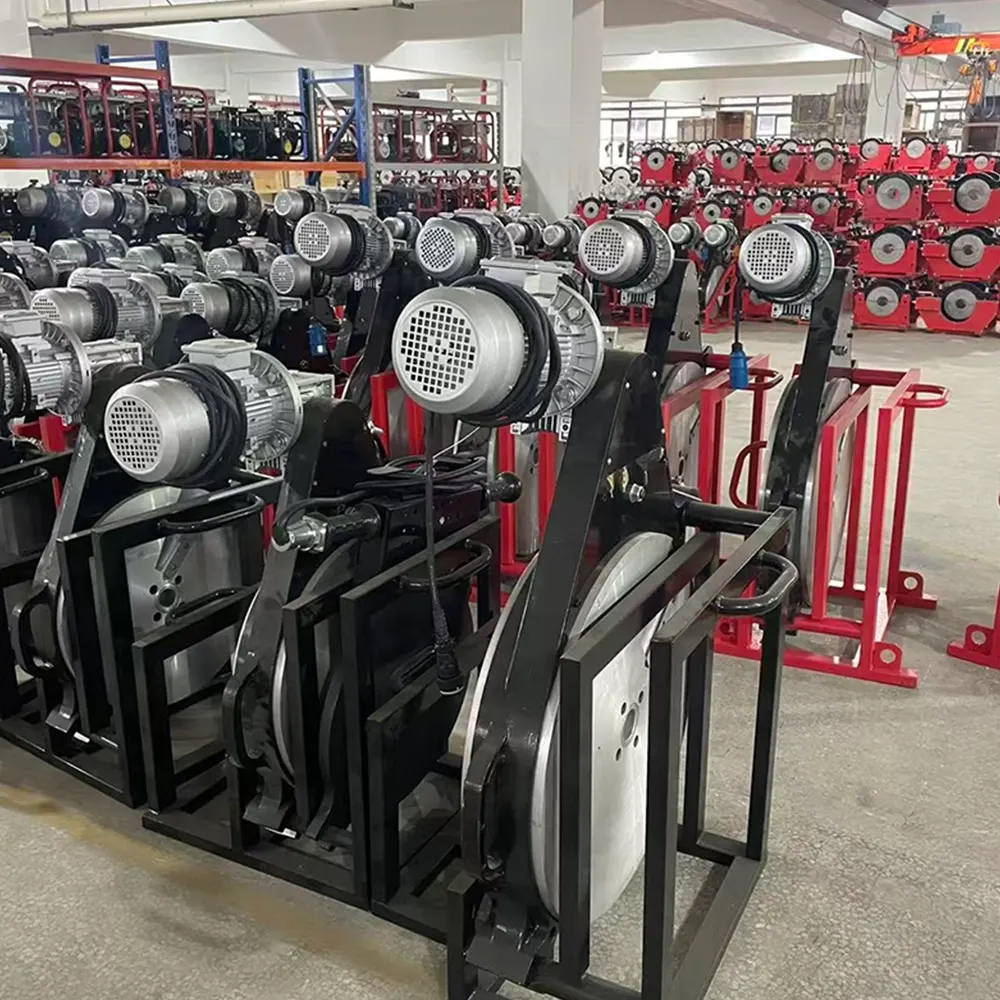
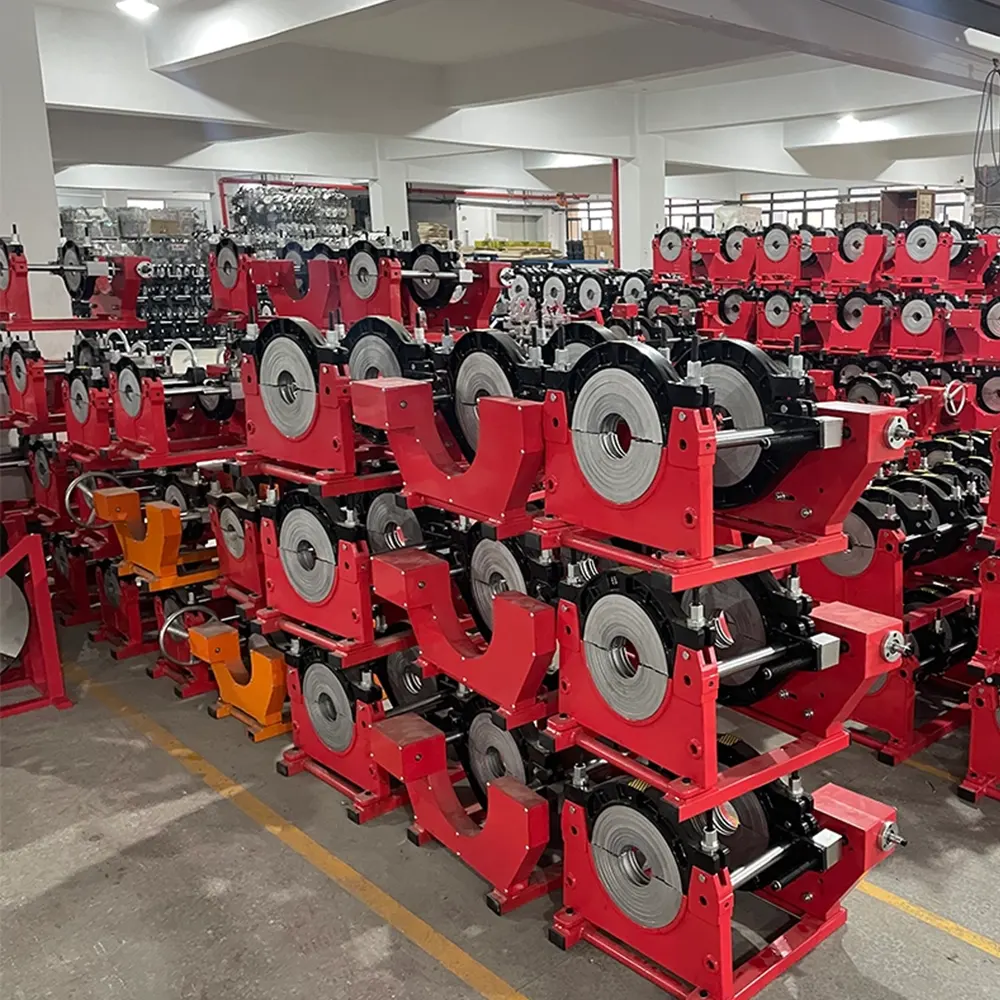
Visit Our Manufacturing & Ready-Stock Facility
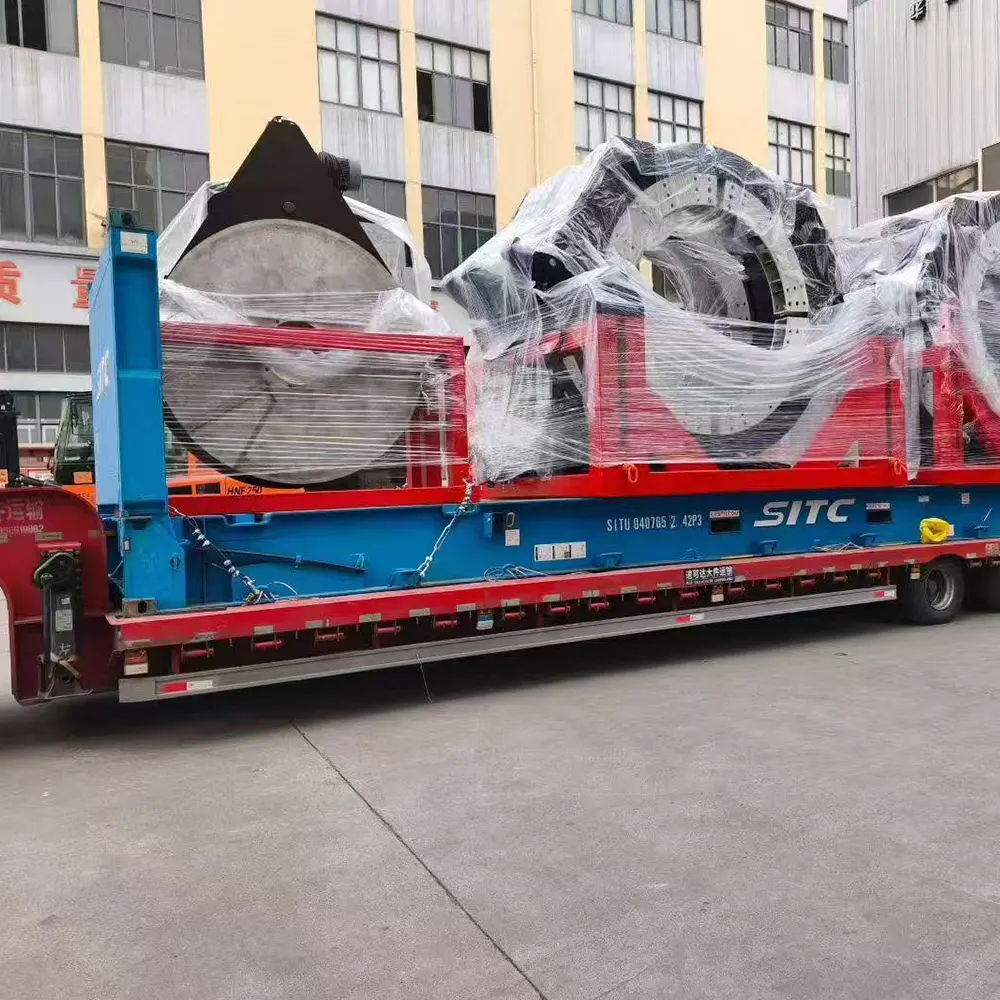
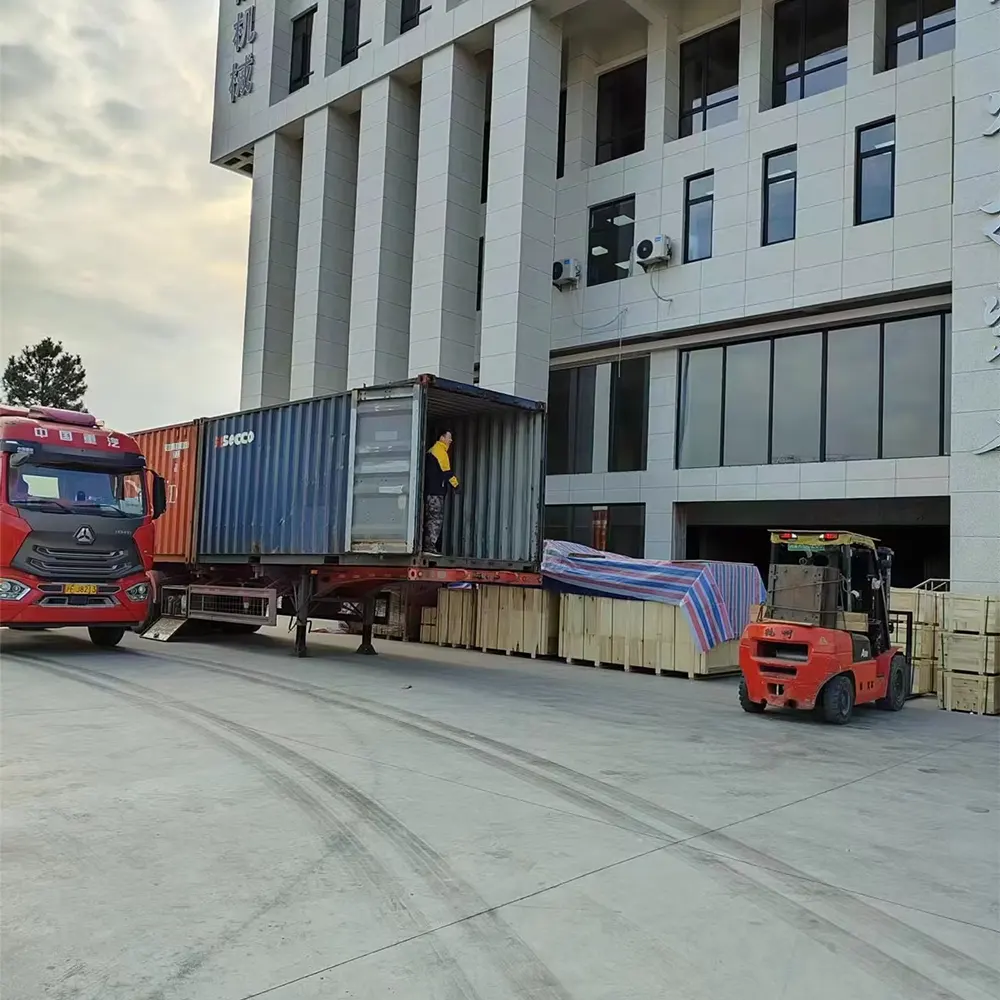
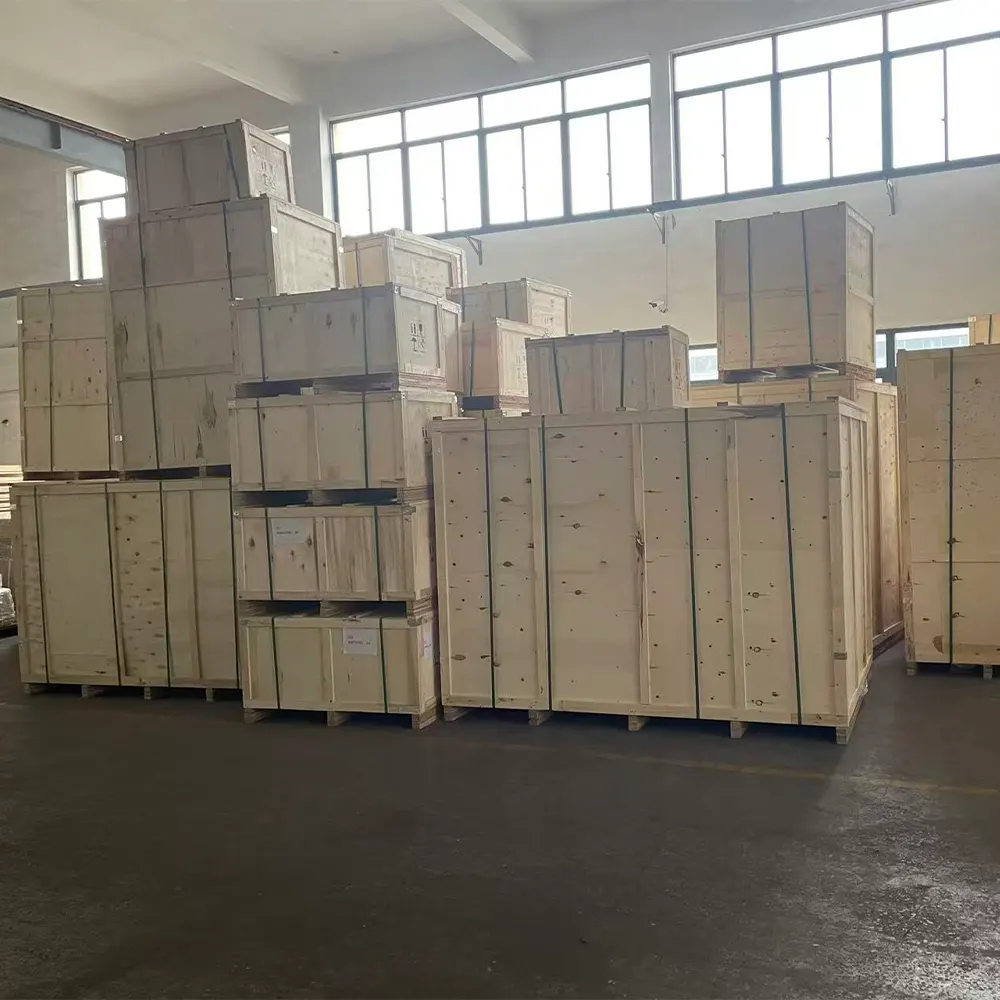
Over 300+ units of manual, hydraulic, and CNC fusion machines ready for immediate international dispatch.
Frequently Asked Questions: PE Pipe Butt Fusion Machine Operations
Direct answers to operator inquiries, parameter configurations, and maintenance guidelines
How is total welding pressure calculated on a hydraulic PE butt fusion machine?
Total fusion pressure ($P_{text{gauge}}$) is the sum of calculated theoretical interfacial fusion pressure plus the machine’s actual system drag pressure ($P_{text{drag}}$). Drag pressure represents the hydraulic force required to overcome pipe weight and carriage friction on the linear slide bars. Operators must record $P_{text{drag}}$ before each weld cycle and add it to the standard fusion chart value.
What is the standard heating temperature for HDPE PE100 and PE80 pipes?
In accordance with ASTM F2620 heat fusion and DVS 2207 standards, the heating plate temperature must be set between 200°C and 230°C (392°F – 446°F), typically targeting 220°C ± 3°C across the entire heating mirror surface. High-grade digital PID controllers in JQ-Fusion equipment maintain tight uniformity across all ambient temperatures.
When should a contractor choose butt fusion over electrofusion?
As highlighted in butt fusion vs electrofusion analyses, butt fusion is markedly more economical and faster for long continuous pipeline runs from 90mm up to 2250mm, as it eliminates costly electrofusion coupling fittings. Electrofusion is preferred for trench repairs, tight tie-ins, and small branch saddles where machine clamping space is constrained.
Can different wall thicknesses (different SDR ratings) be joined by butt fusion?
Direct butt fusion is only recommended between pipes of identical outside diameter and matching SDR wall thickness (or within ±10% wall mismatch). Joining unequal wall thicknesses causes asymmetric melt distribution and stress concentration. For different SDR ratings, contractors should use transition fittings or specialized machining per PE pipe joining procedures.
How is quality verified on-site after joint cooling?
Quality assurance includes continuous non-destructive visual bead inspection (checking uniform bead width, rollover symmetry, and lack of notches), electronic data-log review, and post-installation hydrostatic pressure testing per PE pipe hydrostatic leak testing (ASTM F2164).
Ready to Upgrade Your Pipeline Joining Efficiency?
Connect directly with JQ-Fusion engineering specialists for custom machine configurations, competitive factory pricing, and full product catalogs tailored to your regional infrastructure standards.
Email Inquiries
Direct Phone / WhatsApp
Manufacturing Headquarters
Zhengzhou, Henan, China
