
High-Precision Electrofusion Welding Machine for Pipe Systems
Engineered for absolute fusion integrity in critical gas distribution, municipal water transmission, mining, and industrial polyolefin networks. Designed strictly under international ISO and ASTM standards for consistent electrothermal performance.
State-of-the-Art Electrofusion Welding for Critical Pipelines
An Electrofusion Welding Machine serves as the technological cornerstone for joining high-density polyethylene (HDPE), medium-density polyethylene (MDPE), and polypropylene (PP) pressure pipe systems. Operating through resistive implant heating, the machine outputs controlled low-voltage alternating or direct current through conductive heating wires embedded within specialized electrofusion couplers, tapping tees, and reducer fittings.
According to technical guidelines outlined by the PPI technical guidance and international literature on what is PE electrofusion, the process creates an interfacial molten pool under high melt pressure. This forces polymer chains across the pipe-fitting boundary to interdiffuse and crystallize into a single, homogeneous, leak-free joint that matches or exceeds the parent pipe’s mechanical strength.
Unlike conventional mechanical fittings, modern electrofusion delivers 100% joint integrity without flow restriction, offering superior resistance against seismic activity, ground settlement, and hydraulic water hammer effects.
JQ-Fusion’s microprocessor-regulated electrofusion units dynamically monitor input voltage, ambient temperature, heating time, and real-time current, ensuring full compliance with ASTM F1290 electrofusion standards and PE electrofusion equipment standard (ISO 12176-2).
Precise Energy Output
Microprocessor RMS voltage control stabilizes energy delivery against field generator fluctuations between 180V–260V.
Optical Barcode Recognition
Integrated 24-digit optical scanners automate parameter loading strictly following ISO 13950 / ISO 12176-4 codes.
Temperature Compensation
Real-time external thermal sensors auto-adjust weld cycles across harsh -10°C to +45°C ambient site conditions.
Full Traceability Storage
Internal non-volatile memory logs up to 2,000+ fusion cycles, exportable via high-speed USB for pipeline auditing.
Flagship Electrofusion Welding Machines
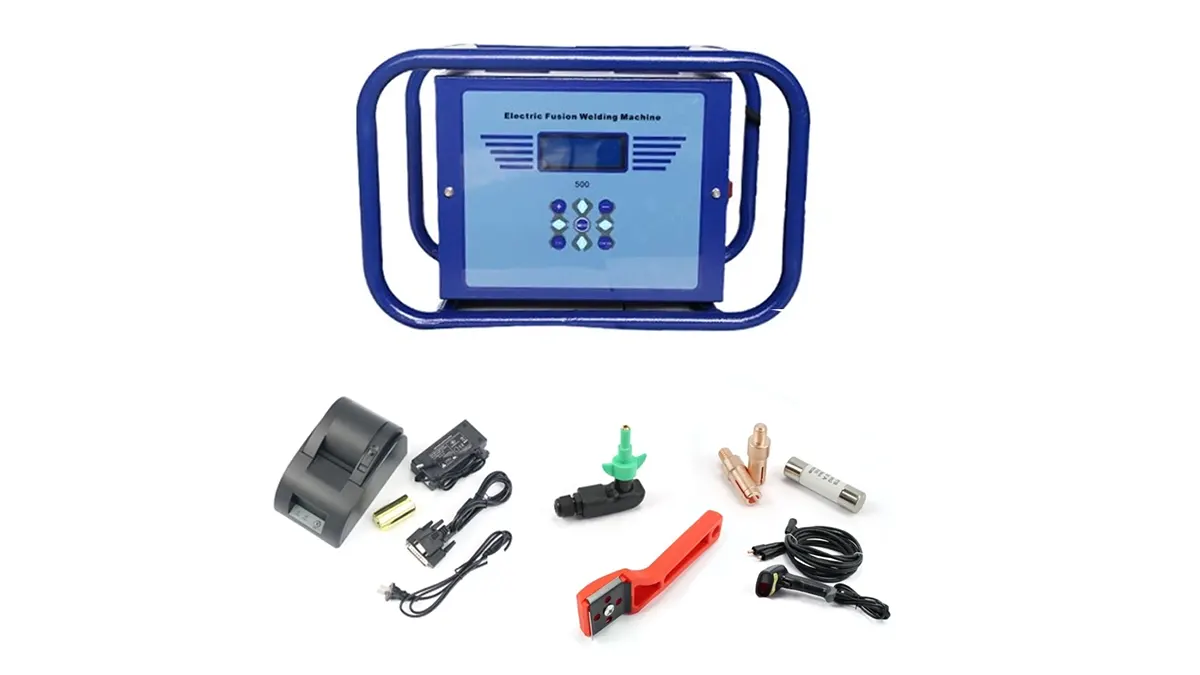
JQEA Series Universal Electrofusion Machine
A high-performance universal welder designed for medium to large diameter HDPE pipe fittings. Features automatic voltage regulation, multi-language color display, and dual scanning interfaces.
- Welding Range: DN20 – DN800 mm
- Output Voltage: 8V – 48V (Auto Stabilized)
- Input Power: 220V AC / 50-60Hz (3.5 – 8.0 kW)
- Traceability: ISO 12176-3 / 4 Compliant
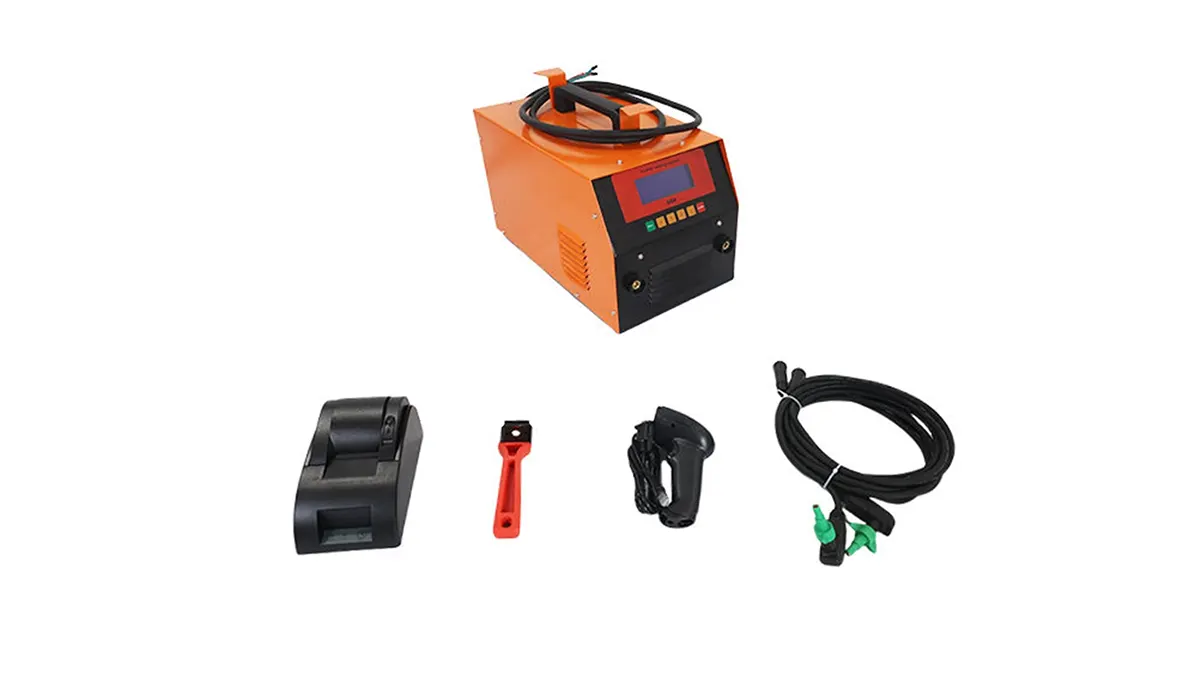
JQEB Series Compact Field Electrofusion Machine
Engineered for lightweight mobility and trench operations. Built inside an ultra-durable shock-absorbing aluminum alloy chassis for rapid deployment in gas service connections and water network repairs.
- Welding Range: DN20 – DN315 mm
- Output Mode: Constant Voltage / Barcode Auto
- Protection Rating: IP54 Dust & Splash Proof
- Data Export: High-speed USB Flash Drive
Electrofusion vs. Butt Fusion: Engineering Selection Guide
Understanding butt fusion vs electrofusion is essential for pipeline designers. While standard hydraulic butt fusion excels in long continuous cross-country runs, electrofusion welding machines are ideal for constrained trench conditions, tie-ins, and complex branch fittings.
| Operational Parameter | Electrofusion Welding Machine | Butt Fusion Welding Machine |
|---|---|---|
| Space Requirement | Minimal clearance needed; ideal for tight trenches and urban retrofits | Requires linear space for pipe clamps and hydraulic carriages |
| Applicable Diameter Range | Commonly DN20 to DN800+ mm (using specialized large couplers) | DN50 up to DN2250+ mm for large cross-country mains |
| Different Wall Thicknesses (SDR) | Can easily join pipes of identical OD but different SDR ratings | Requires identical wall thickness or transition machining |
| Operator Dependence | Highly automated via optical barcode scanner (ISO 13950) | Requires manual or CNC pressure/time profiling |
| Primary Applications | Service saddles, electrofusion couplers, repair patches, gas distribution | Long distance water transmission, penstocks, industrial sewer mains |
Step-by-Step Electrofusion Joining Workflow
Pipe Prep & Peeling
Cut pipe square, peel the outer oxidized layer using a mechanical scraper (0.2mm depth), and degrease using isopropanol wipes.
Clamping & Alignment
Insert pipe into fitting up to insertion depth stops; secure with alignment clamps to eliminate stress and prevent movement during heating.
Barcode Scanning
Scan the ISO 13950 barcode with the optical wand. The machine auto-sets voltage, fusion cycle duration, and cooling cycle parameters.
Fusion & Cooling
Execute weld. Monitor fusion pop-up indicators. Leave clamps untouched for the full mandatory cooling cycle per ASTM F1055.
Key Hardware & Software Innovations
Dynamic Current Protection
Advanced IGBT inverter modules provide sub-millisecond short-circuit and over-voltage shutoff, safeguarding operators and expensive fittings from burn-throughs.
Multi-Standard Protocol Support
Pre-programmed with global welding databases complying fully with PE pipe fittings standard (ISO 4427-3) and ASTM F1055 electrofusion fittings.
Intuitive Graphic Interface
High-contrast backlit LCD screen displays real-time voltage, amperage, ambient temperature, resistance, countdown timer, and fault error codes.
Robust Field Enclosure
Constructed inside high-impact military-grade polymer casing or treated aluminum chassis, resisting sand, muddy moisture, and heavy drop impact.
QA Welding Report Generation
Outputs complete PDF and CSV QA welding reports detailing weld energy, fitting manufacturer, operator ID, and GPS coordinates for municipal documentation.
Universal Fitting Compatibility
Equipped with 4.0mm and 4.7mm quick-swap connection adapter pins, guaranteeing flawless mating with all major global fitting manufacturers.
International Pipeline Engineering Standards
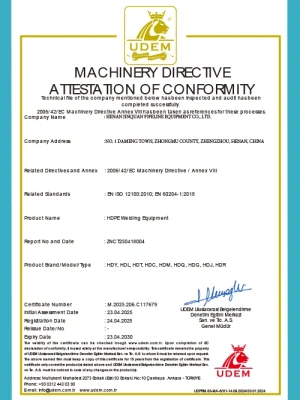
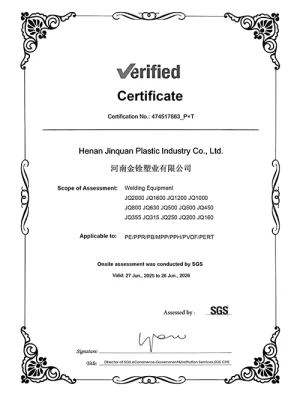
JQ-Fusion designs and calibrates all electrofusion welding equipment under stringent international standards, verifying weld integrity across critical utility and industrial environments.
ISO 12176-2: Electrofusion Equipment Standard
Specifies electrical safety, operational controls, and performance characteristics for low-voltage equipment.
ASTM F1290: Electrofusion Joining Practice
Standard practice for electrofusion joining of polyolefin pipe and fittings in North American gas & water utilities.
ISO 4437-2 / ISO 4437-3: Gas Supply Networks
Rigorous test protocols for gaseous fuels piping systems, ensuring zero-emission fusion joint security.
ISO 4427-2: Water Supply Systems
Global standards regulating polyethylene piping joints for potable water mains and industrial pressure pipelines.
About JQ-Fusion Pipeline Solutions
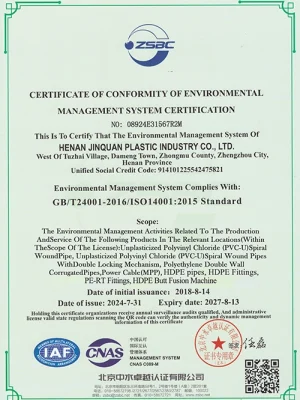
JQ-Fusion is a premier global manufacturer specializing in HDPE pipe welding technology and pipeline jointing solutions. Covering butt fusion, electrofusion, and multi-angle pipe fitting welding machines, we empower international contractors and distributors with rugged, precise equipment.
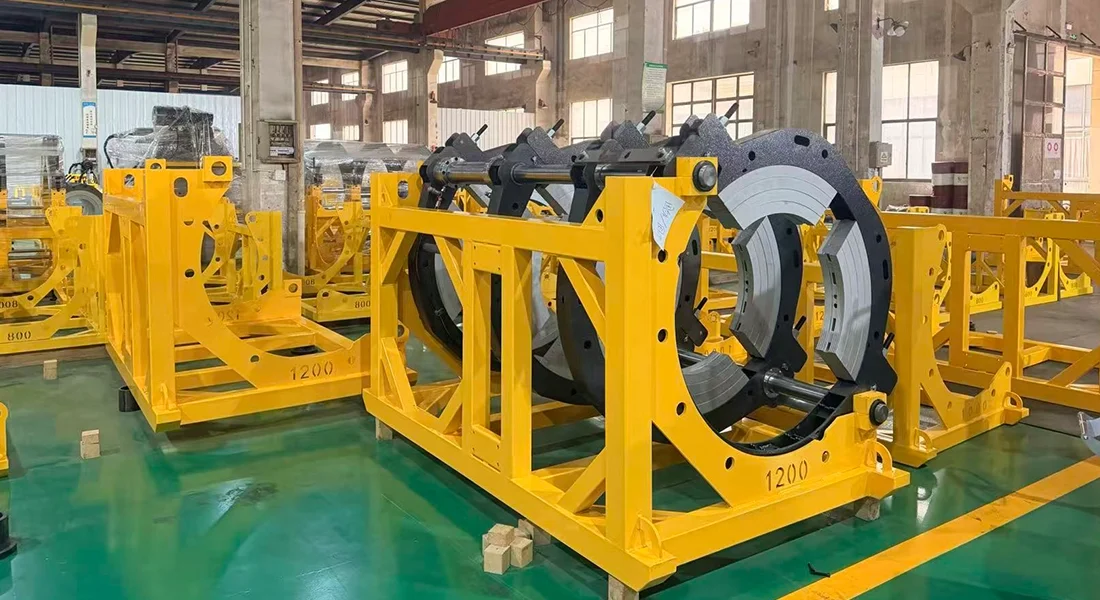
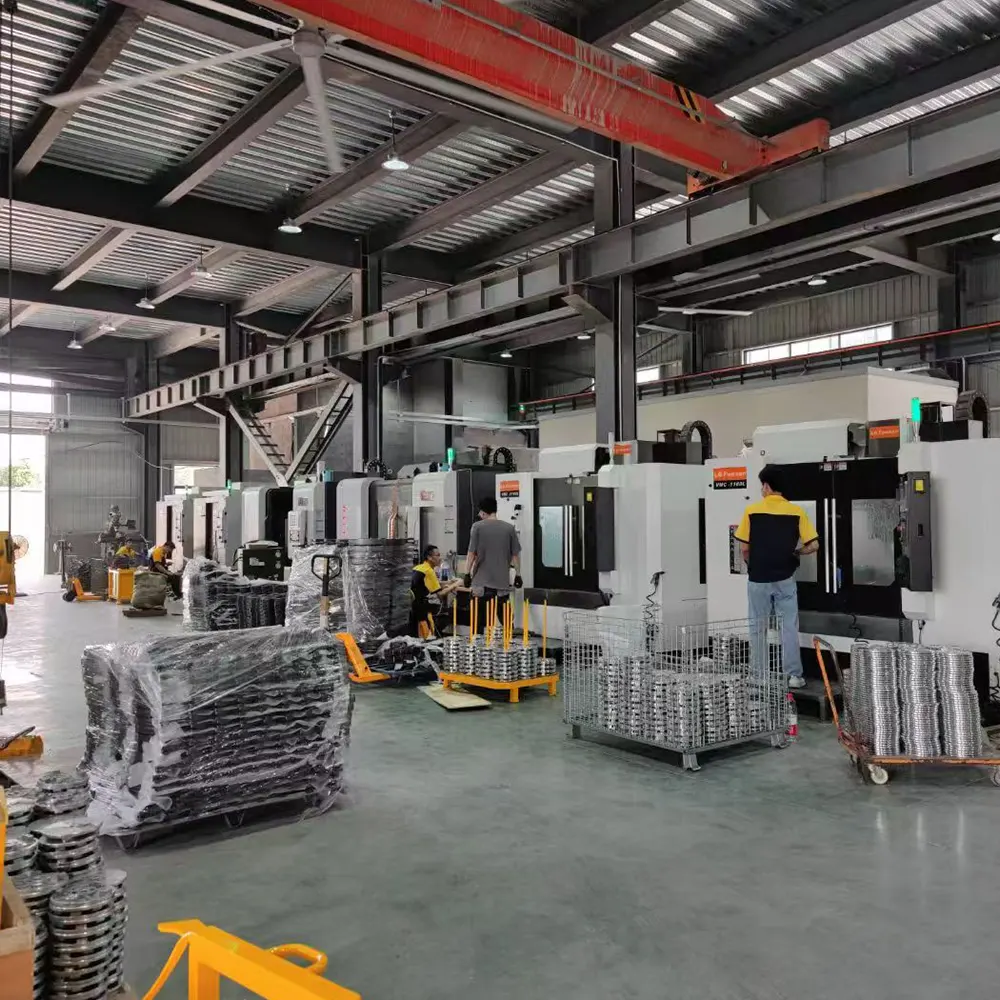
Our manufacturing facility integrates advanced CNC milling, electrical component assembly, and rigorous ISO-certified thermal stress testing. From standard models to tailored OEM/ODM solutions, JQ-Fusion maintains extensive inventory to fulfill immediate project dispatches worldwide.
- Reliable Fusion Output: Stable power management and microsecond control ensure strong, repeatable jointing.
- Rigorous Testing: Multi-point clamp alignment, voltage stability, and IP testing before every shipment.
- Global Logistics & Stock: Strategic inventory ready for dispatch within 48-72 hours.
Frequently Asked Questions
Why is mechanical pipe scraping mandatory before welding?
Polyethylene pipes naturally develop an oxidized outer layer when exposed to UV radiation and oxygen. If not removed with a certified mechanical peeler (0.2mm depth), this degraded layer prevents molecular cross-linking between the pipe surface and fitting melt zone, causing joint failure under pressure testing.
Can electrofusion join different PE grades (e.g., PE80 to PE100)?
Yes. According to PE pipe compatibility standards, modern electrofusion machines can weld PE80 to PE100 or PE-RT, provided both materials have compatible melt flow indices (MFR 190°C/5kg within 0.2 to 1.4 g/10min).
What power generator size is recommended for electrofusion?
For welding couplers up to DN315, an AVR-regulated generator rated at minimum 5.0 kVA is required. For large-diameter fittings up to DN800, we recommend a heavy-duty generator rated between 8.0 kVA and 10 kVA with pure sine wave voltage stabilization.
How does the machine compensate for ambient temperature?
JQ-Fusion welders integrate external temperature probes. When the ambient temperature drops below standard reference (20°C), the micro-controller increases the fusion heating cycle duration proportionally per ISO 12176-2 formulas to ensure complete interfacial melt without thermal degradation.
Ready Stock & Factory Direct Dispatch
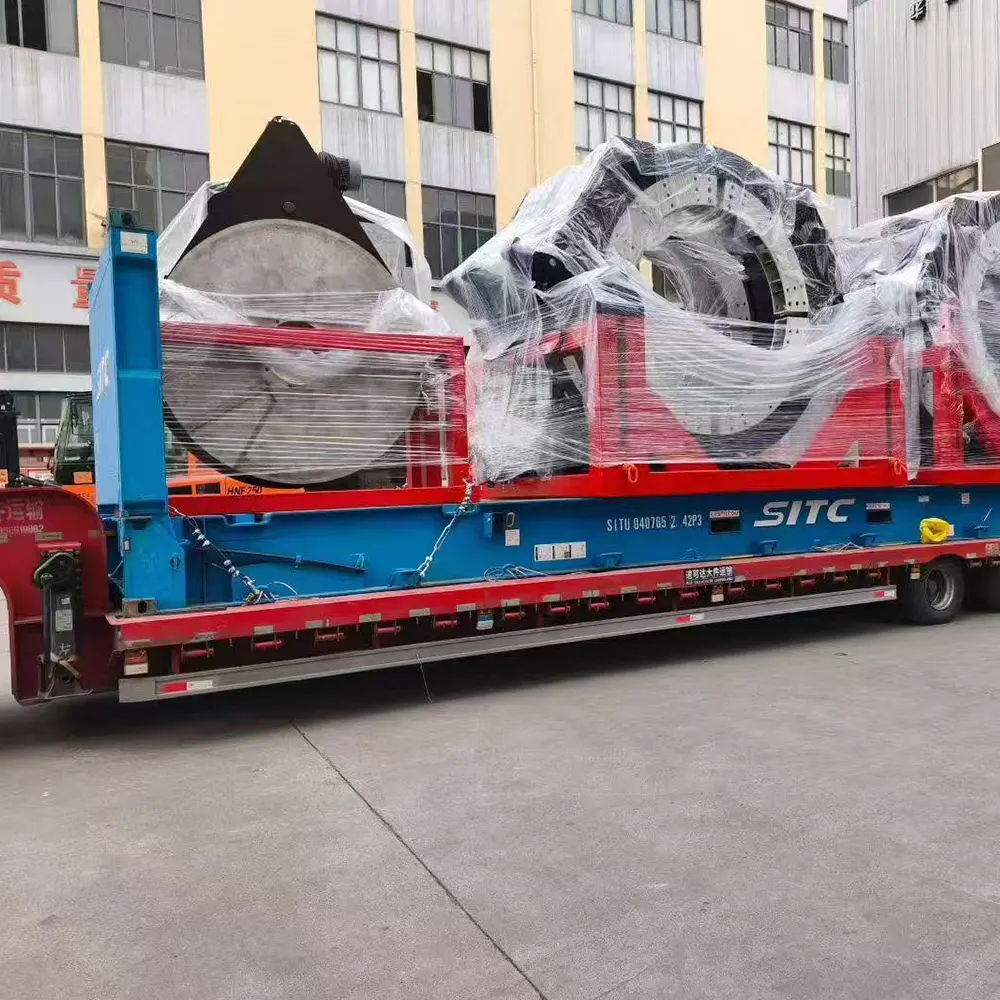
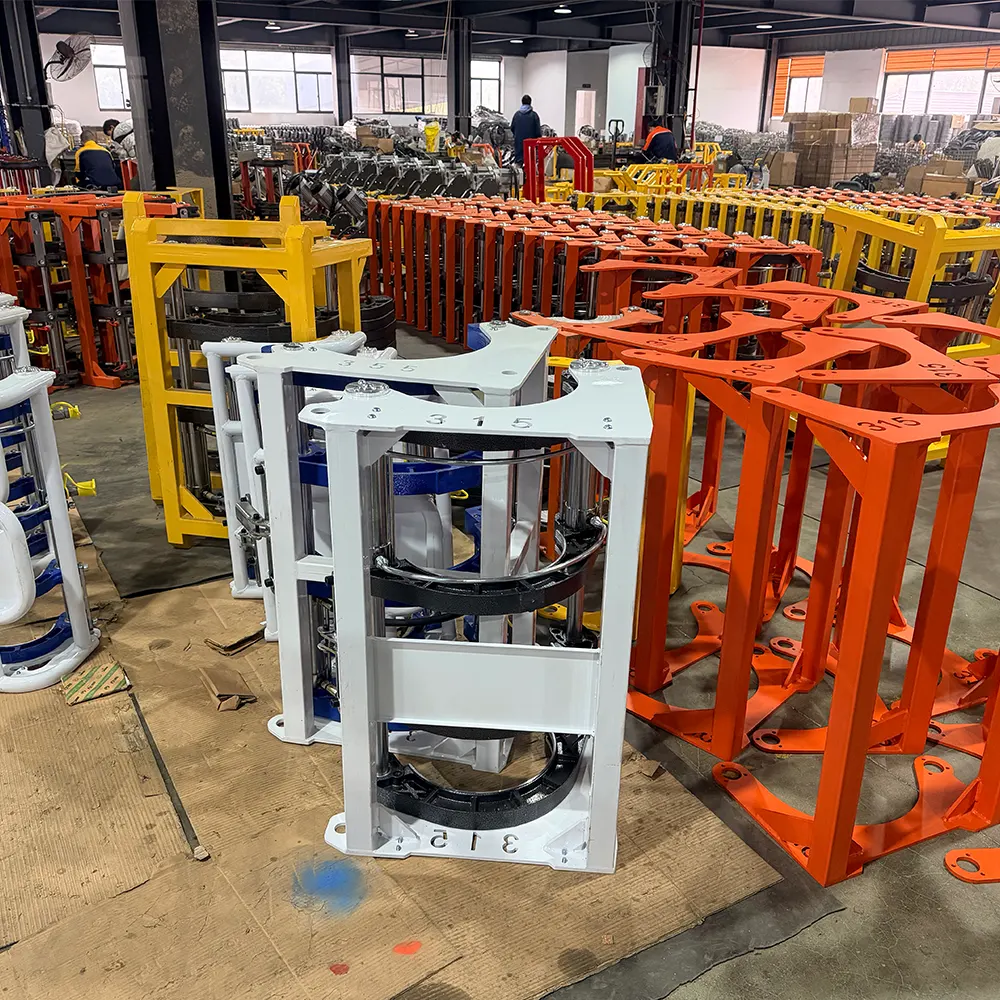
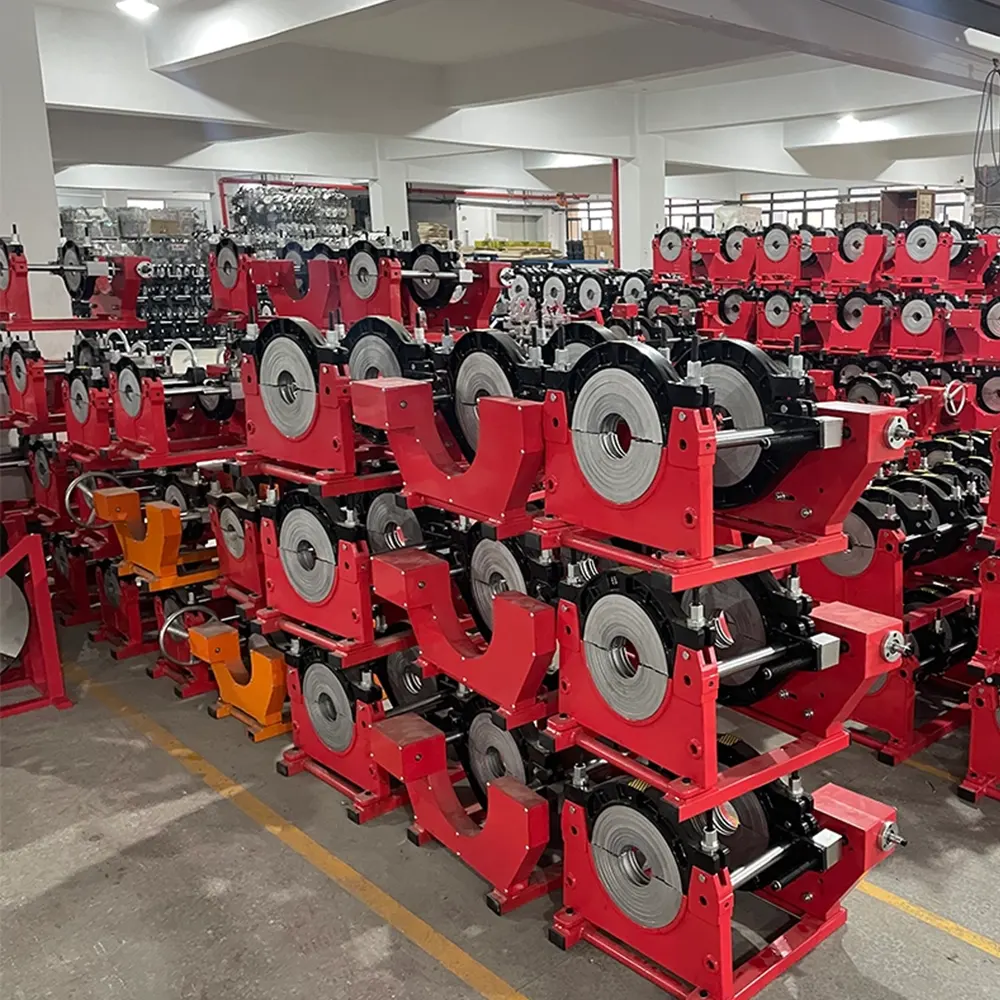
JQ-Fusion maintains large inventory reserves of electrofusion machines, CNC automatic butt fusion welders, and manual HDPE fusion equipment, fully packaged for sea and air freight.
Equip Your Pipeline Projects with JQ-Fusion
Contact our engineering sales team for comprehensive catalogs, distributor pricing tiers, and customized technical proposals.
